Chris Hall
Personal Trainer and Founder of Hall Personal Training
Exercise Men's Health
November 11, 2026
The best exercise for men over 40 is regular strength training, two or three times a week, backed up by walking or other cardio on most days. The key to staying injury free is starting lighter than you think you need to, learning good technique and building up gradually. Do that consistently and you can get stronger, fitter and leaner well into your fifties, sixties and beyond.
Here is what changes after 40, how to train around it and what a sensible first month back looks like.
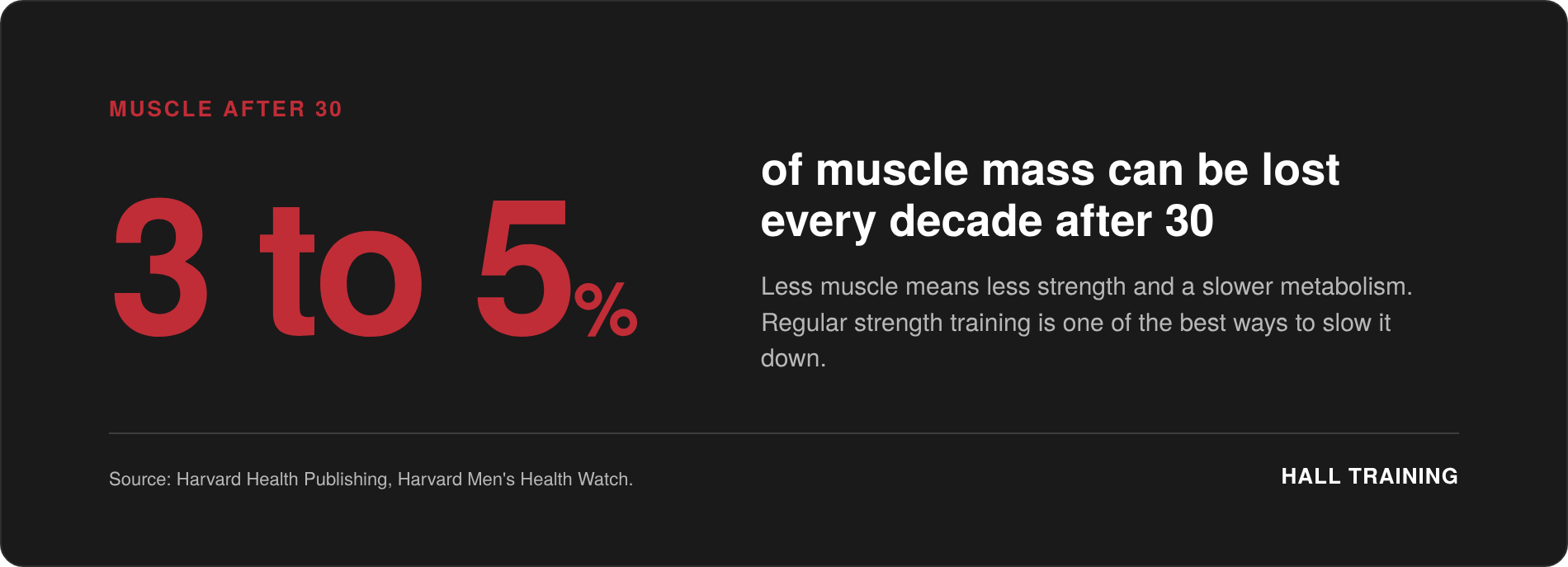
You can still make great progress after 40, but a few things work differently. According to Harvard Health, men can lose as much as 3 to 5% of their muscle mass every decade after the age of 30. Less muscle means less strength, a slower metabolism and a higher chance of aches and injuries.
Recovery also takes a little longer, old sports injuries have a habit of resurfacing, and work and family leave less time to train. None of that is a reason to stop. It is simply a reason to train smarter rather than harder.
Strength training should be the foundation. It is the most effective way to hold on to muscle, and it makes everything else, from carrying the shopping to playing with the kids, feel easier. Focus on movements that use lots of muscle at once:
Add regular walking, cycling or swimming for your heart and lungs. The NHS physical activity guidelines recommend at least 150 minutes of moderate activity a week, plus strength work for all the major muscle groups on at least two days.
Two or three sessions a week is the sweet spot for most men. A review of training frequency research found that working each muscle group at least twice a week gives better results for muscle growth than once a week. Leaving a day between sessions gives your body time to recover and adapt.
And it is never too late to start. A review of 49 studies on adults over 50 found that regular strength training added an average of around 1.1 kg of lean muscle in about 20 weeks.
Most injuries in men coming back to exercise happen for the same reason: doing too much, too soon. The good news is that strength training itself is one of the best forms of protection.
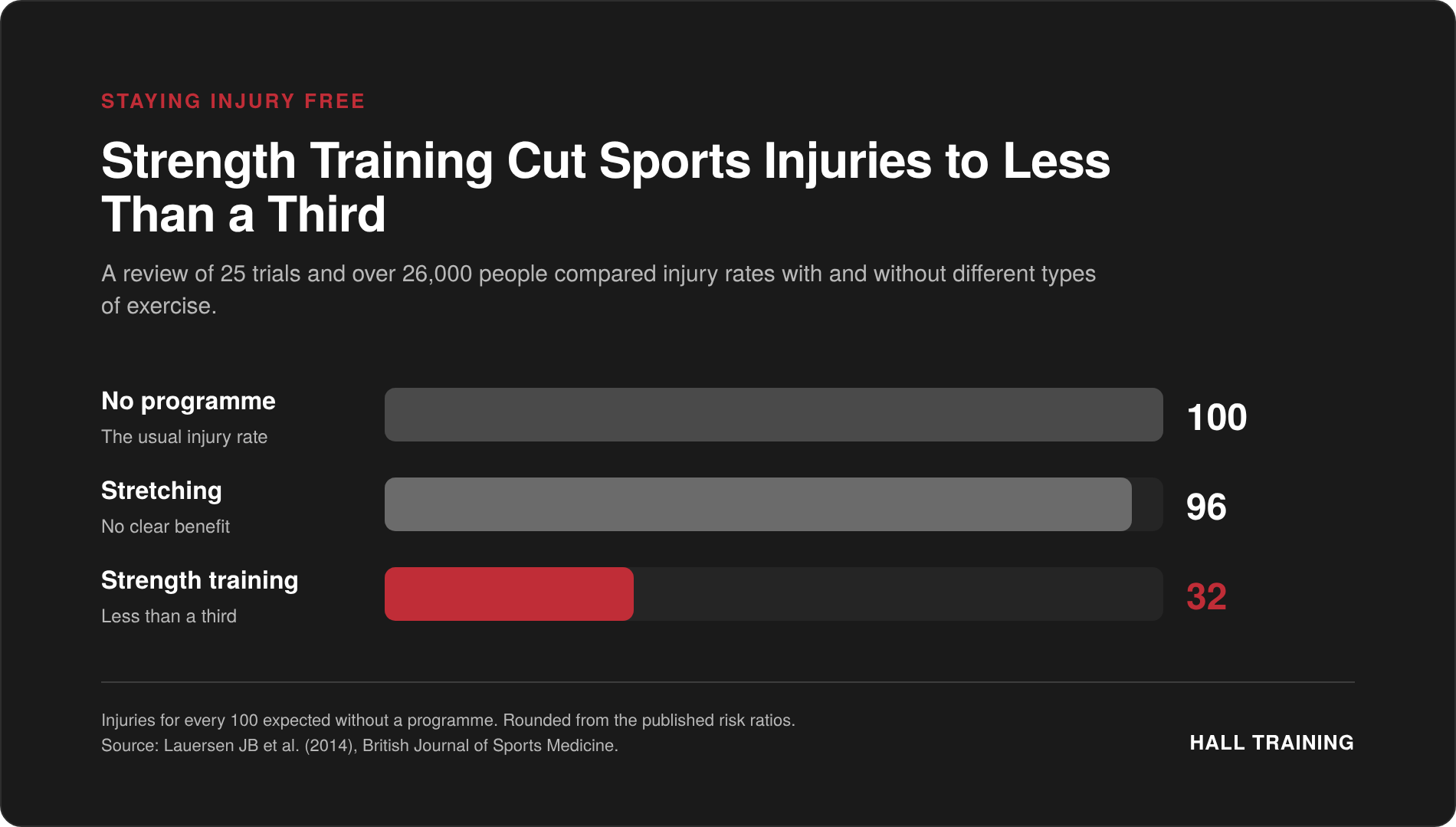
A review of 25 trials involving over 26,000 people found that strength training reduced sports injuries to less than a third. Stretching, on the other hand, showed no clear benefit for preventing injuries.
To stay on the right side of that statistic:
Some stiffness after your first few sessions is normal and isn’t a sign that you trained well or badly, as we explain in our post on muscle soreness. Sharp pain or pain that gets worse during an exercise is different, so stop and get it checked.
Less than many men fear. NI Direct, the Northern Ireland government’s health service information site, explains that testosterone does fall with age, but the decline is steady, at less than 2% a year from around the age of 30 to 40, and is unlikely to cause problems in itself.
The same guidance points to poor sleep, an unhealthy diet, lack of exercise, too much alcohol and stress as common causes of the tiredness and low mood often blamed on hormones. Those are all things you can work on. If you are worried about symptoms such as low energy or low sex drive, speak to your GP.
Training gives your muscles a reason to grow, but food gives them the materials. Protein matters most, and many men over 40 eat less of it than they think, especially at breakfast and lunch. Aim to include a good source at every meal, such as eggs, Greek yoghurt, chicken, fish, lean meat or beans. Our guide to how much protein you need explains how to work out your own target.
Beyond that, keep it simple. Plenty of vegetables, fewer takeaways and a closer eye on alcohol will do more for your energy and recovery than any supplement. Sleep is the other half of recovery, so protecting seven or so hours a night makes every session count for more.
If you are returning after a long break, think of the first month as laying the groundwork rather than proving a point.
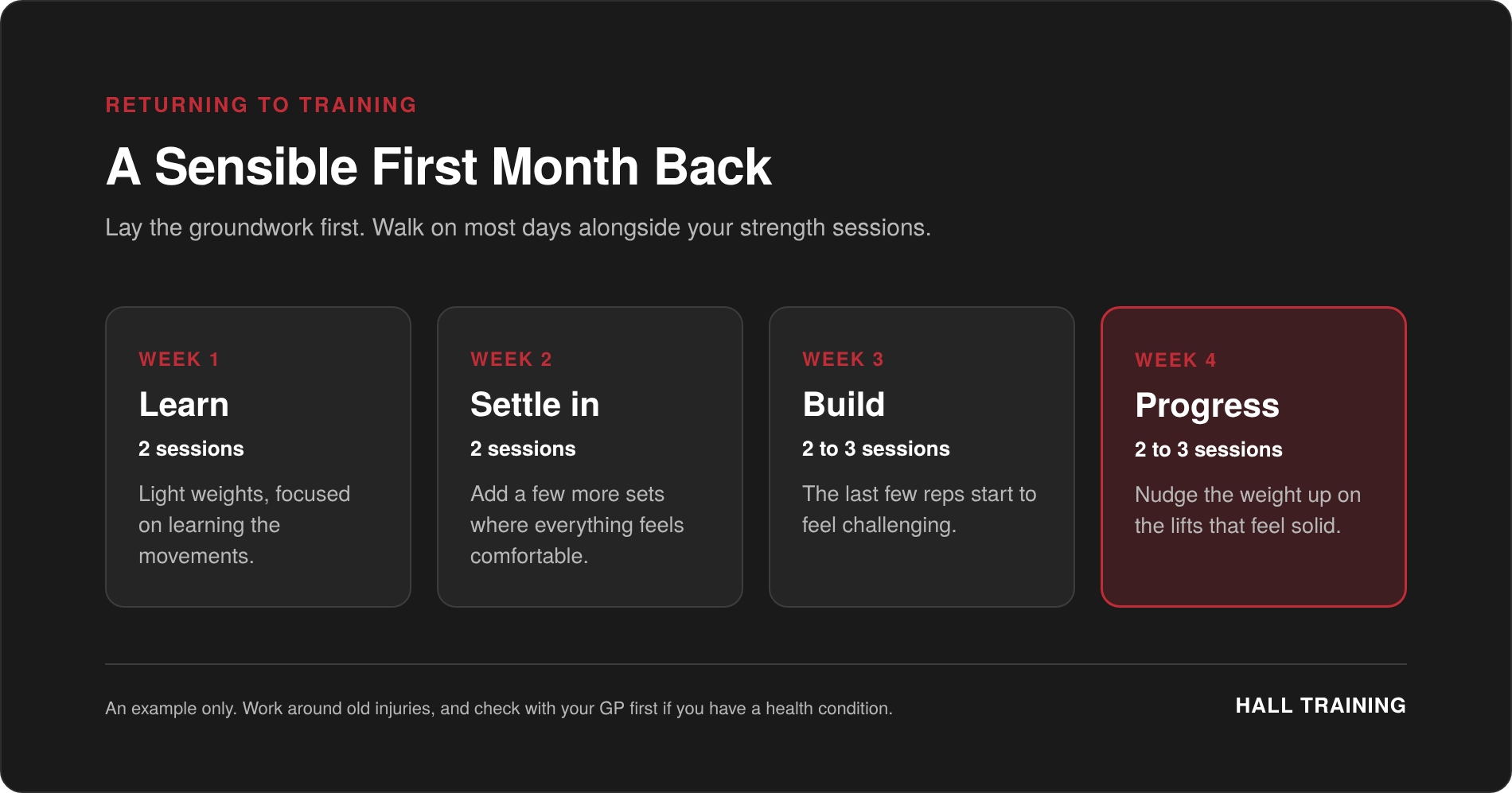
Walk most days alongside this. By the end of the month, most men notice they are sleeping better, feeling less stiff and lifting more than when they started.
A softer middle is one of the most common reasons men in their forties get in touch with us. Our post on the dad bod and how to avoid it looks at why it happens. The short version is that strength training, enough protein and a bit more daily movement go a long way.
With Movember putting men’s health in the spotlight this month, there is no better time to make a start.
Our members range in age from 40 to 78, with an even split of men and women, so training men over 40 is a big part of what we do. At our Kidlington and Deddington studios, you train in small groups of no more than six, each following your own programme. Your coach checks your technique, works around old injuries and decides when it is time to add weight, so you can get stronger without the guesswork.
If you would like a plan built around your body and your week, book a call with our team and we will talk through where you are now and how to get started safely.

Chris Hall
Personal Trainer and Founder of Hall Personal Training
you may also enjoy...
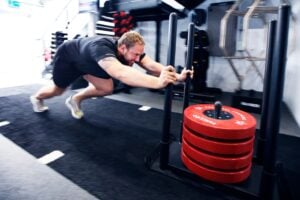
Body Recomposition: Can You Lose Fat and Build Muscle at the Same Time?
Can you lose fat and build muscle at the same time? Yes. Our coaches explain body recomposition, who it suits and how to track progress beyond the scales.

How Many Hours Per Week Should You Exercise? The Science-Backed Answer
We break down exactly how to split your time between strength and cardio for maximum health, longevity, and results.

How Many Steps Should I Actually Walk a Day?

The Post-Plunge Protocol: Why Temperature Is the Missing Key to Red Light Therapy Success
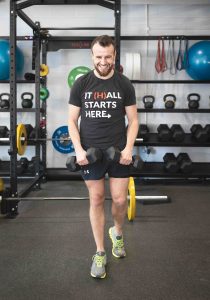
How Much Is Personal Training at Hall Training? The Complete Cost & Value Guide
why we’re comfortable being the premium choice for personal training in Oxfordshire
Clear answers
Better training
No. Muscle responds to strength training at any age. Start at a sensible level, build up gradually and get your technique checked early on.
Both. Strength training protects your muscle and joints, while cardio looks after your heart and lungs. Two or three strength sessions plus regular walking is a good balance for most men.
If you have a health condition, take regular medication or haven’t exercised for a long time, it is sensible to check with your GP before starting a new programme.
Most men feel stronger within the first few weeks. Visible changes usually take two to three months of consistent training.