Chris Hall
Personal Trainer and Founder of Hall Personal Training
Mindset Miscellaneous Wellness
June 19, 2025
I had the pleasure of speaking at the Network & Natter conference at Bloxham Mill this week, where I gave a presentation on one of the most important topics we rarely stop to think about: Time, Attention, and how we can reclaim both to live more intentionally.
You can download the full presentation here. Since the talk, the feedback has been incredible. I’ve been genuinely surprised by just how much it resonated with people.
So, I thought I’d pull together the key points and turn them into an easy-to-digest and actionable blog post. If you couldn’t attend – or you just want to refresh the message – I hope this gives you something to reflect on and put into practice
In today’s world, we idolise those who work 60+ hour weeks, live in giant homes, and drive around in £100,000 sportscars. It’s easy to assume that if we simnply work harder and hustle longer, we’ll reach that same level of success – and happiness will follow.
Our education system reinforces this. From a young age, we’re told: work hard, get good grades, earn more money, and everything else will take care of itself.
But there’s one problem: it isn’t true!
Studies suggest that once your basic needs are met – food, shelter, security – additional income has minimal impact on your happiness. The “sweet spot” for life satisfaction is estimated at around £70,000 per year. Beyond that, more money tends to buy more things, not more joy.
What’s more, we’re trading something finite (our time) for something that we mistakenly treat as infinite (money). But only time can offer the most meaningful rewards: presence, relationships, growth, and purpose.
“All my possessions for one moment of time.” – Queen Elizabeth I
A stark reminder that time, not wealth, is our most precious commodity.
Over the past few decades, we’ve engineered a world that makes almost everything easier. While innovation has improved safety and efficiency, it’s also made our lives too comfortable—and that’s becoming a problem.
From lifts and escalators to Uber and food delivery apps, we’ve removed nearly all physical friction from our day-to-day routines.
The Escalator Study
A particularly telling example: in public places, studies show only around 8% of people choose stairs over escalators. That means 92% of us will actively avoid discomfort, even if it’s just walking up a flight of stairs.
It’s the same with prescription weight-loss drugs like Mounjaro, which bypass the discomfort of healthy eating and exercise. Technology has allowed us to escape the natural stressors that once kept us strong—now we’re losing resilience in the process.
We’ve built a life that protects us from the slightest inconvenience, and in doing so, we’ve created a culture of fragility.
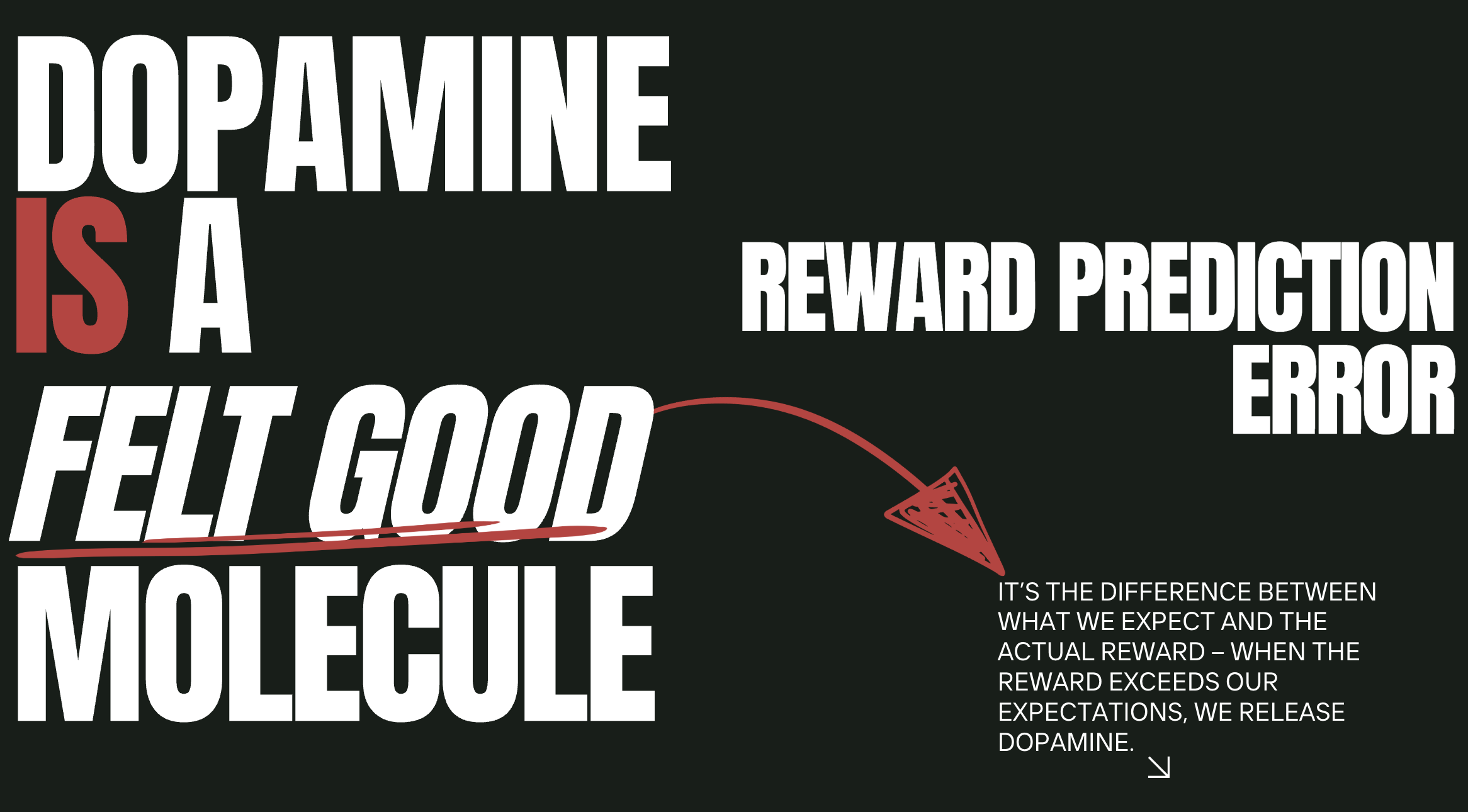
Let’s get something clear: dopamine is not the feel-good chemical. That role belongs to anandamide, a neurotransmitter responsible for true pleasure and bliss (the name itself comes from the Sanskrit word ananda, meaning joy).
The Role of Dopamine
Dopamine is the motivation molecule. It spikes when we experience something unexpectedly good—a “reward prediction error.” For example, if you didn’t expect to find a new coffee shop on your way to work, dopamine helps you remember that moment and associates it with pleasure.
But dopamine is fleeting. Despte popular belief dopamine’s role isn’t to make us feel good – it’s to teach us what felt good and drive us to seek it again.
Food, Exercise & Modern Dopamine Traps
Modern ultra-processed food is engineered to hijack our dopamine system: high fat, high sugar, salt, crunch, and reward. It overrides natural satiety signals and keeps us craving more. Exercise, on the other hand, triggers a slow release of dopamine and anandamide – especially after exertion – which is part of the famous “runner’s high.”
But when comfort creep and technology make it easier to avoid effort, we stop chasing these natural highs, and start relying on artificial ones – scrolling, snacking, bingeing. And we lose out on the real rewards.
It’s easy to blame our phones for stealing our attention. But surprisingly, only 10% of distractions come from external triggers. A full 90% are internal. They come from within: feelings of boredom, anxiety, restlessness, or dissatisfaction.
When those feelings arise, we grab our phones or check our email—not because we’re truly interested, but because we’re uncomfortable.
Our phones have become our modern “shock machines” In a 2014 study, 67% of men and 25% of women chose to administer electric shocks to themselves rather than sit quietly for 15 minutes. That’s how uncomfortable we’ve become with just being.
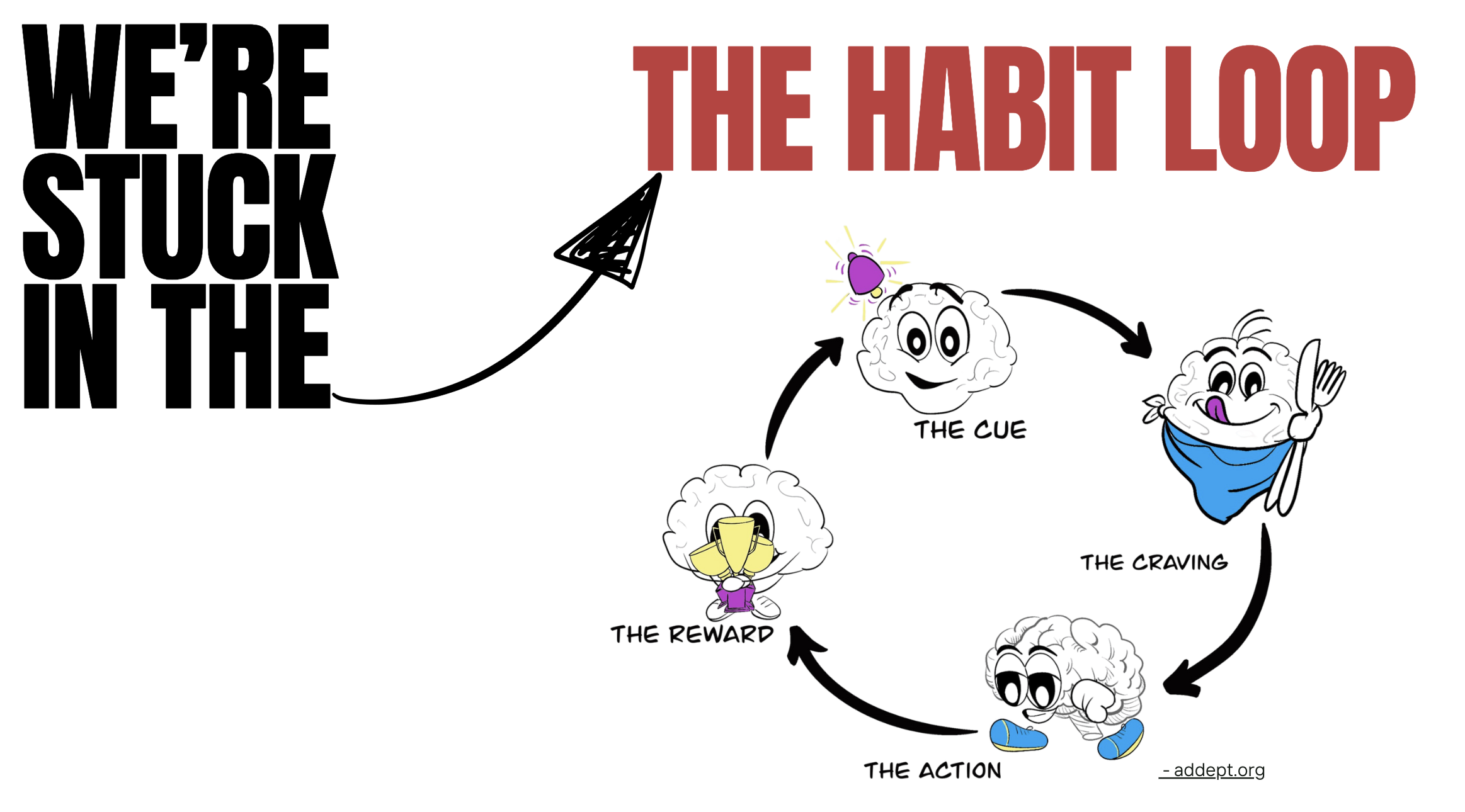
Charles Duhigg’s Habit Loop explains how behaviours form:
Cue: is a trigger, the habit e.g. the sight of your phone. It’s a prompt for your brain to move on to the next step – the craving.
Craving: is that delicious anticipation of the reward. It’s the motivational force behind each habit. We don’t crave the action; we crave the state/the reward that occurs after the action has been done. You don’t crave clicking on social media; you crave the relaxation and entertainment it offers your brain.
Action: is the behaviour itself – working out, drinking your coffee, taking a shower, scrolling on social media – the thing you need to do in order to answer that craving.
Reward: is what doing that action gives you – the dopamine hit! It’s the thing that satisfies the craving and makes you that much more likely to do it again.
This loop wires our brain for fast, repeatable behaviour. Every time you reach for your phone instead of sitting with discomfort, you reinforce the habit.
We’re not addicted to our phones. We’re addicted to relief from discomfort.
If comfort is killing our attention, motivation, and vitality—what’s the solution?
The answer lies in hormesis: the process by which small, manageable stressors make us stronger.
These “beneficial stressors” train the body and mind to tolerate discomfort and become more resilient over time.
Here’s how it works:
Cold Exposure (Ice Baths)
• Triggers norepinephrine release and dopamine, boosting mood, alertness, and mindfulness.
• Regular exposure improves circulation, reduces inflammation, increases fat metabolism, and enhances stress tolerance.
Heat Exposure (Infrared Sauna)
• Increases blood flow and heart rate similar to cardio.
• Enhances heat-shock proteins that repair cellular damage.
• Reduces cortisol and promotes parasympathetic recovery.
Red Light Therapy
• Stimulates mitochondrial function, ATP production, and cellular repair.
• Reduces oxidative stress (ROS), improves skin appreance and wound heeling, speeds recovery, and balances hormones.
• Shown to positively impact sleep and circadian rhythm.
These aren’t gimmicks. They’re modern applications of ancient wisdom, now supported by clinical research and neuroscience. And they’re at the heart of Avanto Wellness, our new wellness hub (opening August 2025), designed to help you reclaim your energy, sharpen your mind, and build real-world resilience.
You don’t need to throw away your phone or move to the mountains. But if you want to take back control of your time and attention, start with this:
Let your phone serve you
Keep it out of your workspace. Even its presence lowers memory and focus by up to 10%.
Time block your day
Plan your tasks and stick to time-limited windows of work, movement, connection, and rest.
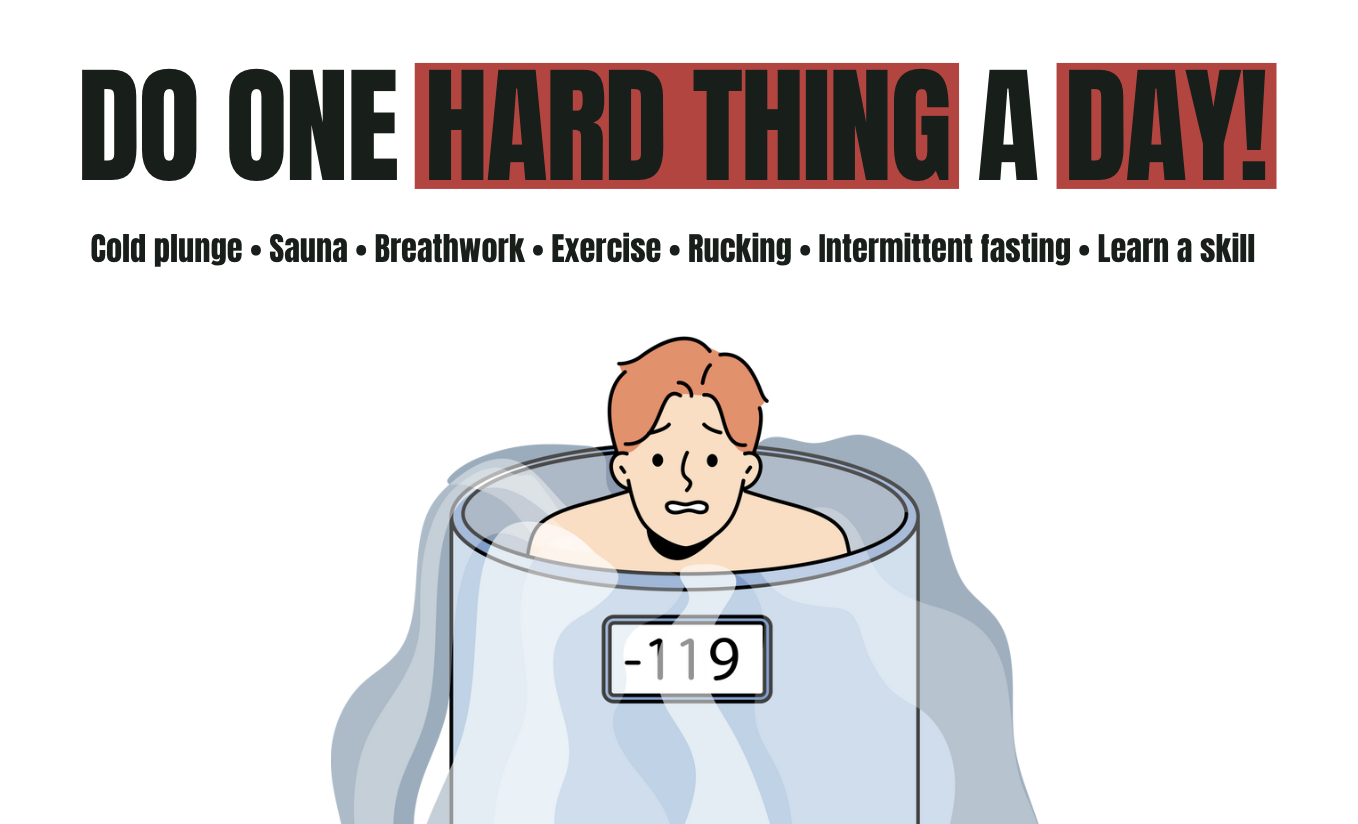
Do one hard thing a day
Train your tolerance. Become comfortable around the feeling of discomfort. It could be an ice bath, workout, sauna, or even fasting or learning a new skill.
Get comfortable with discomfort
Don’t rush to escape every moment of silence, stillness, or stress. These are opportunities to grow.
Attention is time. Time is life.
If we can’t control where our attention goes, we can’t control how our life unfolds.
At Hall Personal Training and through Avanto, we’re here to help you slow down, build resilience, and reclaim the energy and presence you were designed to live with.
Ready to take back control of your time, energy, and focus?
Whether you’re looking to improve your resilience, build healthier habits, or simply feel more present in your day-to-day life—we’re here to help.
Chris Hall
Personal Trainer and Founder of Hall Personal Training
you may also enjoy...
How Many Hours Per Week Should You Exercise? The Science-Backed Answer
We break down exactly how to split your time between strength and cardio for maximum health, longevity, and results.
Why Most People Never Start Exercising (Even When They Really Want To)

How Many Steps Should I Actually Walk a Day?
We’re Not for Everyone
Not for quick fixes, short-term chasers, or solo lifters
Why Women Should Cold Plunge – and the Benefits You’ll See
is cold exposure safe for women?