Chris Hall
Personal Trainer and Founder of Hall Personal Training
Exercise Mindset Wellness
September 8, 2016
For those of you who don’t already know, as well as being a personal trainer I am also a qualified sports therapist. A sports therapist works with musculoskeletal injuries such as muscle strains, ligament sprains and fractures, to name just a few. In my role as a sports therapist, I also analyse posture and any postural imbalances that a person may have. One of the most common types of posture issue I see is Upper Cross Syndrome (UCS).
Upper Cross Syndrome is a muscle imbalance which affects the upper body and to be more specific, the head and shoulder area. It is characterised by a rounding of the shoulders and an extended neck. If somebody is suffering from UCS, you will notice forward neck translation (forward told of the head), a hunched back, rounded shoulders, and pain and tightness in the upper back and neck.
Why does it happen?
Our bodies are fantastic at adapting to muscle imbalances, which sounds great but really it’s not. Adjusting for imbalances puts a lot more stress on other joints, which shouldn’t be loaded with the extra work. Due to the adaptation seen in UCS, muscles that tend to be relaxed when their buddies should be doing the work get loaded with extra responsibilities.
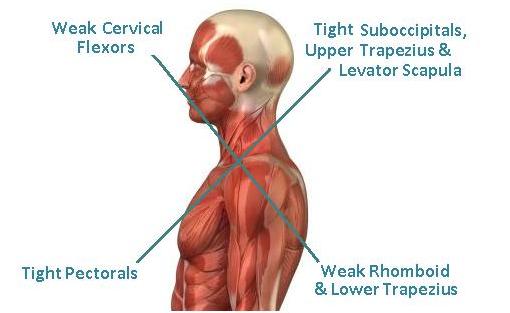
The main muscles which are affected by UCS are the pectorals, upper trapezius and levator scapulae, also weak rhomboids, lower trapezius and neck flexors. The image below describes which muscles are weak and which are tight in the condition.
 What are the causes?
A sedentary lifestyle is the main contributor to UCS. This can range from sitting on the sofa watching TV to being sat at a desk while working. Training patterns can also be a contributing factor, especially in men. When I walk around the gym, I see a lot of men in the free weights area with UCS. I ask them what they’re training and the normal response is chest. They don’t give any attention to their backs and this is why this posture is visibly noticeable. The pecs become tight and when back training is neglected, the lower traps, rhomboids and serratus anterior become weak, which causes the shoulders to round.
Using your smartphone or tablet can also cause the muscles at the back of your neck to become tight and the muscles at the front of your neck to become weak. A lot of us keep our phones at a distance, and its because of this that we over-extend our heads, causing that long neck look that you may see.
How can I fix it?
The first issue to address is strengthening the muscles that have become weak. Any exercise that strengthens the upper back will help, however I would strongly recommend the High Cable Lateral Extension and Seated Rows.
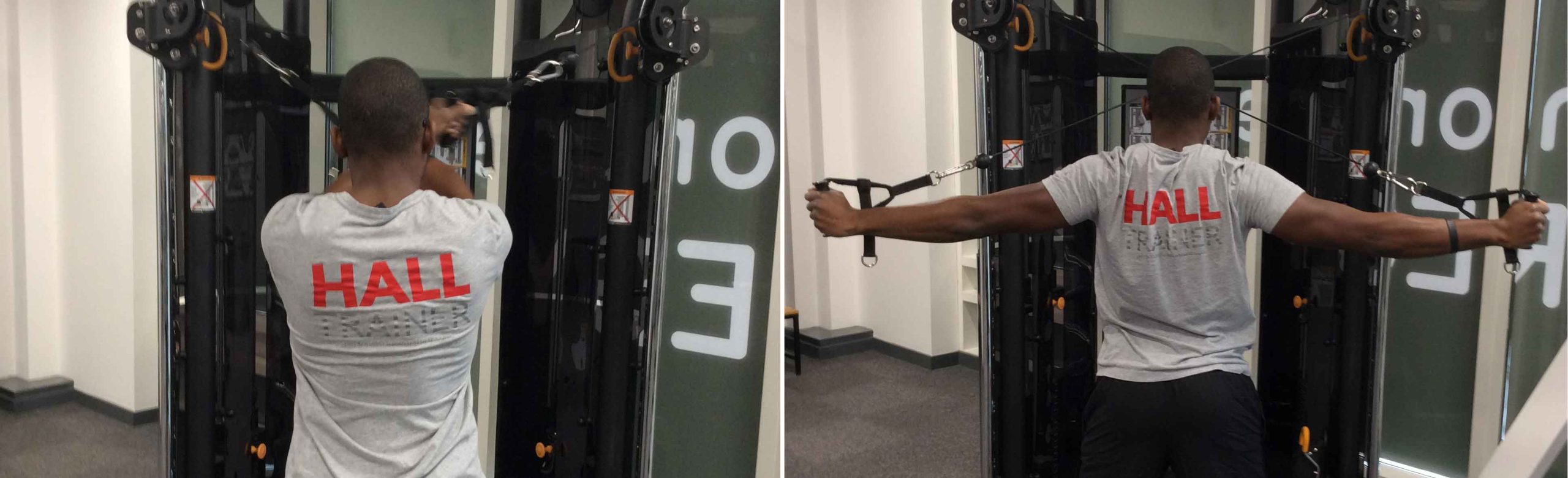
High Cable Lateral Extensions
Stand facing the cable machine and hold the left cable with the right arm and the right cable with the left arm as shown in the picture on the left. Next create the letter T with your arms as shown in the picture on the right. As you make the letter T, squeeze the shoulder blades together (a good cue for this is try to get your shoulder blades into your back pocket). Return back to the starting position. It’s best to work with light weights focusing on high repetitions. Three sets of 15 reps will do the trick.
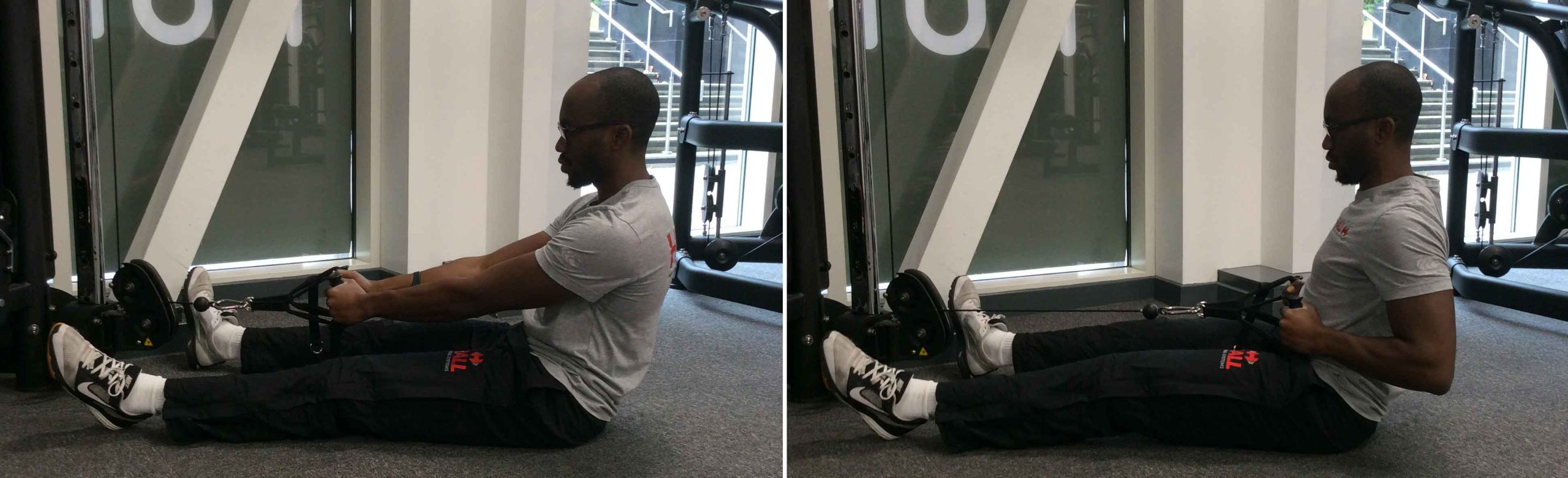
Seated Rows (Machine or Cable)
You can use either a cables machine or a fixed machine. What you want to do is pull either the cables/handles towards your chest and focus on squeezing the shoulder blades together. Again use the cue I mentioned above to help squeeze the shoulder blades together.
Upper Cross Syndrome is a relatively common condition, but by being more aware of your posture on a daily basis and working to strengthen your upper back, you can really make some ground in reducing the symptoms and improving your posture.
If you have any further questions or need more advice, drop me a line.

Chris Hall
Personal Trainer and Founder of Hall Personal Training
you may also enjoy...

How Many Hours Per Week Should You Exercise? The Science-Backed Answer
We break down exactly how to split your time between strength and cardio for maximum health, longevity, and results.
Why Most People Never Start Exercising (Even When They Really Want To)

How Many Steps Should I Actually Walk a Day?
We’re Not for Everyone
Not for quick fixes, short-term chasers, or solo lifters

Why Women Should Cold Plunge – and the Benefits You’ll See
is cold exposure safe for women?