Chris Hall
Personal Trainer and Founder of Hall Personal Training
Female Health
October 16, 2026
Weight gain during perimenopause and menopause is common, and the NHS notes it often settles around the stomach and upper body. It happens because falling oestrogen changes where your body stores fat, while muscle mass starts to drop at the same time. Strength training can’t stop those hormonal changes, but it is one of the most effective ways to protect your muscle and change your shape, especially when it is paired with regular activity and good food.
Here we explain what is actually going on, why the scales don’t tell the whole story, and what a realistic plan looks like.
There is rarely one single cause. It is usually a combination of three things happening at once.
As oestrogen levels drop, the body starts to store more fat around the abdomen rather than the hips and thighs. Harvard Health describes this shift as one of the main reasons the middle changes shape during menopause.
Muscle mass also begins to fall, which means you burn fewer calories at rest. If you keep eating and moving in exactly the same way you did ten years ago, that small drop can add up over time.
Sleep problems are listed by the NHS as a common symptom of perimenopause and menopause. Broken nights make it harder to find the energy to exercise and easier to reach for quick snacks. Add busy jobs, family and caring responsibilities, and it is easy to see why activity often slips at exactly the wrong time.
The British Menopause Society explains that as oestrogen falls, visceral fat (the deeper fat that sits around your organs) rises from around 5 to 8% of total body weight to around 10 to 15%. That is why many women notice their waistband getting tighter even when their weight hasn’t changed much.
The long-running SWAN study, which has followed women through midlife for decades, found something even more telling. Around two years before the final period, the rate of fat gain roughly doubled and lean mass started to decline. Those changes continued until around two years after the final period, then levelled off.
The surprising part is that body weight kept rising at a steady rate throughout. The extra fat and the lost muscle balanced each other out on the scales, so the shift was happening underneath without showing up as a sudden jump in weight.
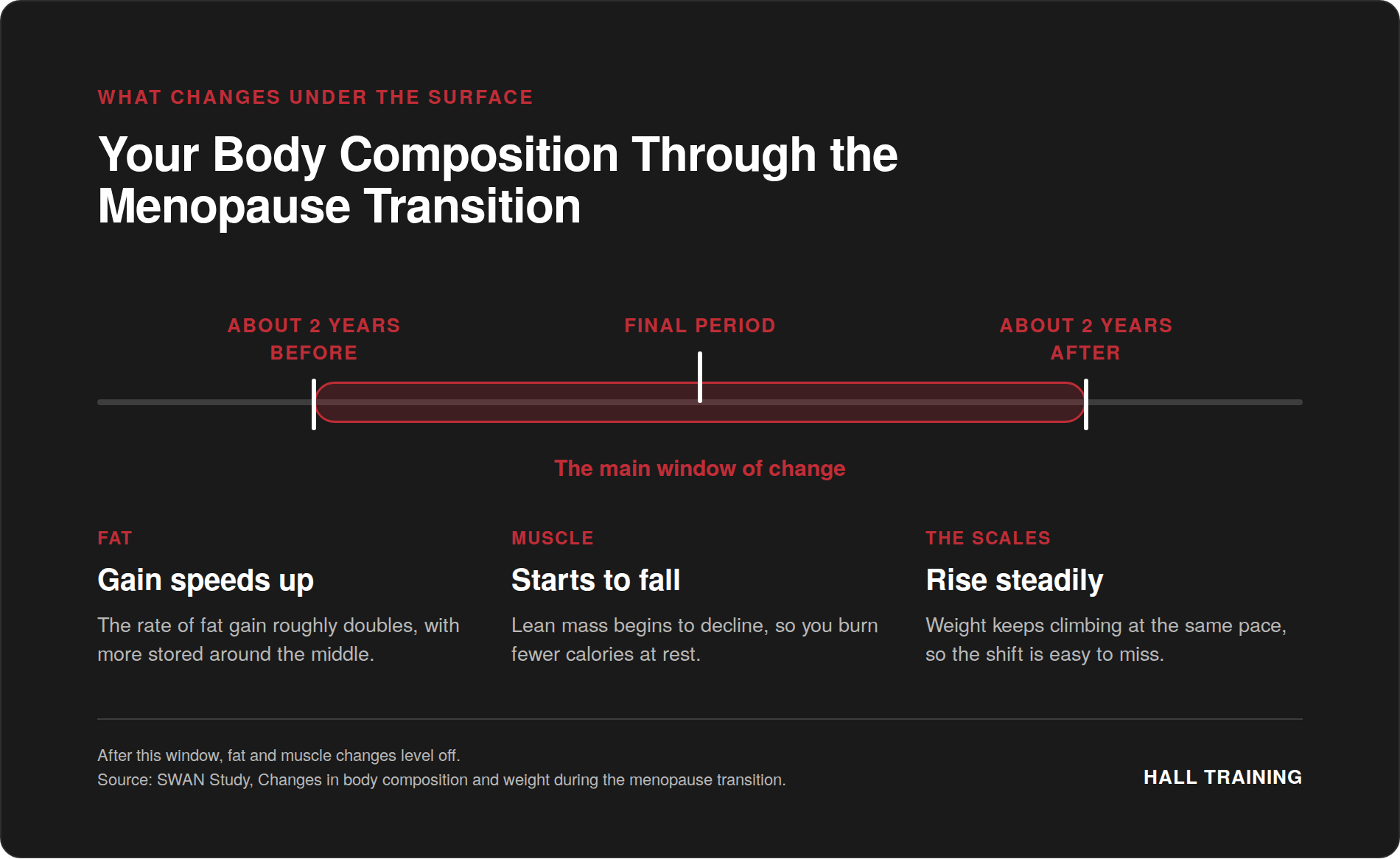
That is why we encourage women to track more than just their weight. Waist measurements, how clothes fit and the weights you lift in the gym tell you far more about what is really changing.
When the waistband gets tighter, the natural reaction is to eat a lot less. The trouble is that a very low-calorie diet tends to strip away muscle as well as fat, and muscle is exactly what you want to hold on to at this stage of life. Lose it, and your body burns even less at rest, which makes the weight easier to put back on later.
Strict diets are also hard to stick to when you are already tired, stressed or sleeping badly. Most women we work with find that small, steady changes last far longer: a bit more protein at each meal, more vegetables, fewer late-night snacks and two strength sessions a week. It is less dramatic than a crash diet, but it is the approach that still works a year later.
Yes, but it works best as part of a bigger picture, and it is worth being honest about how.
A 2023 review of 101 studies involving 5,697 postmenopausal women found that exercise reduced fat mass, body fat percentage, waist size and visceral fat. Aerobic training and combined training (cardio plus strength) had the biggest effect on fat, while resistance training was the most effective for building muscle. The authors concluded that combining the two is a sensible way to improve body composition after menopause.
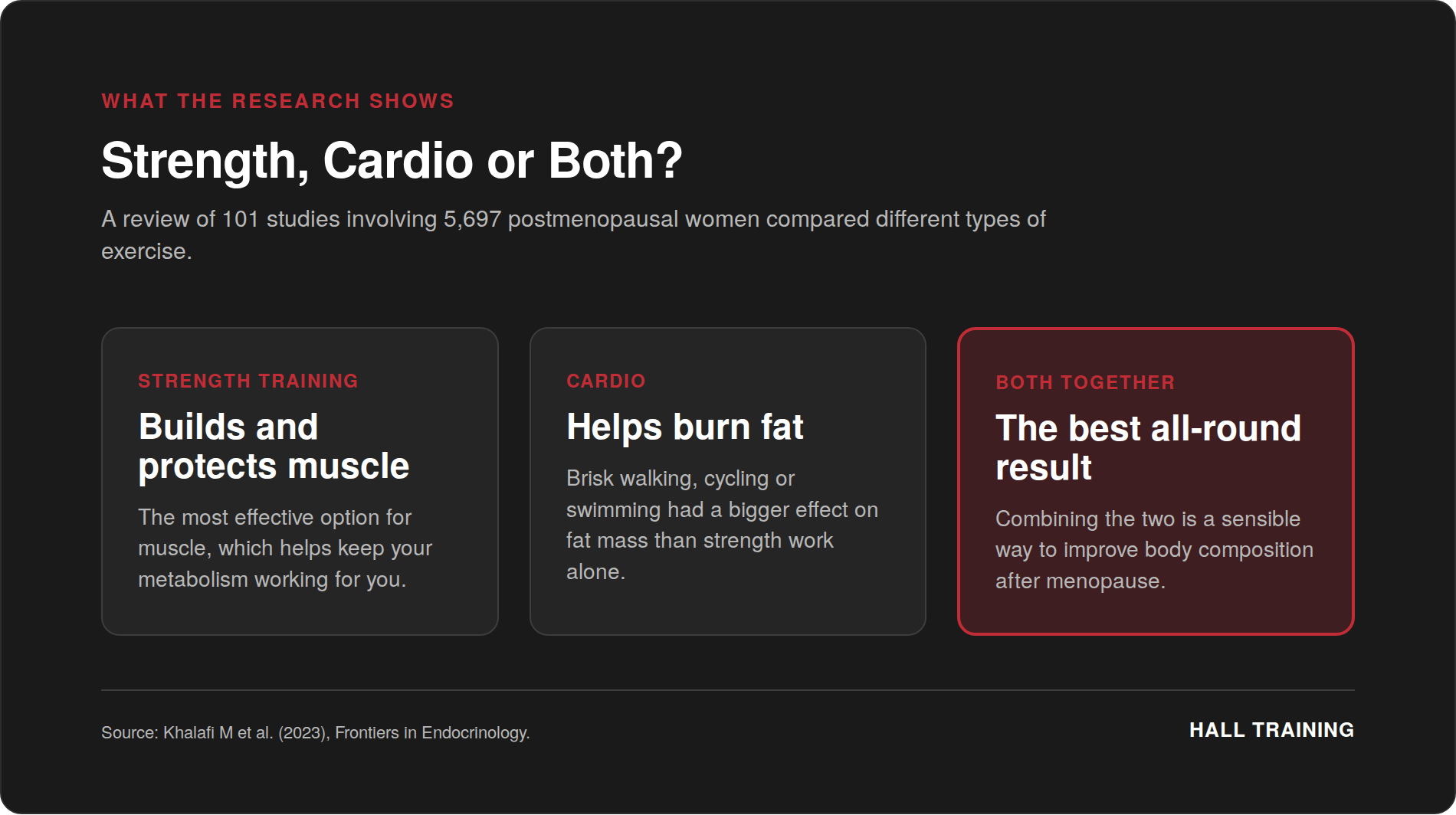
In other words, strength training is the part that protects your muscle and keeps your metabolism working for you, while cardio and everyday movement help with fat loss. The British Menopause Society describes regular strength training as the most efficient way to increase muscle mass and metabolic rate.
One thing strength training can’t do is burn fat from one specific area. Endless sit-ups won’t shift belly fat on their own. Building muscle across your whole body, moving more and eating well is what changes your shape over time.
The NHS physical activity guidelines for adults are a good starting point: at least 150 minutes of moderate activity a week, plus strengthening activities that work all the major muscle groups on at least two days.
That can sound like a lot, but it breaks down into something very manageable. Two strength sessions and a brisk 30-minute walk on most other days covers it.
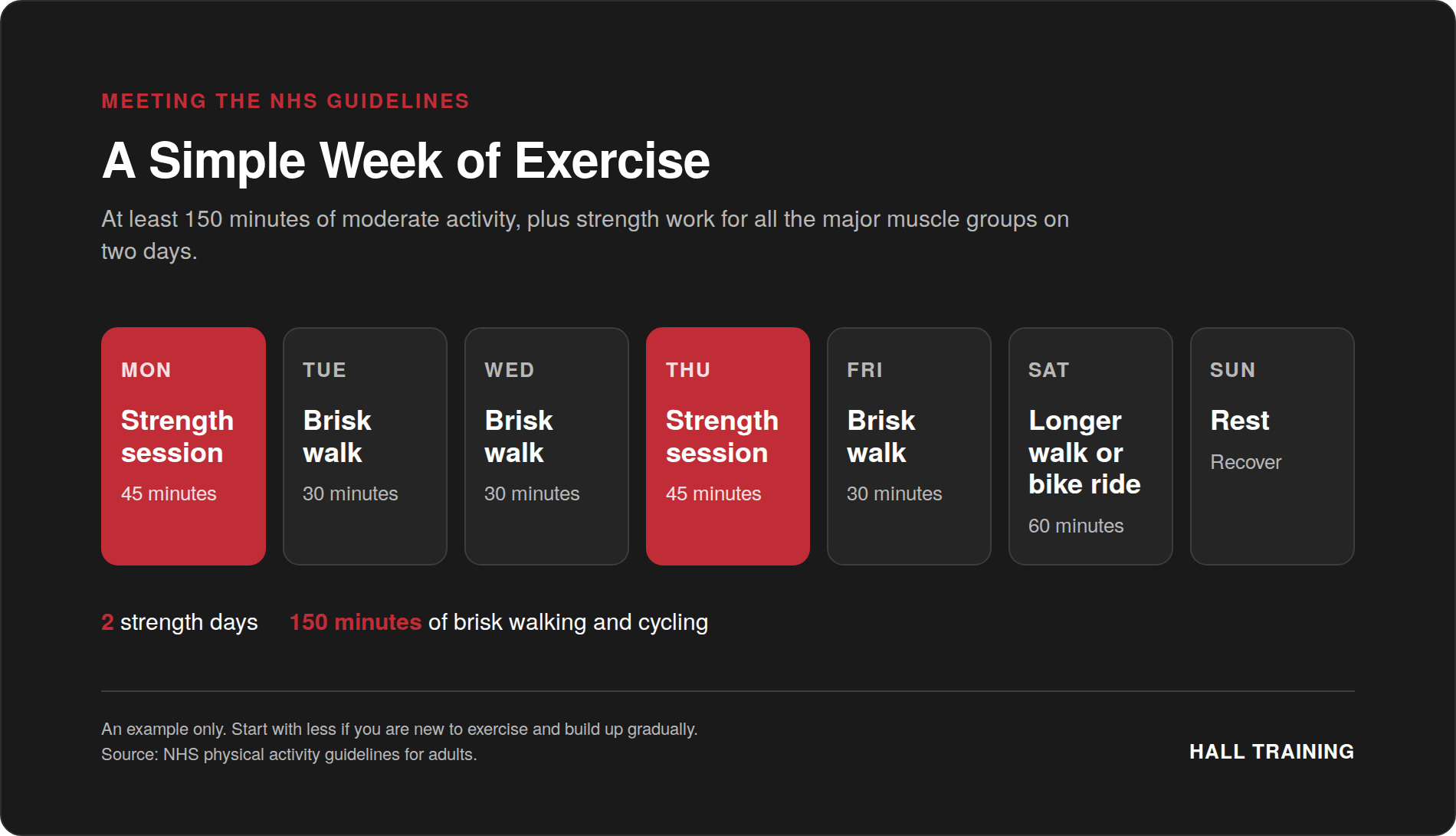
If you are starting from scratch, start with less and build up. Consistency over months matters far more than any single hard week.
Protein helps you hold on to muscle and keeps you fuller for longer. The British Menopause Society suggests protein should make up around a quarter of each meal. Eggs, Greek yoghurt, fish, chicken, beans and tofu are all easy ways to get there. Our guide to how much protein you need goes into more detail, and our post on the top three vitamins for menopause covers the nutrients that matter most at this stage.
Sleep and weight are closely linked. When you are tired, everything feels harder, from getting to a session to choosing what to eat. A regular bedtime, a cooler bedroom and cutting back on late caffeine and alcohol can all help. If night sweats or hot flushes are regularly waking you up, it is worth speaking to your GP about your options.
You don’t need hours in the gym or complicated routines. A good programme for perimenopause and menopause usually includes:
There is a bonus too. Strength training also supports bone health, which matters more after menopause. We cover this in more depth in 5 benefits of strength training every menopausal woman should know.
If you are new to lifting, the first few weeks are about learning the movements and finding the right starting weights. Expect to feel a little stiff after your first sessions. That fades quickly as your body gets used to the work. Most people notice everyday jobs, like carrying the shopping or getting up from the floor, feel easier well before they see changes in the mirror.
It also helps to track a few things beyond the scales. A waist measurement once a month, the weights you lift and how your clothes fit will show you progress the scales might hide.
Many of our members are women in their forties, fifties and beyond, so we understand how much perimenopause and menopause can change the way your body feels and responds. At our Deddington and Kidlington studios, you train in small groups of no more than six people, each following your own programme. Your coach plans every session, adapts it around how you are feeling that week and helps you build strength safely and steadily.
You will also find more support in our Oxfordshire guide to menopause. If you would like a plan that works with your body rather than against it, book a call with our team and we will talk through where you are now and what would help most.

Chris Hall
Personal Trainer and Founder of Hall Personal Training
you may also enjoy...

Why Women Should Cold Plunge – and the Benefits You’ll See
is cold exposure safe for women?

Vitamin D in Winter: Why Your Levels Drop and How to Optimise
beyond just sun and supplements
Why Your Weight Loss Drug (Mounjaro) Is Aging You by 20 Years
and knocking years off your life
The Top 3 Vitamins for Menopause: What Science Really Says
5 Game-Changing Benefits of Strength Training Every Menopausal Woman Needs to Know
Clear answers
Better training
Not necessarily. The SWAN study found that the faster fat gain and muscle loss level off around two years after the final period. Strength training, regular activity and good nutrition can still change your body composition at any stage.
Yes. Research shows that exercise reduces waist size and visceral fat in postmenopausal women, especially when cardio and strength training are combined and supported by good nutrition.
No. Muscle responds to strength training at any age. Start at a level that feels manageable and build up gradually, ideally with a coach to guide your technique.
According to the NHS, there is little evidence that most types of HRT make you put on weight. Many women gain some weight during menopause whether they take HRT or not. If you have questions about HRT, your GP is the right person to talk to.
If your weight is changing quickly, or you have other symptoms that worry you, speak to your GP. They can also talk you through treatment options for menopause symptoms such as poor sleep or hot flushes.