Orthorexia Nervosa: Has your healthy eating gone too far?
Our social media feeds are full of pictures of healthy food and six packs, encouraging us to live a more active and healthier lifestyle. At first glance this sounds great – being healthy is good. But it is possible to be too healthy. There is a worrying trend emerging, with individuals becoming so obsessed with eating healthily that they are damaging their mental health. The line between healthy eating and an eating disorder becomes blurred.
Orthorexia Nervosa involves an intense compulsion to stick to a concrete set of rules for food consumption, often eating healthy, ‘clean’ foods, with complete avoidance of foods perceived to be unhealthy. Although it is not clinically defined as an eating disorder, it is a growing phenomenon, with increasing numbers of people showing orthorexic tendencies. It is more common among those who regularly exercise.
This obsession with healthy foods could come from a number of sources. Environment is massively important – if those around you are obsessive about the quality and type of food they eat, you are more likely to pick up similar habits. Social trends are becoming more of a problem, particularly with the prevalence of food and fitness bloggers on social media setting excessively high standards. The number of wheat, gluten and lactose free foods available, and the publicity surrounding certain diets is another causal factor. People may hear from a nutritionist or a celebrity that wheat is bad, and then cut it out of their diet for example. Although orthorexics seem to be driven by healthy motivations, underlying reasons such as a desire for control, using their eating habits to create an identity or social standing, and poor body image are more likely to be the driving factor. Orthorexia is also associated with OCD.

In the drive for health, some orthorexics can end up limiting their diet in such a way that it becomes nutritionally unsafe. Cutting out meat and pulses can cause a protein deficiency, while eliminating dairy limits the amount of calcium available to the body. Avoiding gluten often means avoiding wheat-based products, which have a high fibre content, often leads to a low fibre intake, and a lack of B vitamins.
Although these nutritional deficits can be dangerous, it is the mental effects of orthorexia that are often the most debilitating. Thoughts of food type, quality and timings become all consuming, as you would expect with a more common eating disorder, such as anorexia or bulimia. Orthorexia can also wreak havoc on the digestive system, as sufferers eat according to strict ‘healthy’ rules, ignoring signs that they are hungry or full so they eat what they perceive to be the correct diet.
Due to our society’s preoccupation with fitness and a slender physique, orthorexic behaviours can appear socially acceptable when they are really a symptom of an underlying problem.
Signs of Orthorexia
The signs of orthorexia include: avoiding social activity that involves food. Sufferers can find themselves unable to take part in everyday life, due to preoccupation with food. They become increasingly isolated and intolerant of other people’s views about diet and nutrition. Other symptoms include paying increased and unnecessary attention to food source and macronutrient content, and excluding entire food groups from their diet.
Steps to Recovery
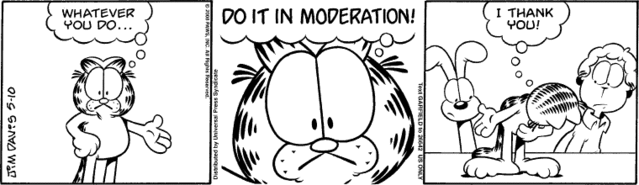
The first step to recovery is noticing and acknowledging that there is a problem. It’s also essential that there is a desire for change. Learning to listen to your body and eat more flexibly is an important first step, as well as gradually reintroducing eliminated or ‘unsafe’ food groups back into the diet. No single food will make you unhealthy or fat as long as it is eaten in moderation, so there’s no reason to cut out an entire food group. Recovering from orthorexia is about learning to eat a diet that is physically healthy, but more importantly, mentally healthy.
For more information, or to seek advice, visit:
http://www.b-eat.co.uk/
http://www.hypnotherapy-directory.org.uk/articles/eatingdisorders.html
About Chris Hall
As the founder of Hall Training Systems, it is my mission to provide you with the very best personal training experience. I set up Hall Training Systems as Oxford’s leading personal training service in nutrition, performance and weight loss, ensuring I can deliver the very best in training techniques.
You can find me on Facebook, Google+ or why not even give us a Tweet @Hall_Training
With the holidays upon us, family commitments and gatherings can make getting to the gym near impossible. Many of my clients tend to travel to see family and friends both abroad and all over the UK. So, to help them stay in shape and give them a level of sanity I sometimes prescribe them the hotel room workout!
A workout that’s designed to be done within 15-20 minutes with no kit and in the smallest of spaces. In this short video I demonstrate an 8 exercise workout that can be done, literally anywhere.
The Circuit
A1 – Split Squat – 2-3x 15 reps
rest 10-30 secs
A2 – Push Ups – 2-3x 15 reps
rest 10-30 secs
A3 – Burpees – 2-3x 20-30 secs
rest 10-30 secs
A4 – Prisoner Squats – 2-3x 20-30 reps
rest 10-30 secs
A5 – Jumping Jacks – 2-3x 30 secs
rest 10-30 secs
A6 – Spot Running w/high knees – 2-3x 30 secs
rest 10-30 secs
A7 – Mountain Climbers – 2-3x 20-30 secs
rest 10-30 secs
A8 – Plank w/alt. leg swipes – 2-3x 10-12 reps per/side
rest 60-90 secs. Repeat 2-3 times
Range of motion: Full vs. Partial. Which is better when it comes to muscle size and strength?
Admit it guys and girls, we’re all guilty of it. There has been a time in most of our lifting careers when ego has got the better of us and we’ve favoured the weight over the technique. I’m outright here to admit I was one for sure. At the start of my lifting career, I only lifted using short/partial range of motion (ROM). I remember my first ever weight training book by Pete Sisco & John Little, called Power Factor Training – A scientific approach to building lean muscle mass. It was a book and a system developed around the method of using partial reps to train a muscle in a shortened state for maximum hypertrophy. I saw the word ‘scientific’ and so thought it must be gospel! Unbeknown to me about the real science behind proper lifting techniques and muscle hypertrophy.
However, since then 11 years have passed and I’ve grown wiser of the lifting community. Developing a greater understanding, knowledge and application of examining the bro-science against the actual science. So, when I was clearing up tonight I stumbled across my old Power Factor Training book which ignited an unanswered question. Does working a muscle in its shortened range of motion (aka partial reps) have any greater benefit on a muscles size & strength over a full range of motion?
Well, let’s take a look at the evidence for a moment…
Due to the greater difficulty in measuring muscular cross-sectional area (size/strength at its largest point) over a long-term period, there are very few studies comparing the results between short ROM over full ROM however, here are the ones I dug out.
The first long-term study (12-weeks) compared the effects of parallel and quarter squats over full range back squats. Their findings showed that full range back squats produced higher increases in quadriceps muscle cross-sectional area than a quarter squat. (Raastad, 2008)
In 2012, a 10-week study [1] evaluated strength and muscle gain differences between full ROM and partial ROM when performing preacher curls (see figure 3). Researchers asked the 40 untrained males to perform preacher curls twice per week for 10-weeks. One group lifted the weight from 0 to 130 degrees (full ROM) whilst the second groups lifted the weight from 50 to 100 degrees (partial ROM). At the end of the 10-weeks the researchers discovered the following results:
• The full ROM group increased bicep thickness by 9.52%.
• The partial ROM group increased bicep thickness by 7.37%.
However, the difference between hypertrophy of the two groups was not significant.
In 2013 Bloomquist and his researchers compared the effects of partial ROM (0-60 degrees) and full ROM (0-120 degrees) on thigh muscle cross-sectional area when performing a back squat.
Both groups were asked to do 3-4 sets of 3-10 reps both to failure and then not to failure. Their results found the group who performed full ROM increased total quad muscle cross-sectional area across the entire sites of the quadriceps, whereas the partial ROM group only saw increases across two heads of the quadriceps and at the most proximal sites – the site nearest the hip. Additionally the full ROM groups also noticed a greater muscle cross-sectional area at the back of the thigh (hamstrings) than the group who performed partial reps [2].
Lastly, another study done in 2012 by McMahon looked at partial ROM vs. full ROM on three knee extension exercises using 80% of 1RM on the squat, leg press and leg extension. The researchers found that the vastus lateralis muscle cross-sectional area increased significantly in both groups. They also noted the full ROM group displayed greater relative gains in the vastus lateralis muscle cross-sectional area compared to the partial ROM group. However, the difference between groups was only significant at the end of the 8-weeks, with the full ROM group displaying a 15% increase compared to the partial ROM group, showing only a 10% increase in the muscles size and strength [3].
While the research is still limited in this area it does seem that working a muscle across its full ROM is more beneficial to its size and strength than working it across a partial range. Nevertheless, it’s not to say one should forget partial work all together; after all it can be a great tool in overcoming ‘sticking points’ in a lift. However, I do believe ROM should be dictated by exercise type, individual lever length and training outcomes. It should not be dictated by weight, a hungry ego or some pseudoscience you’ve read in a fancy book!
Sources:
[1] Pinto RS, Gomes N, Radaelli R, Botton CE, Brown LE, Bottaro M. Effect of range of motion on muscle strength and thickness. J Strength Cond Res. 2012;26(8):2140-5. doi: 10.1519/JSC.0b013e31823a3b15.
[2] Bloomquist K, Langberg H, Karlsen S, Madsgaard S, Boesen M, Raastad T. Effect of range of motion in heavy load squatting on muscle and tendon adaptations. Eur J Appl Physiol. 2013;113(8):2133-42. doi: 10.1007/s00421-013-2642-7.
[3] McMahon GE, Morse CI, Burden A, Winwood K, Onambélé GL. Impact of range of motion during ecologically valid resistance training protocols on muscle size, subcutaneous fat, and strength. J Strength Cond Res. 2014;28(1):245-55. doi: 10.1519/JSC.0b013e318297143a.
Revolutionising the New Year’s Resolution
For most people, this week is first week back after the Christmas break, and the time when most people will start taking their new year’s resolutions seriously. Every year when I ask people what their resolutions are, they’re usually rather similar: to give up chocolate, cut out mid-week drinking, cut out all carbohydrates, give up smoking, or to spend less time glued to their laptop after working hours. The thing all of these have in common is that they are giving something up, or cutting something out. I personally don’t think this is a constructive way to make a change, as one failure or slip up can kill the whole resolution, and means everything goes back to the way it was, until the following year, where it all starts again. Instead, I encourage my clients to take things up. This doesn’t necessarily have to be in the gym – it could be starting a new hobby, or making that career progression you’ve been thinking of, anything really that’s going to make a positive change to your life.
In this article I’ve listed my top recommendations on how to transform diet, training and wellbeing in the new year by adding things in, not giving them up.
Diet & Nutrition
When it comes to diet people often fall down at two hurdles: hydration and protein consumption. People underestimate the importance of proper hydration, and often struggle to take in enough water throughout the day. Water can have a great impact on weight loss.In one study, drinking 500ml of water prior to meals resulted in a greater weight loss (2kgs across 12 weeks) due to the reduced food intake in the subsequent meal [1]. Water has been shown to ‘trick’ our brains into feeling full. The signals for hunger are extremely similar to the signals for thirst, so they become intertwined and can be easily confused [2]. As well as weight loss, dehydration can lead to a drop in exercise performance when an individual is dehydrated by as little as 2%. Losses in excess of 5% of body weight can decrease the capacity for work by about 30% (Armstrong et al. 1985). Get adequately hydrated by hitting your daily hydration target. A good place to start would be 0.044 litres x body weight in Kilos. So, if you weigh 70kg, you’d need to drink 3.08 litres of water per day for optimum health, and ideally this should come from water alone. A great app I like to recommend to clients is Waterlogged. It allows you to set up your daily target and gives your reminders to drink, as believe it or not, it’s very easy to forget!
My next dietary tip would be to eat more protein. Protein should be the first of the three major macronutrients to be addressed, but like water it is often neglected. Having an adequate protein intake is important for non-training individuals because protein is the building block for our cells and tissues, and it will also help to maintain your current muscle mass. If you’re inactive maintenance of skeletal muscle mass is that much harder. For individuals who exercise and are trying to increase muscle size and/or decrease body fat protein is a necessity. A high protein diet has been shown to increase levels of satiety meaning you feel fuller for longer, with several studies showing the advantages of a high protein breakfast over a carbohydrate one for better calorie control and consumption [3][4]. Higher protein diets have also been shown to favour increased muscle development and strength gains [5]. For example, a study of college football players consuming 2g/kg/day of protein over 12 weeks resulted in 14.3 kg greater increase in maximum squat strength over control groups [6]. When it comes to the consumption of protein women should aim to consume 1.6-2g of protein per kilogram per day, while men should aim to consume 1.8-2.3g [7][8]. This is of course dependent on training goals, individual circumstances and outcomes.
Exercise & Training
Funnily enough, when it comes to training people make the opposite mistake, and try to take on too much. Don’t fall victim to the January rush, and promise yourself that you’ll go from no sessions in the gym to four or five a week. Or if you only go once or twice don’t suddenly increase it to five or six times per week! While the motivation is great, such a drastic change is unlikely to stick in the long run, as you haven’t allowed time for training to become a gradually bigger part of your lifestyle, or have an adaptive response on the body. If you don’t visit the gym at the moment, set a reasonable goal and aim to go for two or three sessions a week. If you can stick to this for a few months, think about increasing it. Remember, when it comes to training less is more.
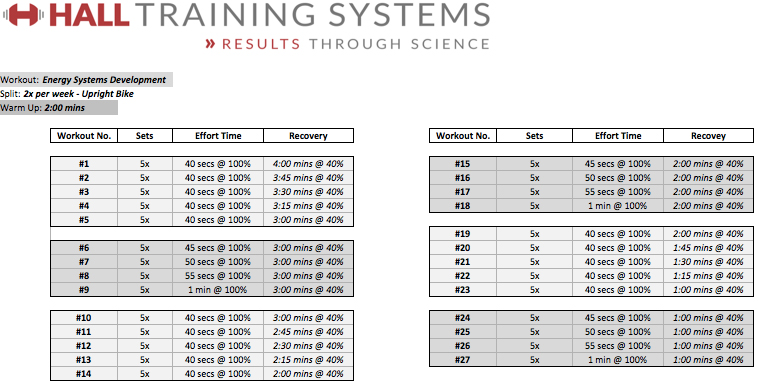
If you already train, think about what you may be missing. Many people who strength train neglect stretching and mobility work. Rather than adding in more strength based sessions, add in some time to spend on flexibility work. Other strength based trainees leave cardio work out, but HIIT has been shown to compliment any muscle building work, and can help increase quad size when twinned with resistance training. Try to make time for a decent HIIT session per week. This will also aid any fat loss attempts. An example of this may be 5 sets of 40 secs full out effort with 2 minutes of rest.
 Those who just do steady-state cardio should also look at taking up strength training. Even those whose main focus is cardio can benefit from resistance training, as a well structured programme can increase cardiovascular performance, strengthen up lagging body parts, and prevent injury.
Rather than slogging away with your old programme adopt a new training principle such as HIIT, increase core work, take up a training method such as 5×5 Method, German Volume Training, or Wave Loading, or it can be as simple as adding tempo into your lifts. All of these techniques will help to increase strength and encourage fat loss. For more training methods and tips on fat loss check out my seminar on Training Principles for Fat Loss!

Lifestyle
Although diet and exercise are important, there are changes made outside the gym that have a huge impact on performance. Sleep is a key factor. A new resolution could be to make more time for sleep, improve the quality of sleep or create a better nighttime routine. Stress also affects training negatively – adopting better time management and sticking to a solid structure can help combat stress, as well as giving you time to achieve goals outside the gym.
Whatever you have decided to do this new year, make sure it becomes a habit, and make sure you set yourself measurable and achievable goals. Despite the common myth that it takes 21 days to make or break a habit, according to Lally and her team it actually takes anywhere from 18 to 254 days to form a habit with 66 days being the average [9]. Sticking to something for three months allows it to become a part of your daily routine, with one study showing positive habit-based results for weight loss at around 3 months [10]. Using a website such as habitforge.com can be a really helpful way of tracking your progress and taking a step towards a healthier new year. Good luck and remember; a resolution isn’t just for the new year but for the whole year. Results take time so give it the time it deserves and don’t give up!
Want to make a start on your resolution?
Then why not let us help you and book in for a complimentary consultation. To book, simply click on [Book Now] enter your details and leave the rest up to us! We’ll then guide you on the best approach at achieving your new year goals. Alternately, check out our online personal training packages and start seeing results through the use of our mobile app and remote training set up.
Sources
[1] Dennis EA, Dengo AL, Comber DL, et al. Water consumption increases weight loss during a hypocaloric diet intervention in middle-aged and older adults. Obesity (Silver Spring). 2010;18(2):300-7. doi: 10.1038/oby.2009.235.
[2] Leibowitz SF. Hypothalamic alpha- and beta-adrenergic systems regulate both thirst and hunger in the rat. Proc Natl Acad Sci U S A. 1971;68(2):332-4.
[3] Vander Wal JS, Marth JM, Khosla P, Jen KL, Dhurandhar NV. Short-term effect of eggs on satiety in overweight and obese subjects. J Am Coll Nutr. 2005;24(6):510-5.
[4] Leidy HJ, Ortinau LC, Douglas SM, Hoertel HA. Beneficial effects of a higher-protein breakfast on the appetitive, hormonal, and neural signals controlling energy intake regulation in overweight/obese, “breakfast-skipping,” late-adolescent girls. Am J Clin Nutr. 2013;97(4):677-88. doi: 10.3945/ajcn.112.053116.
[5] Churchward-Venne, T., et al. Role of Protein and Amino Acids in Promoting Lean Mass Accretion with Resistance Exercise and Attenuating Lean Mass Loss During Energy Deficit in Humans. Amino Acids. 2013. 45, 231-240.
[6] Bosse, J., Dixon, B. Dietary Protein To Maximize Resistance Training: A Review and Examination of Protein Spread and Change Theories. Journal of the International Society of Sports Nutrition. 2012. Published Ahead of Print.
[7] Helms, E.R., et al., A Systematic Review of Dietary Protein During Caloric Restriction in Resistance Trained Lean Athletes: A Case for Higher Intakes. International Journal of Sport Nutrition and Exercise Metabolism, 2013.
[8] Phillips, S.M. and L.J. Van Loon, Dietary protein for athletes: from requirements to optimum adaptation. J Sports Sci, 2011. 29 Suppl 1: p. S29-3.
[9] Phillippa Lally, Cornelia H. M. van Jaarsveld, Henry W. W. Potts andJane Wardle, How are habits formed: Modelling habit formation in the real world. Eu J Soc Psych. 2009. DOI: 10.1002/ejsp.674
[10] Beeken RJ, Croker H, Morris S, et al. Study protocol for the 10 Top Tips (10TT) trial: randomised controlled trial of habit-based advice for weight control in general practice. BMC Public Health. 2012;12:667. doi: 10.1186/1471-2458-12-667.
About Chris Hall
As the founder of Hall Training Systems, it is my mission to provide you with the very best personal training experience. I set up Hall Training Systems as Oxford’s leading personal training service in nutrition, performance and weight loss, ensuring I can deliver the very best in training techniques.
You can find me on Facebook, Google+ or why not even give us a Tweet @Hall_Training
Fitness events in Oxford across January
The Christmas tree has been taken down, the decorations boxed up and another year has passed. For most of us, we welcome in the year of 2015 with all good intentions of being healthy and making a start on our resolutions. However, this can be a somewhat tricky and daunting time with so many avenues to explore. With so much alcohol consumed over Chritsmas Dry January is proving to be a great place to start. Having said that New Year is often about having to give something up, when why can’t it be a time to take something up; a new hobbie perhaps? Well, when it comes to health and fitness we have it sorted. I’ve made it easier for you this New Year and have listed a few popular avenues that you can explore as I bring you a review of Oxford’s sporting and fitness events. There’s something for everyone!
From all of us here at Hall Training Systems; wishing you a Happy New Year and let 2015 be the year where we get Oxfordshire moving!
Fitness events this month around Oxfordshire:
Nutrition Seminars
About: Myself Chris Hall will be hosting short 45mins seminars on popular trends, topics and myths surrounding nutrition and diet.
Where: Reebok Crossfit store, Cornmarket street, Oxford
When: first one is on Saturday 31st January @ 12:00pm then each month thereafter
How much: FREE
Contact: to express interest, or to book please email either:
Cossima.Scown-Geary@reebok.com
info@halltrainingsystems.com
New Abingdon Slimming World Group
About: If you are like me and have tried diet after diet and haven’t yet had the success you want, then look no further as I have found the answer. Slimming World!
Where: Abingdon Cricket Club
When: Next on 6th January @ 7:30pm then every Tuesday thereafter
How much: N/A
Contact: amyslimmingworld@hotmail.com
Tai Chi Classes
About: These are traditional Chinese methods of moving meditation and therapeutic exercise which can free up the joints, reduce stress, increase flexibility and improve posture.
Where: The Complementary Healthcare Practice, Abingdon
When: 2nd January at 11:00am then every Friday thereafter
How much: £4.00 per class
Contact: enquires@abingdontherapies.co.uk
Group Personal Training
About: An affordable way to access personal training through circuit based classes
Where: Gladiator Fitness Studio, Marston
When: 3rd January @ 2:00pm
How much: £7 per person or £65 upfront for 10 sessions
Contact: mindovermatterfitnessoxford@gmail.com
Yoga Classes
About: Gentle, flowing yoga to help you stretch, tone, relax and de-stress
Where: The Clifton Centre, Bicester
When: 6th January @ 6:15pm then every Tuesday thereafter
How much: N/A
Contact: elaine@yogabeing.co.uk
Oxford City Girls Football
About: Girls football, all abilities welcome
Where: Oxford City Stadium, Marston
When: 8th January @ 5:30pm then every Thursday thereafter
Contact: burden1564@sky.com
About Chris Hall
As the founder of Hall Training Systems, it is my mission to provide you with the very best personal training experience. I set up Hall Training Systems as Oxford’s leading personal training service in nutrition, performance and weight loss, ensuring I can deliver the very best in training techniques.
You can find me on Facebook, Google+ or why not even give us a Tweet @Hall_Training
What’s your beef with red meat?
It’s 2015 and that time of year where we feel we need to turn over a new leaf and start a fresh. Fitness and diet are often the areas people turn to when they wish to feel better. Diet especially is a big one and it’s not uncommon to hear people wanting to eliminate certain food groups to help ‘detox’ after a gluttonous Christmas. Red meat is often one of the first foods to go even more so with its constant media attention throughout 2014.
Everyone has heard the rumours about red meat – how it can cause high blood pressure and cancer, as well as ruin any serious diet attempt. Over the last few decades, hundreds of studies have been carried out to test the validity of these claims. Here at Hall Training Systems we’ve been wading through them, hoping to work out once and for all if red meat deserves its bad reputation. Here’s what we found:
Does red meat cause high blood pressure?
Compared to white meat, the sodium levels in red meat are high, leading to claims that red meat consumption can cause high blood pressure, or hypertension. We don’t believe this is true. A study published just this summer looked at 44,616 disease-free French women between 1993 and 2008, hoping to establish a link between red meat consumption and high blood pressure.
Women who consumed less than five 100g servings of unprocessed red meat per week had no significant risk of developing high blood pressure, even when compared to women who only ate one serving per week.
This wasn’t the end of the story though, and this is where it becomes important to draw a distinction between processed and unprocessed red meat. The women who consumed more than five 50g servings of processed meat had a 17% higher rate of high blood pressure than those who consumed less than one serving per week[1]. This is quite an increase! So, while there is an increased risk of blood pressure with meat consumption, this is only caused by poor quality or processed meat, red meat itself is not to blame.
Is there a link between red meat and cancer?
It is notoriously difficult to analyse the affect of red meat in isolation. Known causes of cancer include a high intake of refined sugars and alcohol, a low intake of fruit, vegetables and fibre, low physical activity, a high prevalence of smoking and a high BMI. All of these aspects are typical of a western lifestyle, as is red meat consumption.
We’re sure you’ve all heard of studies in which red meat is linked to increase risk of cancer, and it’s true – they do exist. However, the correlations found often show tiny risk. In 2010, a group of researchers evaluated 35 recent studies, and found that the relative risk was not statistically significant, and averaged at a 1.5% increased risk with regular red meat consumption. “Meat consumption and cancer has been evaluated in hundreds of epidemiologic studies over the past three decades; however, the possible role of this food group on carcinogens is equivocal,” they concluded[2].
But again, there’s a different tale to tell when it comes to processed meat. A study published in 2013 tracked incidences of colorectal cancer in 6060 participants, and found a strong link between many types of processed meat and cancer. Bacon and sausages, alongside salami, hot dogs and ham, were some of the meats that were tracked.
Surprisingly, sausages were not associated with any raised risk, and bacon was inversely associated with the cancer sites studied, which is is good news for our Full English fry-ups! Salami and hot dogs didn’t fare so well – both showed links with various sites, and particularly gastric cancer, while ham was associated with nearly all of the cancer sites studied[3].
Although it is still unknown precisely why processed meat should cause cancer, it has been suggested that the presence of salt and certain amines and nitrates could be to blame. As with hypertrophy, red meat seems to have an undeserved reputation.
What about weight gain?
The part red meat plays in nutrition has never been clear-cut, but we recommend red meat to all our clients. Compared to other forms of protein, animal proteins have a fantastic nutrient profile, offering nutrients that are not readily available in other food types. These include Creatine, Glycine and Vitamin B12, to mention just a few!
Various studies have also shown that increasing protein intake can actually reduce calorie intake overall, as protein makes you feel fuller, and reduces hunger. It’s crucial to keep up protein levels to maintain lean muscle mass, and build further muscle. A 2009 study in the British Journal of Nutrition compared the muscle mass index of 21 female omnivores to 19 female vegetarians, all of whom were healthy, but none of whom were active individuals. On average they found that the omnivorous women had 23kg of muscle mass, compared to 18kg in the vegetarians, even though both groups were consuming the same amount of protein – that’s a 5kg increase and just goes to show the vital role of animal protein[4]!
Furthermore, there’s no real reason to think that red meat will cause weight gain. Sixty-one overweight women were split into two groups by researchers, and randomly assigned chicken or lean beef as their main source of protein. They were also given a twelve-week light exercise programme to follow. At the end of the twelve weeks, both groups showed big drops in their body fat percentage, but more importantly, there was no significant difference between the two groups. Red meat didn’t hinder their weight loss at all[5].
So, is red meat bad for us?
The short answer is no: there’s no significant link between red meat and cancer or high blood pressure, and it has great benefits for those wishing to increase their muscle mass, energy levels and mood. High quality, grass-fed red meat should be a staple part of everyone’s diet. Processed meat however, is another matter and is best limited to 2-3 servings per week.
Sources:
[1] Lajous, M. et al . (2014). Processed and unprocessed red meat consumption and hypertension in women. American Journal of Clinical Nutrition. 100 (3), p948-952.
[2] Alexander, D. and Cushing, C. (2011). Red meat and colorectal cancer: a critical summary of prospective epidemiologic studies. Obesity Reviews. 12 (5), p e472-493.
[3] De Stevani, E. et al. (2013). Processed meat consumption and risk of cancer: a multisite case-control study in Uruguay. British Journal of Cancer. 107 (9), p1584-1588.
[4] Lehevdre, M. and Alderereutz, H. (2009). Relationship between animal protein intake and muscle mass in healthy women. British Journal of Nutrition. 102 (12), p1803-1810.
[5] Melanson, K. et al. (2003). Weight loss and total lipid profile changes in overweight women consuming beef or chicken as the primary protein source. Nutrition. 19 (9), p409-414.
About Chris Hall
As the founder of Hall Training Systems, it is my mission to provide you with the very best personal training experience. I set up Hall Training Systems as Oxford’s leading personal training service in nutrition, performance and weight loss, ensuring I can deliver the very best in training techniques.
You can find me on Facebook, Google+ or why not even give us a Tweet @Hall_Training
Fitness events in Oxford across December
With Christams looming just three weeks away, the only thing on people’s minds is shopping, fine food and drink; and of course the works Christmas party! This leaves little room to think about exercise and fitness to which, we normally just push it to one side and say; “I’ll wait until January and start in the New Year!”
I’m afraid I have to agree, Christmas is a time where personal trainers like ourselves see a drop in business and a general laxidasial approach to fitness. After all, Christmas is, and can be a very stressful and expensive time of year.
Having said that, Oxford still caters for some great Christmas fitness excitement, with no other than the annual Santas on the Run event. A joyous 3k run around the festive spires of Oxford. What better way to bring in the merry season? The picturesque walk, jog or run for young and old winds through Oxford City Centre and University Parks, taking in Oxford’s pristine colleges enroute.
Fitness events this month around Oxfordshire:

Santas on the Run
About: 3k fun run around Oxford
Where: University Parks
When: Sunday 14th December
How much: £17:00 adults – £12 Children – FREE for under 5s
Your ticket includes:
• A FREE Santa suit and race number
• Unlimited support from our jolly elves
• Delicious mince pies on event day
• Warm up routine with 1,700 other Santas
• A fun-packed goody bag and Santa medal
• A fantastic way to start your Christmas holidays!
More Info
War against fat! The only war that needs fighting
According to a report commissioned by McKensey & Company, obesity costs the global economy as much as war and terrorism, totalling a whopping $2 trillion each year!
The obesity epidemic costs the UK, £47 billion per year while in the US it’s £663 billion. In 2012 the report found that in the UK, obesity had the second largest impact after smoking, generating an economic loss of more than £44 billion a year, while the annual loss from the armed forces, violence and war was £43 billion.
Why it’s a problem!
There are more than 2.1 billion people across the world, (around 30 per cent of the world’s population) that are either overweight or obese, with experts predicting that almost half the world’s adult population will be overweight or obese by 2030. Between 2000 and 2013 no country in the G-20 has managed to reduce its obesity prevalence, with it being responsible for 5 per cent of the world’s deaths.
The solution!
Dr Alison Tedstone, chief nutritionist at Public Health England, said: “Overweight and obesity is a complex problem, which requires action across individual and societal levels involving industry, national and local government and the voluntary sector. There is no single ‘silver bullet’ solution. If we reduce obesity to 1993 levels, where 15 per cent of the population were obese, we will avoid five million disease cases and save the NHS alone an additional £1.2 billion by 2034.” The report predicted a series of 44 interventions that could bring 20 per cent of overweight or obese people in the UK back into the ‘normal weight’ category within 5 to 10 years. This would save around £16 billion a year in the UK. A few of the interventions that are being discussed are:
• portion control on fast food packed goods
• better nutrition labelling on foods and packaging
• Investing in parental education
• introducing healthy meals in schools and the workplace
• chaning the school curriculum to include more physical exercise
• encouraging more physical activities by introducing cycle lanes and free bicycle use
This report clearly highlights the ever growing problems associated with the obesity epidemic, and on current projections, the cost to the NHS could increase from £6 billion to £8 billion in 2015 to between £10 billion and £12 billion in 2030. With figures as high as these, people who are overweight or obese are going to eventually place a strain, not only on their waistline but, also on the economy too!
Don’t you think it’s time to take action? I would love to hear your thoughts on this topic as well as any additional interventions you feel would help to tackle this war againt fat!
About Chris Hall
As the founder of Hall Training Systems, it is my mission to provide you with the very best personal training experience. I set up Hall Training Systems as Oxford’s leading personal training service in nutrition, performance and weight loss, ensuring I can deliver the very best in training techniques.
You can find me on Facebook, Google+ or why not even give us a Tweet @Hall_Training
Back pain! Getting to the core of the problem
As you may have seen from a previous post, I was asked by AXA PPP healthcare to take part in a live study, to explore the prevalence of poor posture and back pain in the UK. AXA PPP healthcare’s study included ten office workers and ten active workers, and the company also surveyed 2,000 workers in the UK. Fifty-five per cent of people said they were affected by back pain. Spending so much time in the gym, I regularly see examples of poor posture, and am finding the prevalence of back pain to be an increasing problem. This is often related to poor exercise technique, and weak or inactive core muscles.
Posture is one of the first things Hall Training Systems addresses in new clients, as we have seen the problems that can occur if it’s not tackled. These include limited joint mobility, increased muscle tightness, poor range of motion and limited power output, which will all have a detrimental impact on an individuals’ training and performance. This is of course alongside the more serious problems, both physical and mental. AXA PPP healthcare’s survey found that 60 percent of participants’ sleep is affected; while a quarter experience a negative impact on their work, and 19 per cent on their sex life and family life – Ah! Now I have your attention!
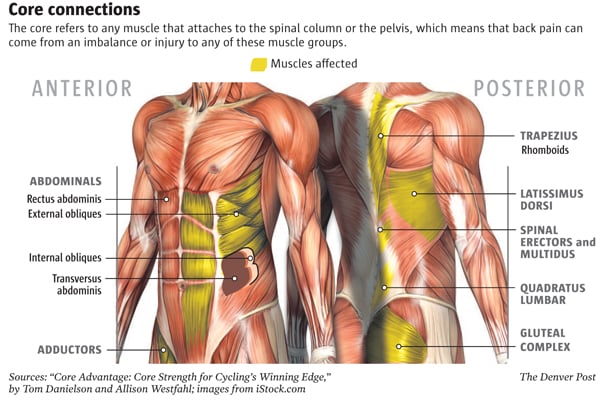
The majority of the muscles that control posture are collectively known as the core, and are found predominantly in the torso:
Upper torso
The trapezius muscle attaches the shoulder blades to the spine, covering the neck, shoulder and mid back. For good posture this muscle needs to be equally strong across the back as the front of the body. The rhomboid muscles are responsible for retracting the shoulder blades, helping to bring the shoulders back and together. I frequently see people in whom the rhomboids are overextended and weak across the back of the body, as a result of being too tight at the front, causing the shoulder blades to pop forward and resulting in a slumped posture.
Middle torso
The abdominals are also crucial in maintaining posture but probably the one that is forgotten is the transverse abdominis (TVA). This muscle lies deep below the internal obliques and is thought to be vital for thoracic and pelvic stability. On the back of the body, the muscles that run parallel to the spine – the spinalis, longissimus and iliocostalis, otherwise known as the erector spinae – work simultaneously to extend the spine. The vertebrae are connected and supported by a small group of muscles deep in the body, that runs the length of the spine – the multifidus muscles.
Lower torso
The lower part of the body is again supported by again our friend, the transverse abdominis. The iliacus and the psoas muscles support the lumbar region of the back. Let’s not also forget the glutes and adductors, whose job it is to provide pelvic stability and support. Contrary to popular belief the glutes and adductor muscles are and should be treated as part of the core.
This list is by no means exhaustive. Different people will have diverse weaknesses and need to focus on different exercises in order to correct them. But posture is something everyone should be aware of. Last week I got the results back from the live study and I was surprised to find that I spend 50% of my working day in bad posture. Most of this time is when I get back from work late, and spend a few hours at the computer writing programmes, nutrition plans, and social media posts. I spend most of my day on my feet, so I was quite surprised at the result, and asked to know about the results from the office workers. That group spent 66% of the trial in bad posture!
It is crucial that all people, but especially office workers, pay attention to their postural muscles and actively engage them. Unfortunately, it takes time to build good posture. It’s something that needs to be worked on every day, both in and out of the gym. The research by AXA PPP healthcare showed that 2pm is the time office workers are most likely to slouch, and that Mondays are the worst day of the week for poor posture. Getting up for a five minute walk every hour can help draw your attention to the problem, and give you chance to reset your position when you sit down again.
It is possible to tackle back pain and poor posture. It’s important to keep moving. A third of respondents to the survey thought it was best to rest and it’s definitely not! Try to maintain your normal routine, but avoid any activity that will put unnecessary pressure on your back. Always seek expert advice when pain occurs. It may be that there are a few simple exercises you can do to ease the problem. Two thirds of respondents to the survey said they knew what good posture was, but admitted they don’t usually apply it. It’s so easy to fall into this group, as the study I did revealed, but with some awareness and hard work the problem can be resolved.
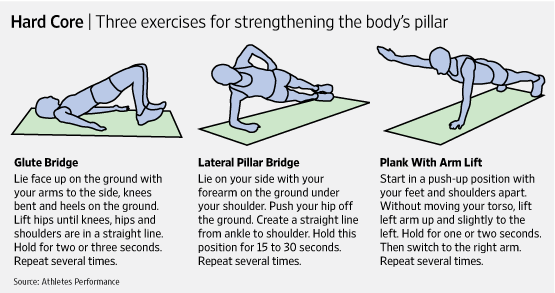
So, when you next find yourself presented with the onset of back pain, I would advise you take 10 minutes, to get up, walk about and even possibly work on that core of yours. At the end of the day, it’s pointless boasting how hardcore your workout was down at the gym when you lack the real definition of hard-core!
Visit AXA PPP healthcare’s online resource Muscles, Bones & Joints for more tips, advice and information on good posture and dealing with back pain.
Join the conversation on Twitter: @axappphealth @Hall_Training
About Chris Hall
As the founder of Hall Training Systems, it is my mission to provide you with the very best personal training experience. I set up Hall Training Systems as Oxford’s leading personal training service in nutrition, performance and weight loss, ensuring I can deliver the very best in training techniques.
You can find me on Facebook, Google+ or why not even give us a Tweet @Hall_Training
Finally! Scientists answer the question to: What is the best diet?
Finding the answer to the question, what is the best diet? Is like finding the Holy Grail. It’s a question that every personal trainer, nutritionist, dietician, client, and really anyone who’s looking to lose weight, want to know the answer to. Well, the wait is over as scientists believe they’ve finally found the answer to what could be; the best diet!
A study published in The Journal of the American Medical Association, analysed 11 well known diets and their effects on weight loss in an attempt to find the most effective one.
Diets Assessed
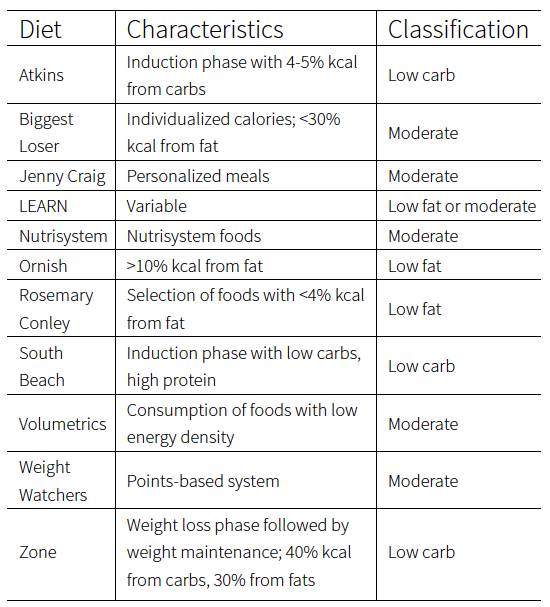 Image source: Examine.com – Readers Digest
The researchers looked at the effect each of these diets had on weight loss at both 6-month, and 12-month intervals, and found several surprising outcomes:
• Any diet was superior to no diet at all
• At Six months in, the subjects on low-carb diets lost an average of 8.73 kgs and were seen to be more effective than all other types of diets. However, this finding was not significant when compared to those on a low-fat diet who lost 7.99 kgs.
• After 12 months, subjects on low-carb and low-fat diets were pretty much matched, with those on low-carb losing 7.27 kgs compared to 7.25 kgs low-fat. These diets were superior to all other diets, and both had nearly equal effects in terms of weight loss.
• When individual diets were compared, the Atkins (10.14 kg lost) and Ornish (9.03 kg lost) diets were seen to be of the most effective at both six and 12 months in.
• In the short term, behavioral support resulted in greater additional weight loss with an additional 3.23 kgs lost. In the long term, the effect of behavioral support waned off and the effect of exercise became more apparent with 2.13 kg lost. This effect occurred regardless of what diet the participant was on.
What does this tell us?
The subjects were all overweight and obese adults and showed that any diet is better than no diet at all, with low-carb and low-fat diets having the greatest impact on weight loss in this population. The researchers found that the use of behavioral support/counselling was associated with additional weight lost six months in, while exercise showed a much greater impact 12 months into the study. Based on these findings, the authors conclude that, “the ideal diet is one that is best adhered to by
Individuals so they can stay on the diet as long as possible.”
In short, the success or failure of a diet ultimately comes down to adherence, and whether that person is likely to stick to it in the long-run.
Source
Johnston BC, Kanters S, Bandayrel K, et al. Comparison of weight loss among named diet programs in overweight and obese adults: a meta-analysis. JAMA. 2014;312(9):923-33. doi: 10.1001/jama.2014.10397.
About Chris Hall
As the founder of Hall Training Systems, it is my mission to provide you with the very best personal training experience. I set up Hall Training Systems as Oxford’s leading personal training service in nutrition, performance and weight loss, ensuring I can deliver the very best in training techniques.
You can find me on Facebook, Google+ or why not even give us a Tweet @Hall_Training