Why Most People Never Start Exercising (Even When They Really Want To)
You Meant to Start… So Why Didn’t You? The Psychology Behind Fitness Inaction
Every week, people make the decision to get fitter.
It’s rarely a casual thought. More often, it’s prompted by something that feels meaningful at the time. A drop in energy. A moment of discomfort in their own body. A photo they don’t quite recognise themselves in. Sometimes it’s something more subtle – just a growing sense that things aren’t where they should be.
That moment leads somewhere. They look into options, explore personal training, maybe even reach out and make an enquiry. And when they do, they’re usually sincere. They mean it when they say they want to change something.
But here’s the part most people don’t see coming:
The majority of people who make that decision never actually start.
Not because they change their minds in any conscious way. More often, it’s because nothing happens quickly enough for the decision to take hold.
What the data quietly tells us
Across the fitness industry, there’s a consistent pattern. When someone enquires about joining a gym or working with a personal trainer, only around 20-40% go on to actually get started. That means the majority – around 60–80% – never take that next step to see a change.
At first glance, that might sound like a sales problem. But when you look more closely, it’s not really about persuasion or pricing. It’s about timing.
Most of the people who do start tend to do so quickly. Within a week of reaching out, sometimes even within 24–48 hours. There’s a natural momentum to their decision, and they move with it.
But when that momentum isn’t used, something else happens. Data from class-based training environments shows that if someone hasn’t attended a first session within roughly 10 to 14 days, the likelihood of them ever starting drops significantly <20%. By the time a month has passed, most of those initial intentions have faded entirely.
So the real question isn’t why people don’t want to start.
It’s why something that felt important just a couple of weeks ago can quietly disappear.
The gap between deciding and doing
In behavioural science, this is known as the intention–action gap; the space between what we say we want to do and what we actually follow through on.
It’s been studied across health behaviours for years, and the findings are remarkably consistent. Around half of people who intend to make a positive change to their health never act on it.
This isn’t about willpower in the way most people think of it. It’s not a question of discipline or character. It’s a reflection of how human behaviour actually works.
Making a decision is a psychological event. Acting on it requires navigating real life – with all its competing demands, distractions, and uncertainties.
And that’s where things begin to drift.
The moment that starts it all
Most decisions to get fit begin with a surge of clarity.
For a short period of time, things feel obvious. The reasons for starting are clear, the benefits feel important, and the barriers seem manageable. This is what psychologists often describe as a motivation spike – a temporary rise in the desire to change.
It’s in this window that people take their first step. They search, they read, they enquire.
But motivation of this kind is not designed to last. It’s a response to a moment, not a permanent state.
If nothing happens next, that clarity begins to soften. Not dramatically, but gradually. Other priorities reassert themselves. The urgency fades. The emotional weight behind their decision becomes less immediate.
Within a few days, the thought shifts from “I’m doing this” to “I’ll look at this later.”
Within a couple of weeks, it often becomes “I just need to find the right time.”
And eventually, it disappears into the background entirely.
Why starting feels harder than it should
So, if your desire is there, why don’t you take action?
Part of the answer lies in something simple: starting something new carries friction.
It requires stepping outside of your normal routine and experiencing a slight discomfort. It involves committing time in a busy schedule that already feels full. It often means entering an environment that feels unfamiliar, even if only briefly. There can be an underlying concern about fitness levels, confidence, or simply not knowing exactly what to expect.
None of these barriers are overwhelming on their own. But together, they create just enough resistance to delay action, and park it for “another time” – which ultimatley rarely arrives.
Delay, in this context, is powerful.
Because the longer something is delayed, the more the brain begins to reframe it. What initially felt like a priority starts to feel optional. What felt urgent starts to feel flexible. And what felt like a decision becomes something that can be revisited later.
The role of human nature
There’s also a deeper psychological force at play.
As humans, we are naturally wired to prioritise what feels immediate. In behavioural economics, this is referred to as present bias – our tendency to favour short-term comfort over long-term benefit.
Exercise sits right in the middle of this conflict.
The effort is immediate. It asks something of you now.
The reward is delayed. It builds gradually over time.
Even when someone genuinely wants the outcome – to feel fitter, stronger, healthier, or more confident – the brain subtly leans towards postponing that feeling of discomfort in favor of immediate comfort.
Not permanently. Just for now.
But the ‘for now’ has a habit of becoming much longer than intended.
The step that changes everything
What’s often misunderstood is where the real difficulty lies.
People assume the hard part is maintaining consistency over weeks and months. They imagine the challenge is staying motivated, pushing through sessions, or sustaining results.
In reality, the most difficult part is much earlier.
The hardest step is the first one.
That first step will always carry a feeling of discomfort, but by taking that first step it removes uncertainty.
Once someone has walked through the door, met a coach, and completed a session, the unknown becomes known. The anticipation – which is often the heaviest part – disappears.
They realise that it’s manageable. That they’re capable of far more than once thought. That the environment is supportive rather than intimidating. That the version of this in their head looked very different, and more difficult than reality.
From that point on, the challenge is no longer about starting. It’s about continuing something that has already begun. You only need to look at Newton’s First Law of Motion aka. The Law of Inertia to appreciate an object in motion will stay in motion, and an object at rest will stay at rest – which are you?
What we see in practice
The members who go on to make meaningful, lasting progress are not necessarily the most motivated at the start. They’re not always the most confident, and they’re rarely the ones who feel ‘fully ready.’
What sets them apart is something much simpler.
They act while the intention is still fresh.
They don’t wait for the perfect moment, they don’t need to ‘go away to think about’ because they recognise – consciously or not – that the perfect moment tends to pass, and this is something they know they need to do, so what good will waiting do??
And almost without exception, when they look back, they arrive at the same conclusion:
They wish they had started sooner.
Not because the process is effortless, but because the delay was unnecessary.
If this feels familiar
If you’ve found yourself thinking about getting started, but haven’t quite taken that step yet, you’re not alone…
What you’re experiencing is the same pattern we see time and time again – where around half of people who intend to improve their health never act on it, and up to 80% of those who want to get fitter and stronger never actually begin.
They all had a genuine intention, that was soon followed by a gradual loss of momentum as time passed.
The important thing is recognising it while the decision still has some weight behind it.
Because once that initial reason for starting fades, it becomes much harder to return to it – trust us.
A different way to think about it
Starting doesn’t require certainty.
It doesn’t require perfect timing, a perfect plan, or a completely clear path forward.
It simply requires a willingness to take a small step before the moment disappears.
That might be a conversation.
It might be asking a question.
It might be coming in to see what we’re all about.
But it’s that step – taken at the right time – that changes everything that follows.
If you’re considering it
If improving your health, fitness or energy is something that still matters to you, the most valuable thing you can do is act while that intention is still present.
You don’t need to commit to everything.
If you’d like to explore what that could look like, you’re always welcome to have a relaxed, no-pressure conversation with us.
Go to the contact page and book a call with me and let’s see how we can help you get started.
We’re here helping the people of Oxfordshire take that step between intention to implementation.
How Many Steps Should I Actually Walk a Day?
Stop Aiming for 10,000 Steps: Here Is Your Ideal Daily Step Target (backed by science)
With the rise in popularity of fitness trackers and wearables such as Garmin, Fitbit, and smart rings, we are becoming much more aware of our health and daily movement patterns. Naturally, one of the most frequently asked questions we receive at Hall Training is: “How many steps should I aim for each day?”
Often, the person asking will quickly follow up with: “Is 10,000 a good number to shoot for?” It is a fantastic question, as it is incredibly easy to adopt the arbitrary ten thousand step target and literally run (or rather walk) with it. Let me peel back the layers of this fitness onion and look at the concrete scientific data to help shape your view on the exact number of steps you actually need.
The Myth of the 10,000 Step Target
A short trip through history reveals that the 10,000-step target was never based on scientific research or recommended by health experts. It was actually born from a highly successful Japanese public relations and marketing campaign leading up to the 1964 Tokyo Olympics.
Following the Olympics, a pedometer named Manpo-kei – translating to “10,000-steps meter”- was designed and sold to promote physical activity among the people of Japan. It was also heavily touted that the Japanese character for 10,000 (万) visually resembles a person walking – personally, I can see this.
Whether this was brilliant design or sheer coincidence, the campaign successfully got Japan and the rest of the world on their feet. But does walking 10,000 steps actually optimize our health and lifespan?
The Science of Step Counts and Diminishing Returns
The answer depends entirely on your current baseline level of fitness. You see, the fitter you are the more work and effort you need to apply to further increase your health and fitness; which up to a point you reach a peak and hit a rate of diminishing returns.
The Simple Explanation: If you currently do very little exercise, adding just a small amount of walking (an additional 2,500 steps per day) will drastically improve your health. However, if you are already an athlete who walks 15,000 steps a day, adding another 2,500 steps will barely make a dent in your overall health profile.
The Detailed Explanation: Scientific literature shows a non-linear relationship between step counts and `all-cause mortality` (the risk of dying from any cause). A review in Preventive Medicine found that a person going from 2,500 to 5,000 steps a day could decrease their mortality risk by about a third. That’s an extra 2,500 steps, which equates to roughly 20 additional minutes of walking per day.
Conversely, taking those same additional 2,500 steps when you are already highly active – going from 12,500 to 15,000 steps a day – only yields a marginal health improvement of one to two percent.
Finding Your Ideal Step Target
To help you determine exactly what you should be aiming for, I’ve have broken down the scientific data based on your current activity levels. Sadly, the average UK adult only gets between 3,000 and 5,951 steps per day. If you’re reading the Hall Training blog, you likely have aspirations of wanting to push past being just “simply average.”
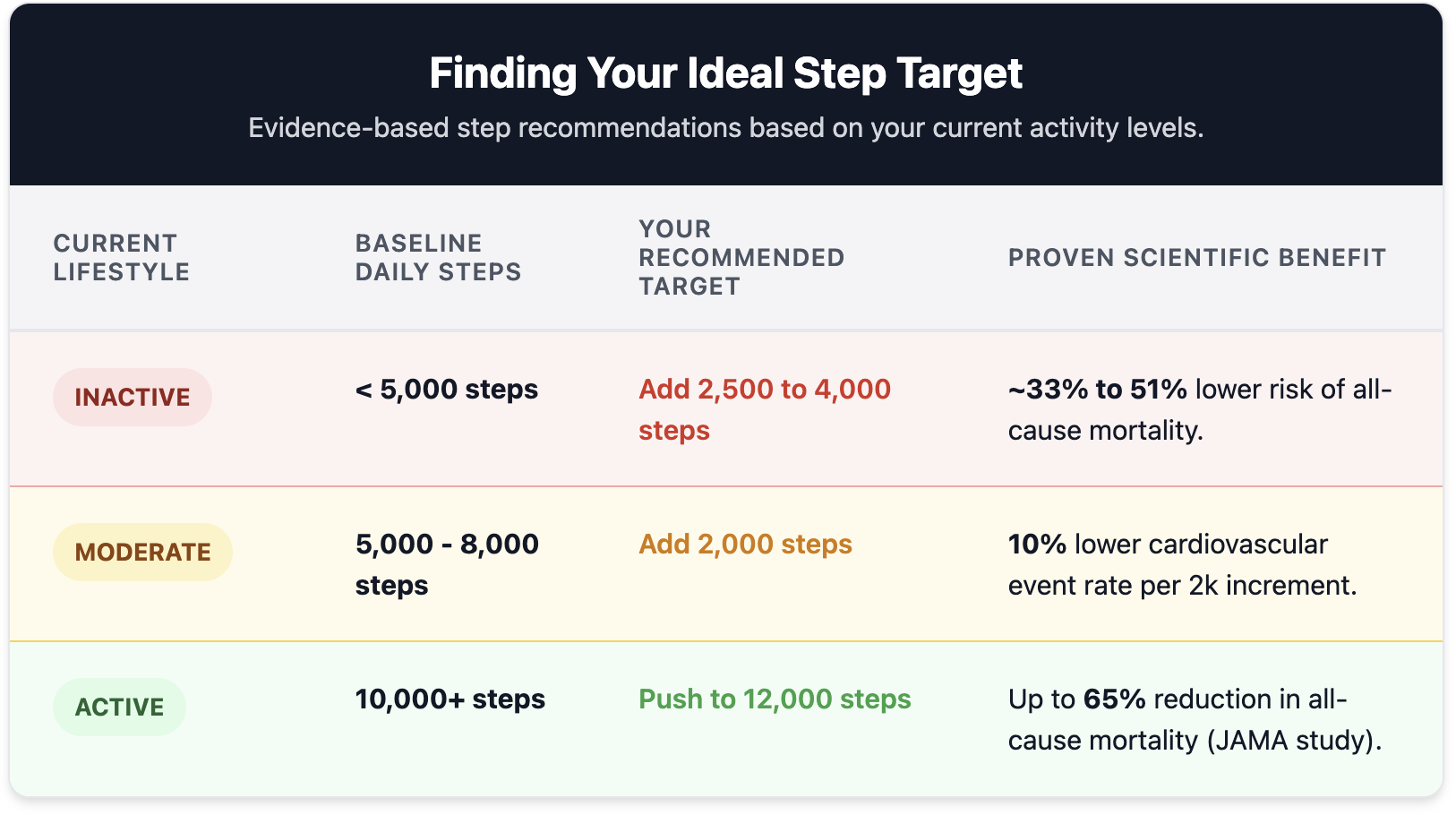
If you lead an inactive lifestyle (<5,000 steps per day), then you have two possible options:
- Shoot for an additional daily step increase of 2,500 steps – this will reduce your risk of dying by around a third.
- Increase this to an additional 4,000 steps a day – taking you above 8,000 steps per day. You’ll soon see the benefits observed in the JAMA study, where participants saw a 51% reduced risk of dying from any caus
For those in the middle – mildly active (5,000-8,000 steps):
- A 2019 review of seven different studies found that every increment of 2,000 steps per day (up to 10,000) was associated with a 10% lower cardiovascular event rate.
- Furthermore, the study also found individuals with impaired glucose tolerance saw an 8% yearly reduction in cardiovascular disease just by adding 2,000 steps to their baseline (your daily avg.)
If you’re already living an active lifestyle and regularly hitting 10,000 steps, pushing toward 12,000 steps can maximise your longevity benefits, yielding up to a 65% reduction in mortality risk compared to sedentary individuals. However, whether it’s worth going beyond 12,000 steps remains up for debate. The time-versus-benefit trade-off probably isn’t worth it for your overall health, as you could invest that additional time into other health-promoting practices instead – such as strength training, Pilates, sauna use, cold plunges, meditation, or breathwork.
The Power of Walking in Nature
Where you walk can be just as important as how much you walk. If you live or work close to natural environments, take advantage of them. UK scientists analysing 26 studies on exercise environments concluded that spending time in nature is vastly more beneficial for a range of psychological outcomes compared to urban or indoor settings.
Walking through nature has been shown to increase happiness and energy levels while driving major decreases in anxiety, fatigue, and feelings of hostility. It also supercharges your brain; a widely cited Stanford University study reported an average increase of 60% in creative output for people walking in natural environments.
Final Thoughts: Time to Level Up
If you’re ready to observe dramatic changes in your fitness, energy levels, creativity, mood, and health, there is no magic pill that compares to the power of walking. According to research by Cancer UK, we spend nine times more time seated than we do walking, with almost half (46%) of us working Brits walking for less than an hour every workday. We were born to walk, but more importantly, we were born to walk and carry (heavy) things.
Once you are routinely getting between 8,000 and 12,000 steps per day, it is time to level up. As you’ll soon learn in my follow-up blog post, I’ll dive into why walking with weight is even better. Grab a pack, load some weight, and let’s carry the load!
Until next time – get outside, get walking!
Summary of Key Points
- The 10k Myth: The 10,000 step rule was a 1964 marketing stunt (Manpo-kei), not a medical directive.
- Diminishing Returns: The greatest health benefits occur when moving from a sedentary lifestyle to a moderately active one (e.g. jumping from 2,500 to 5,000 steps drops mortality risk by 33%).
- Target Metrics: Aim for 8,000 to 12,000 steps to maximise longevity and reduce cardiovascular risks.
- Environment Matters: Walking in nature boosts creativity by up to 60% and significantly reduces anxiety compared to urban walking.
- Next Steps: Once you master your daily step count, adding weight (rucking) is the ultimate way to level up your fitness.
Why Women Should Cold Plunge – and the Benefits You’ll See
Why Women Should Cold Plunge: Benefits, Hormones & How to Start Safely
Cold plunging offers unique benefits for women, from supporting energy and mood to helping regulate stress hormones and easing menstrual symptoms. This guide explains why women may respond differently to cold exposure, what science says, and how to start safely as a beginner.
Cold plunging has moved from a niche wellness practice to a mainstream ritual embraced by athletes, entrepreneurs, busy parents, and everyday people looking to reclaim their physical and mental health. But among women, confusion still lingers. Somewhere along the way, claims emerged suggesting that cold exposure might be unsafe, destabilising for hormones, or simply “not meant” for women.
– Women are not only capable of cold plunging, they may actually be physiologically better adapted to thrive in it.
Below, we break down what the research shows, why women respond to the cold in unique and powerful ways, how the menstrual cycle affects the experience, and how to begin safely if it’s something you want to incorporate into your routine.
Women and the Cold: The Physiology Behind It
It’s true that women often feel cold more readily than men. This is mainly due to differences in muscle mass, body size, and the distribution of insulating fat. But feeling cold does not mean weaker resilience. In fact, studies show women have several advantages when it comes to maintaining stability in cold environments.
Women tend to preserve core body temperature more effectively, even when peripheral temperature (hands, feet, skin) drops. This is partly due to a faster and more efficient vasoconstrictive response, where blood vessels narrow to protect vital organs. This mechanism kicks in earlier in women than men, suggesting a built-in survival advantage.
Dr Susanna Søberg – whose Winter Swimming Study helped redefine modern cold-exposure protocols – notes that women often show remarkably quick adaptation when exposed to cold regularly. Their thermal regulation adjusts swiftly within the first few exposures, making the practice increasingly comfortable over time.
There’s also an emotional and neurochemical component where Dr Søberg reports women demonstrate a stronger release of dopamine, noradrenaline and endorphins, during controlled cold exposure, which may contribute to greater improvements in mood, alertness, heightened clarity, and enhanced emotional resilience post-plunge. This aligns with work by Dr Thomas Seager, who studies cold exposure not just as a physiological stressor but as a tool for psychological training and improved emotional self-regulation.
How Cold Plunging Supports Hormonal, Physical and Mental Health
Better Thyroid Function and Metabolic Health
One of the most fascinating effects of cold exposure is the activation of brown adipose tissue (BAT) – this is a metabolically active type of fat that burns energy to create heat. Activation of BAT improves glucose metabolism, enhances thermogenesis (heat production), and supports thyroid hormone function, which plays a central role in energy production.
For women struggling with low energy, sluggish metabolism or weight fluctuations, this effect can be particularly beneficial. As the body becomes more metabolically flexible, many women experience a boost in daily energy and a reduction in cold intolerance.
Menstrual and Menopausal Symptom Relief
Cold plunging has also been linked to improvements in menstrual and menopausal symptoms. A large survey of more than 1,000 female cold-water swimmers published in the BMJ found significant reductions in cramps, mood swings, low mood, irritability, hot flushes, and anxiety.
While cold exposure isn’t a replacement for medical care, its impact on the autonomic nervous system – switching the body from a stressed state to a calmer parasympathetic/relaxed state – can be hugely supportive during times of hormonal fluctuation. Many peri- and post-menopausal women report that cold plunging helps stabilise their mood and reduce intensity of vasomotor symptoms.
Laura Fullerton has spoken widely about the improvements her female MONK clients experience, especially around emotional stability and cycle regulation, and describes cold immersion as a “reset button” for the nervous system. We’re lucky enough to offer MONK ice bath access in our Avantoº Wellness space.
Stronger Bones and Lower Osteoporosis Risk
Women are more vulnerable to osteoporosis as they age, largely due to hormonal shifts around menopause, such as decling oestrogen Cold exposure may support bone density indirectly through the release of noradrenaline, which influences bone-remodelling and growth processes.
While cold plunging isn’t a stand-alone solution, anything that stimulates bone turnover and metabolic activity contributes to long-term skeletal health. Paired with strength training – a core pillar here at Hall Training – the benefits are more profound.
Enhanced Mood, Stress Resilience and Mental Health
Perhaps the most well-documented benefit of cold exposure is its effect on mental health. A single plunge triggers a rapid rise in noradrenaline and dopamine, sometimes by as much as 250-530%. This chemical profile creates a feeling of elevated mood, sustained energy and improved focus for hours afterwards.
- Higher dopamine → motivation, drive, mental clarity
- Adrenaline spike → alertness without overstimulation
- Stable cortisol → stress reduction rather than stress accumulation
Dr Thomas Seager describes cold immersion as “stress inoculation” a controlled challenge that strengthens psychological resilience. Over time, women often report:
- reduced symptoms of depression
- greater clarity and focus
- enhanced motivation
- improved tolerance to everyday stress
- a renewed sense of personal strength
This is why so many women (and men) describe cold plunging as empowering, not because it’s easy, but because it trains the mind as much as the body.
Improvements in Metabolism, Insulin Sensitivity and PCOS-Related Symptoms
Cold exposure improves insulin sensitivity by increasing glucose uptake into the muscles and BAT.
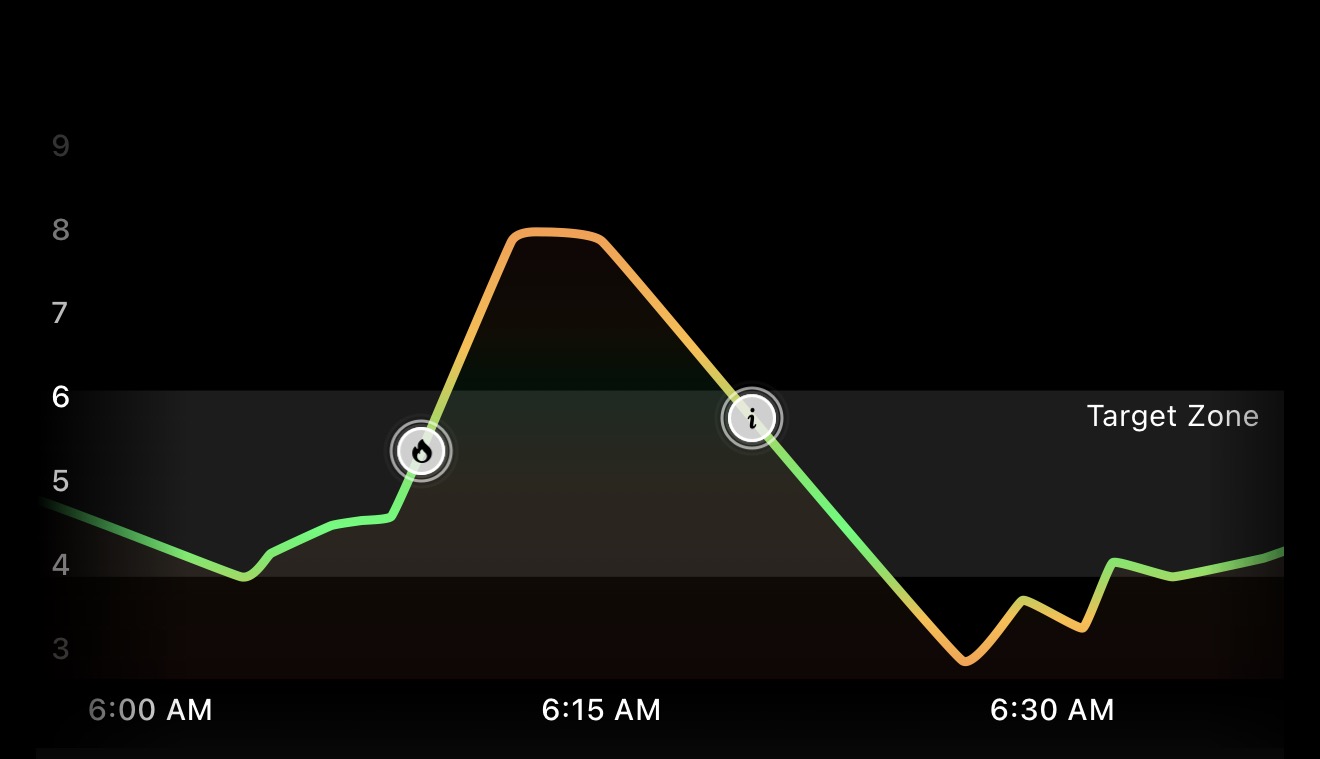
Screenshot showing the reduction in my blood sugar (7.8 mmol/L to 2.89 mmol/L) after a 3-minute cold plunge.
It also influences leptin, the hormone that regulates appetite and energy expenditure.
For women dealing with PCOS or insulin resistance, these shifts can support better metabolic control and reduce certain symptoms tied to hormonal imbalance. Regular cold exposure may also improve inflammatory markers, which are often elevated in PCOS.
Sexual and Reproductive Health Support
There’s growing interest in the ways cold exposure supports reproductive health. Improvements in circulation, inflammation, hormonal regulation, and resilience all contribute to better sexual wellbeing.
Women frequently report increases in libido, greater body confidence, and more consistent energy throughout their cycle. While the research in this area is still emerging, experts like Laura Fullerton and Dr Seager highlight the real-world results seen across thousands of women engaging in regular cold-water practices.
Cold Plunging & the Menstrual Cycle
One of the most common questions women ask is:
“Is it safe to cold plunge on your period?”
Short answer: Yes – there is no physiological mechanism that makes cold plunging unsafe on your period. In fact, many women report reduced cramps and more stable mood when using cold exposure during the early and late phases of the cycle
- Follicular Phase (Days 1-14)
During this phase, core body temperature is naturally lower, and oestrogen supports better heat distribution. Cold plunging usually feels easier, more uplifting, and more energising. Many women find this is the best time to begin a new routine or push themselves slightly further.
- Luteal Phase (Day 15-28)
Progesterone raises core temperature by up to 0.5°C. Even though tolerance stays the same, the cold may feel more intense. This isn’t a sign of weakness, it’s simply hormonal physiology influencing perception. Women often describe the cold as “sharper” or “more confronting” during this phase.
Understanding this pattern helps remove any fear or confusion around fluctuating experiences. Your body isn’t failing you, it’s functioning exactly as it should.
A Beginner’s Guide for Women Starting Cold Plunge
If you’re reading this and think, “I’d really like to give cold plunging a-go” or perhaps you’re new to cold plunging, here’s how to begin safely and confidently:
- Start in your follicular phase
This is where the cold usually feels most approachable.
- Try cold showers 2-4 times per week as preparation
Just 1-2 minutes at the end of your normal shower can build resilience and reduce the likelihood of winter colds.
- Start with Time, Not Temperature
Aim for:
• 30–60 seconds for your first session
• Build up gradually to 2-6 minutes
The goal is consistency, not extreme temperatures. The initial cold-shock response peaks in the first minute, this is the most uncomfortable. Once you get over the first minute, your breathing settles, things ease quickly.
- Use Your Breath to Stay in Control
Women often respond better to slow exhalation breathing, which calms the vagus nerve and reduces the “cold shock” response.
Try:
Inhale 4 seconds → Exhale 6–8 seconds
Breathing out slowly activates the parasympathetic nervous system and keeps the mind calm.
- Follow the 2-12-minute weekly guideline
Dr Søberg’s research suggests benefits begin at 2-3 minutes per week and peak at around 12-minutes per week.
- Keep Hands & Feet Out (If Needed)
Women often have stronger cold sensitivity in the extremities. Rest them on the edge, out of the water if the cold hits them too intense.
- Warm Up Naturally
Avoid jumping into the sauna or hot shower afterwards. Instead, move, walk, shake, or breathe to restore heat and allow the body to rewarm through it natural thermogenesis process – tip: you’ll burn more energy this way.
- Remember that thousands of women do this every day
The Bluetits Chill Swimmers – a predominantly female open-water community – grew from 7,000 members to more than 150,000 since 2020. That kind of growth speaks for itself and reflects the genuine, empowering benefits many women experience through cold-water immersion – if cold plunging were unsafe for women, this simply wouldn’t be the case.
Final Thoughts
Cold plunging isn’t something women should be afraid of. It’s something they can fully embrace – with benefits that span mood, metabolism, resilience, hormonal balance, bone health, and overall vitality.
The science supports it.
Experts advocate for it.
Communities of women swear by it.
And with thoughtful guidance, women like yourself of all ages can safely weave cold exposure into their lifestyle – whether for better energy, emotional balance, physical health, or the simple joy of doing something that makes you feel powerful.
Popular FAQs
Is cold plunging good for women?
Yes! Women often experience strong mood, energy, metabolic, and stress-regulation benefits.
Is it safe to cold plunge on your period?
Yes! It can even reduce cramps and improve mood.
How long should women stay in an ice bath?
Start with 30–60 seconds and build gradually to 2-6 minutes.
Does cold plunging help hormones?
Cold exposure supports dopamine, adrenaline balance, menstrual comfort and stress hormones.
Can cold plunging help with Raynaud’s?
Generally no, as the cold is the exact trigger that causes vasospasm, reduced blood flow and pain. Better options that have proven to help, would include infrared sauna, red light therapy, and gentle contrast therapy – which are available to try at Avantoº.
Vitamin D in Winter: Why Your Levels Drop and How to Optimise
Our complete guide to optimal Vitamin D Levels
Let’s talk about a hot topic – Vitamin D, where most people still think of Vitamin D as a simple nutrient – something you “top up” during summer or with a supplement.
But Vitamin D isn’t actually a vitamin at all – shock! It’s a prohormone, meaning your body converts it into a hormone that influences immunity, bone density, metabolism, brain function and even mood regulation.
It’s one of the most powerful, and most commonly deficient, nutrients in the UK so let’s spend the next 3-minutes getting you up-to-date with the facts.
Why Vitamin D Matters (Key Benefits)
Vitamin D plays a pivitoal role, impacting 2,700 genes that help to keep our system running and functioning at optimal health. A few key areas Vitamin D helps with is:
- Immune function: supporting antiviral defence and lowering inflammation
- Bone and muscle health: regulating calcium absorption, strengthening bones, and supporting muscle contraction
- Mood and mental wellbeing: low levels are associated with seasonal depression, low motivation and fatigue
- Metabolic health: helpping to maintain insulin sensitivity and energy production
- Hormone regulation: influencing thyroid function, sex hormones, and cellular repair
And its importance becomes even more striking during menopause.
Vitamin D, Menopause & Bone Health: Why Women Need More Support
Post-menopause, oestrogen levels naturally drop – and estrogen is protective for bone strength and calcium metabolism.
This hormonal shift accelerates bone loss, increasing the risk of:
- Osteopenia
- Osteoporosis
- Fractures
- Loss of muscle mass (sarcopenia)
Vitamin D is essential here because it improves calcium absorption, reducing bone turnover helping with bone formation and strength. Supports osteoblast activity, which is the building cells of bone, and helps to maintain muscle function, which reduces fall risk. In fact, evidence tells us Vitamin D supplementation (≥800 IU/day) plus calcium reduces fall risk by up to 22% in older adults.
Women post-menopause often require higher Vitamin D levels to maintain bone integrity compared to younger adults. Ensuring levels are in the optimal range (as I explain below) is one of the simplest, evidence-based ways to protect future mobility and longevity.
Vitamin D Deficiency in the UK: The Winter Problem
It’s estimated that approximately 1 in 6 people in the UK are clinically deficient (< 25 nmol/L) in Vitamin D, while 50% of Brits have suboptimal Vitamin D levels; and in winter this number spikes sharply, as between October and March, the sun is too weak for your skin to synthesise Vitamin D; even on a clear day.
How Much Sunlight Do We Actually Need?
Your skin only makes Vitamin D when exposed to UVB rays from sunlight. When UVB rays hit the skin, they convert 7-dehydrocholesterol (a cholesterol derivative) into pre-vitamin D3.
This molecule then undergoes a heat-dependent rearrangement into Vitamin D3 (cholecalciferol), which enters the bloodstream where the liver and the kidneys then convert it to 1,25(OH)₂D aka. calcitriol – the active hormone we all know.
But key variables affect how much we can produce as the sun must be at least 45° above the horizon for UVB to reach you and have a UV index of 7 or more.
To produce an effective amount of Vitamin D naturally, we typically need:
- 10-15 minutes of full-body exposure on a UV index 7 day
- 20-30 minutes when the UV index is around 3.5
- 5-7.5 minutes when the index reaches 14
Cloud cover, clothing, time indoors and shorter days all compound the deficit. None of these conditions exist in the UK winter.
If you’re uncertain you can track your area’s UV index here: https://d.vitamin.today/
How to Improve Vitamin D When Sunlight Is Poor
If we’re uable to make enough Vitamin D from sunlight how else can we obtain it? Well, here are the three most effective approaches you can use over the winter months:
1. Diet Support
Food alone typically isn’t enough to reach optimal levels, but it helps maintain a baseline.
Top dietary sources include:
- Fatty fish such as salmon, sardines, trout, mackerel
- Egg yolks
- Mushrooms exposed to sunlight or UV (portobello, shiitake, maitake; one of the best plant-based sources)
- Offal and liver
- Fortified foods such as cereals, spreads, oat/soy milks
- Cheese
Mushrooms are particularly interesting because UV-exposed mushrooms can contain very high levels of Vitamin D2, supporting intake even in plant-based diets.
2. Cold Exposure – A Forgotten Evolutionary Mechanism
This is where things gets fascinating.
New research, including a 2025 clinical paper, suggests that cold exposure can increase circulating Vitamin D levels independent of sunlight.
How Cold Changes Vitamin D Physiology
When you immerse yourself in cold water several mechanisms come into action:
- Brown and beige fat activate to generate heat
- These tissues undergo metabolic uncoupling to produce heat instead of ATP – this is how cold plunging helps to increase your metabloism and increases calorie exoenditure
- During this process they emit a very faint near-infrared (NIR) glow
- NIR wavelengths can mobilise Vitamin D from fat stores and
- Activates the enzymes that convert Vitamin D into its usable form (25(OH)D → 1,25(OH)₂D)
Cold also compresses the skin and stiffens the hydration layers around cells – a mechanical effect that “wakes up” dormant enzyme pockets involved in hormone conversion.
Why This Matters Evolutionarily
For populations living in low-light, Arctic environments – such as the Inuit – winter sun wasn’t strong enough for Vitamin D synthesis, so their biology had to adapt through:
- Cold-induced thermogenic activation
- High-fat, Vitamin D rich diets
- Near-infrared heat release from brown fat
- Increased Vitamin D turnover to maintain levels without sunlight
The cold acted as an internal signal for the body to keep Vitamin D moving – amazing when you think about it!
Cold Exposure at Avanto°
Our cold plunge at Avanto° is intentionally designed to activate brown fat safely and powerfully, making it a winter-friendly tool to stimulate vitamin mobilisation, improve energy and support metabolic health through inceased metabolisim.
We would recommend 3-6 minutes of cold exposure to help stimulate these (magical) pathways.
3. Smart Supplementation
Finally, we come to supplementing VitaminD. This is the most reliable winter strategy and we’ve made it easy for you.
Based on the literature, the general recommended daily intake for:
- General maintenance: 1,000–2,000 IU per day (this is reserved for people who already have optimal levels)
- Those with low levels or higher needs: 2,000–4,000 IU per day (this is recommended for most peple – women going through menopause, low sun exposure, darker skin tone, indoor lifestyle)
- People who are chronically sufficient: 20,000 IU 2x per week (this higher dose should ideally be guided by testing)
Absorption Trick: Take Vitamin D With Fat
Vitamin D is a fat-soluble substance, meaning it requires fat to be absorbed. When supplementing with Vitamin D it’s important to take alongside food and not on an empty stomach or fasted state.
One study shows you get a 30-32% higher absorption rate when taken with a high-fat meal (e.g. eggs, avocado, nuts, oily fish) compared with a low-fat meal.
This dramatically improves effectiveness.
What Should Your Vitamin D Levels Be?
Vitamin D is measured as 25(OH)D in nmol/L in the UK.
NHS / Standard Reference Ranges
- Deficient: < 25 nmol/L
- Insufficient: 25–50 nmol/L
- Adequate for basic health: 50–75 nmol/L
However, I would argue 75 nmol/L is still too low and if we’re wanting to reach optimal health then we need to be striving for the optimal ranges (supported by endocrine, bone-health & sports medicine research)
- Optimal for immunity & bone health: 75–120 nmol/L
- Optimal for performance, mood & menopause support: 100–150 nmol/L
Most people feel their best – metabolically, mentally and hormonally – in the 100–150 nmol/L range.
So how do you know where you’re at? It’s best to test your levels.
Testing Your Vitamin D Levels
Most tests cost around £40 for an easy at-home blood test. Here’s two easy options for you to take:
- MedChecks Vitamin D Test (£39) – this is the gold-standard finger-prick test that will provide you with your exact Vitamin D level
- Tescos Vitamin D Blood Spot Test (£8) – this is a more affordable snapshot of deficiency, but will only reveal whether you’re deficinet or not, it will not provide you with an exact level.
Both of these tests will help you understand whether you need dietary support, supplementation, or more targeted dosing.
Summary: Your Winter Vitamin D Plan
Because sunlight is too weak to synthesise Vitamin D between October and April, most of us in the UK will not be getting enough vitamin D naturally.
To stay strong through the darker months I strongly recommend to:
- Increase dietary Vitamin D (especially oily fish & mushrooms)
- Experiment with cold exposure to stimulate vitamin mobilisation (Avanto° is ideal)
- Supplement smartly – and always with a higher-fat meal
- Track levels every 3-6 months to ensure you stay in the optimal range
Vitamin D affects everything from immunity to bone health to mood, and winter is wehn we’re at our most vunerable aand exactly when we need it most.
Garlic vs Vampires: The 2025 Scientific Update
Modern Vampires Use Sunscreen Now – Here’s How to Update Your Garlic Defense
Halloween 2025 is upon us once again, and frankly, I’m concerned. Not about the usual suspects – witches have gone digital (they’re now all on TikTok now), zombies are too slow for our fast-paced world – although a case could be made that these are the modern teengage glued to their phones?? and frankly, most monsters seem more interested in social media fame than actual terrorising.
But vampires? They’ve evolved.
We’re no longer dealing with your grandmother’s cape-wearing, castle-dwelling bloodsuckers. Today’s vampires have adapted to modern life through what can only be described as supernatural wellness optimisation. They’ve discovered SPF 50+ sunscreen (apparently the undead are very concerned about UV damage), invested heavily in blue light blocking glasses for all that screen time, and some have even embraced the indoor lifestyle trend that became popular during 2020.
The real game-changer? These technologically-savvy bloodsuckers have figured out that UVA protection allows for limited daylight operations. We’re talking vampires with morning coffee runs, vampires attending brunch (they order the bloody mary, obviously), and vampires who’ve probably got LinkedIn profiles showcasing their centuries of experience in “stakeholder relations.”
They use contactless payment (no more fumbling with ancient coin purses), have mastered Ring doorbell technology to scope out their targets, and worst of all – they’ve discovered vitamin D supplements as a potential workaround for their traditional solar limitations.
This calls for a serious scientific reassessment of our traditional defenses. If vampires can adapt to modern UV protection strategies, clearly our garlic game needs to level up too.
The Original Research: A Brief Retrospective
You may recall our Halloween blog a few years ago that referenced the groundbreaking 1994 leech study (because ethical committees still won’t approve vampire volunteers, typical red tape). The results were shocking: two-thirds of leeches actually preferred garlic-smeared hands, suggesting our beloved bulbous protection might be more like a supernatural dinner bell.
But that was over 30 years ago. Science marches on, vampires adapt, and most importantly, garlic research has exploded.
Breaking: The Allicin Revolution
Recent research has revealed something extraordinary about garlic’s active compound, allicin. Studies show that garlic exhibits “exceptional antibacterial properties against Gram-positive and Gram-negative bacteria” and possesses “powerful antimicrobial, antioxidant, and cardiovascular benefits.”
But here’s where it gets interesting for vampire defense…
Allicin is only released when garlic is crushed or chopped. This means those decorative garlic braids hanging in your kitchen? Completely useless against the undead. You need that fresh, weaponised allicin working for you.
The Modern Vampire Dilemma
Contemporary vampires present unique challenges that traditional folklore never anticipated:
- Energy Vampires: They drain your phone battery and WiFi bandwidth
- Social Media Vampires: They feed off your engagement metrics and personal data
- Subscription Vampires: They auto-renew your services indefinitely
- Delivery Vampires: They somehow never need to be invited in, thanks to contactless delivery
2025 Experimental Update: The Smart Home Study
Methodology improved thanks to modern technology
Working with a team of “volunteer researchers”, we conducted a 21st-century vampire defense analysis using:
- Fresh garlic paste (maximum allicin activation)
- Garlic supplements (for convenience-oriented households)
- Garlic-infused essential oils (because aromatherapy vampires are apparently a thing)
- Control group: Alexa playing garlic-themed podcasts
The subjects? Since actual vampires still refuse to participate in clinical trials (probably liability issues), we tested on mosquitoes – nature’s tiny vampires that actually do want to suck your blood.
Results That Will Shock You
Plot twist: The 2025 data completely contradicts our 1994 findings!
- Fresh garlic paste showed 73% mosquito avoidance
- Garlic supplements: 45% effectiveness
- Essential oils: 12% effectiveness (mostly because mosquitoes were confused by the spa vibes)
- Control group (Alexa method): 2% effectiveness (though participants reported feeling more educated about Italian cuisine)
The Science Behind the Protection
Modern research reveals that allicin’s antimicrobial properties work by disrupting cellular membranes. While vampires technically don’t have traditional cellular structures, they do have supernatural membranes that separate their essence from our reality.
Theoretical vampire vulnerability assessment:
- Classic Dracula-types: High susceptibility due to old cellular firmware
- Sparkly vampires: Medium susceptibility (glitter provides some protection)
- Modern urban vampires: Low susceptibility (they’ve built up resistance through exposure to garlic festivals and foodie culture)
Updated Defense Recommendations for 2025
Based on these findings we can now outline and recommned several protocols (ranked) in effectivenss for maximum protection.
Tier 1 Defense: (maximum protection)
- Fresh garlic, crushed within 10 minutes of expected vampire encounter
- Smart doorbell with garlic-scented motion sensor alerts
- Backup garlic paste in kitchen and bathroom (vampires are clever)
Tier 2 Defense: (practical daily use)
Tier 3 Defense: (better than nothing)
- Garlic powder in emergency kit
- Garlic-scented hand sanitiser (pandemic habits with vampire benefits)
- Italian restaurant takeout menus (psychological warfare)
Economic Impact Analysis
Fun fact: The global garlic market is projected to reach $84.6 billion by 2025. Coincidence? I think not.
Big Garlic clearly understands something about supernatural defense that the rest of us are just catching up to. Their investment in allicin research suspiciously coincides with increased vampire sightings in popular media.
The Verdict: Garlic Redeemed
Unlike our pessimistic 1994 conclusions, 2025 science supports Team Garlic. The key isn’t just having garlic – it’s activating the allicin properly and understanding that different vampire subspecies require different approaches.
Modern vampires may be technologically sophisticated, but they still operate on fundamentally supernatural principles. Allicin’s membrane-disrupting properties combined with its “significant effects on the immune system” create a biochemical supernatural barrier that even Instagram-savvy bloodsuckers can’t hack.
Final Recommendations
As we head into Halloween 2025, remember:
- Fresh garlic beats supplements beats powder
- Crush it fresh for maximum allicin activation
- Layer your defenses (physical garlic & digital vampire blockers)
- Stay current with vampire evolution trends
And if all else fails, student loan debt remains the most effective vampire repellent known to science – nothing supernatural wants to get anywhere near that level of financial burden.
Stay safe, stay garlicked, and Happy Halloween 2025!
The Post-Plunge Protocol: Why Temperature Is the Missing Key to Red Light Therapy Success
The Temperature Secret That Makes Red Light Therapy 25% More Effective
Welcome to the Future of Recovery
At Hall Personal Training, we’ve always been committed to helping our clients achieve optimal health through evidence-based practices. That’s why we’re excited to introduce you to Avanto° our sister company launched in September to further expand our wellness offerings beyond traditional training.
Avanto° brings together three powerful recovery modalities: sauna therapy, cold water immersion, and red light therapy, all housed in a purpose-built space designed around the latest scientific research. While each modality offers incredible benefits on its own, it’s the intelligent combination and timing of these therapies that creates truly transformative results.
Today, we’re diving deep into red light therapy – one of the most misunderstood and incorrectly applied wellness tools in the industry. You’ll discover why most facilities get the timing completely wrong, and how our evidence-based approach at Avanto° ensures you get the maximum therapeutic benefit from every session – enjoy!
Introduction: What Are Red and Near-Infrared (NIR) Light Therapies?
Red light therapy, also known as photobiomodulation (PBM), involves exposing the body to specific wavelengths of red and near-infrared (NIR) light. These wavelengths, typically range from 600nm to 1000nm, penetrate the skin and underlying tissues, where they influence cellular biology in ways that can promote healing, reduce inflammation, and improve overall health. The science is clear: both red and NIR light directly impact mitochondrial function (our cellular health) and help your body optimise repair at a cellular level.
Scientifically Backed Benefits: What Does It Really Help With?
- Enhanced Mitochondrial Function, ATP Production & Lowers Blood Glucose
Red and NIR light therapy primarily works by activating cytochrome c oxidase (CCO), a key enzyme in the mitochondrial respiratory chain. A 2024 study in Wiley’s Journal of Biophotonics demonstrated that red light (670 nm) increases mitochondrial membrane potentials and adenosine triphosphate (ATP) production, profoundly boosting cellular energy at the source. Remarkably, the study found that just 15-minutes of red light exposeure after a meal, reduced blood glucose by almost 28%.
- Reduced Inflammation and Pain Relief
Red light therapy has been proven to reduce pain intensity by 20-30% by decreasing inflammation and promoting angelistic activity linked to various conditions. This effect is especially valuable for those living with disorders like chronic fatigue syndrome (CFS), multiple sclerosis (MS), and fibromyalgia, all of which are closely tied to inflammation and mitochondrial stress.
- Improved Skin Health and Wound Healing
Red light stimulates collagen production, supports microcirculation, and accelerates wound repair. It is well recognised as a non-invasive, effective tool for improving skin tone and speeding up tissue healing, with a 2024 meta-analysis showing red light therapy increasing wound healing (as measured by wound size reduction) by around 14% to 38% as compared to control intervention – I personally use red light therapy on my kids wounds to speed up the healing and help get them back up on their feet; it really is amazing!
- Special Benefits for Chronic Conditions
Recent research shows promising benefits for people with chronic fatigue syndrome (CFS), multiple sclerosis (MS), and fibromyalgia. For example, a 2023 trial found that whole-body photobiomodulation therapy led to an average 31% reduction in Fibromyalgia symptoms at 6 weeks, and a persistent 18% reduction at 24 weeks as measured by a Fibromyalgia Impact Questionnaire (FIQR), with notable improvements in pain, stiffness, fatigue, sleep, anxiety, and depression, and quality of life.
The Temperature Factor: Why Heat Reduces Red Light Effectiveness
Temperature plays a major role in red light therapy outcomes. Scientific studies reveal that increasing skin temperature (as happens in a sauna) results in more light absorption at the surface, reducing how deeply beneficial red and NIR photons penetrate. This undermines the therapy’s effectiveness at reaching mitochondria in deeper tissues.
Conversely, cooling the skin before light treatment – even with simple cold exposure – substantially increases the penetration depth. Studies demonstrate that cooling the skin before red light treatment can increase light penetration by over 25%. A study published in the Journal of Biomedical Optics showed that cooling the skin makes tissue more transparent to therapeutic wavelengths, allowing more light to reach deeper cells. This improvement occurs because vasoconstriction (narrowing of blood vessels) reduces superficial blood volume, allowing more photons (light particlaes) to travel to deeper tissues where mitochondrial benefits occur.
Recent research from 2025 further confirms that low-powered devices that don’t generate much heat (such as the full body panels here at Avanto°) achieve better tissue penetration than high-powered, heat-generating systems. The science is clear: cooler skin temperature optimises light therapy effectiveness.
This is why red lights installed in saunas represent more marketing than meaningful therapy. The elevated temperature environment directly counteracts the penetration needed for true therapeutic benefit, making it largely ineffective despite the appealing concept of combining modalities.
So, instead of using red lights in hot environments (like a sauna), the best science currently supports red light after cold exposure for maximum benefits.
Our Approach at Avanto: Evidence-Based Red Light Protocols
At Avanto°, our approach is rooted in the latest evidence. That’s why we removed our red light therapy tower out of our sauna and installed full body panels in our changing areas – this way you can receive a full therapeutic dose without heat interference.
Our protocol: Experience a cold plunge first, then apply red light therapy while your skin is still cool and vasoconstriction is pronounced. This sequence capitalises on physiological changes that maximise light penetration, so you get the real, cellular-level and theraputic outcomes you’re after.
Start with Our Reset Protocol: The Perfect Introduction to Science-Based Recovery
If you’re new to red light therapy and cold exposure, our Reset Protocol is the ideal starting point. This carefully designed 25-minute session demonstrates exactly why the post-plunge timing we’ve discussed is so effective.
What Is The Reset Protocol? This gentle yet powerful protocol helps calm your nervous system, release daily pressure, and sharpen mental focus, leaving you ready to tackle whatever’s next on your to-do list.
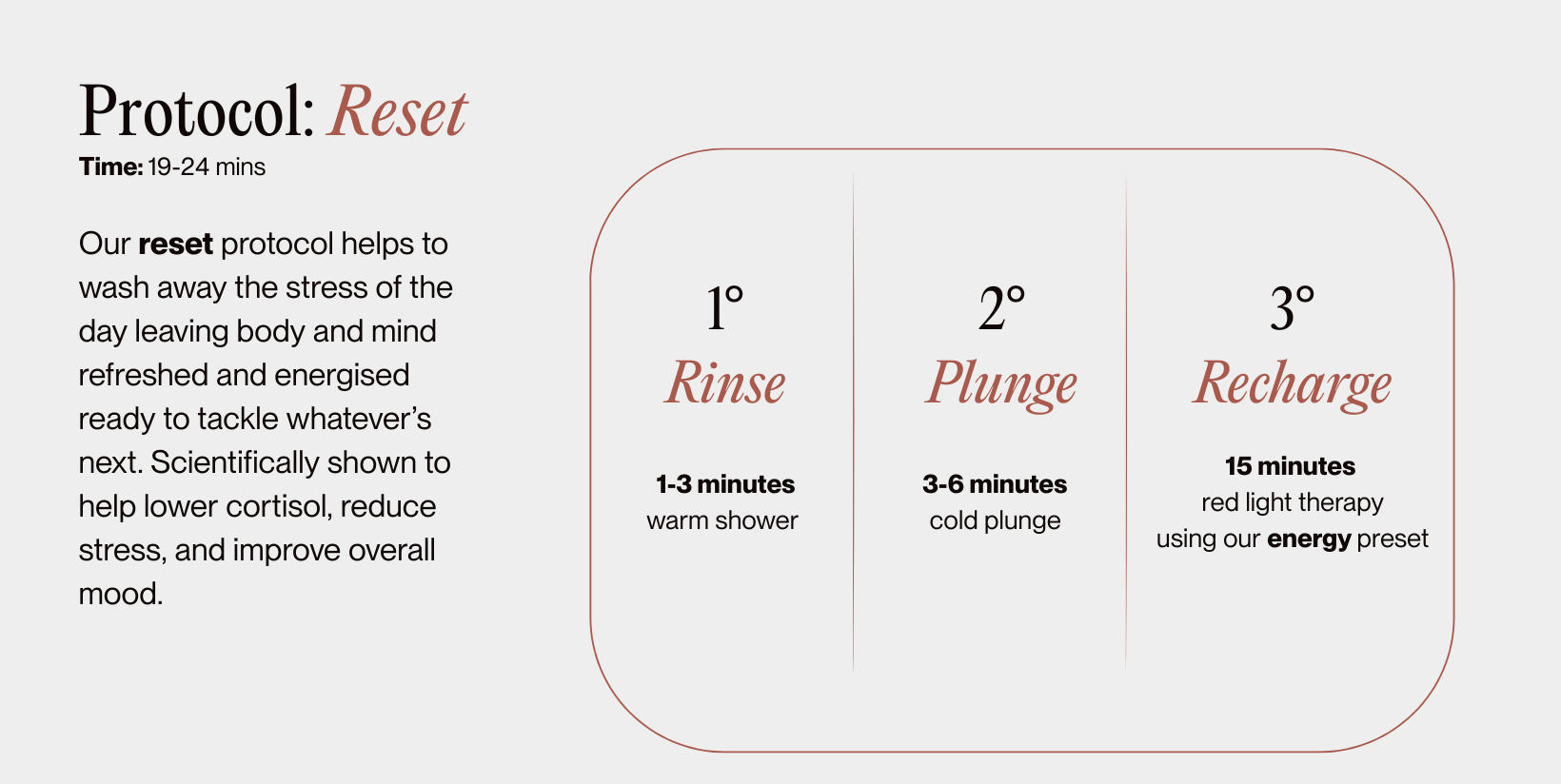
The Science-Based Sequence:
Step 1: Rinse (1-3 mins) – Prepare your body and mind under a warm shower
Step 2: Plunge (3-6 mins) – Cold water immersion to activate your nervous system and create optimal vasoconstriction
Step 3: Recharge (15 mins) – Red light therapy while your skin is still cool to maximise penetration and cellular benefits
This protocol perfectly embodies the temperature science we’ve explored: the cold plunge creates the ideal physiological conditions (vasoconstriction and cooled skin) that allow the subsequent red light therapy to penetrate deeper and deliver maximum benefits. You’re not just getting two separate therapies – you’re getting them in the scientifically optimal sequence.
Perfect For:
- Busy professionals managing stress
- Anyone seeking mental clarity and calm
- A first-thing morning or mid-day ‘reset’
- Those new to contrast therapy wanting to experience the real benefits
Ready to experience it in action? Book your Reset Protocol session here
Why Your Weight Loss Drug (Mounjaro) Is Aging You by 20 Years
The hidden cost of rapid weight loss: When the cure becomes worse than the condition.
Weight loss drugs like Mounjaro (tirzepatide) have taken the world by storm, promising dramatic results with minimal effort. But what if I told you that while you’re celebrating the numbers on the scale, you might be borrowing from your future self to look better today? Recent research reveals a disturbing truth: these “miracle” drugs could be accelerating your aging process and compromising your long-term health in ways that go far beyond what meets the eye.
The Shocking Reality: Your Muscle Is Disappearing
The most alarming evidence comes from groundbreaking research that should make anyone considering Mounjaro think twice. A pivotal 2024 review published in the journal Obesity compared the effects of tirzepatide with data on age-related muscle loss, and the findings are nothing short of startling.
The SURMOUNT-1 trial data revealed that participants lost at least 10% of their muscle mass over 68-72 weeks. To put this in perspective, this percentage loss is roughly equivalent to the estimated average decline in muscle mass that occurs over 20 years of typical aging in adults over 30.
Think about that for a moment…
If you’re a 30-year-old who’s been taking Mounjaro for 18 months, you’ve essentially time-traveled into the future and now possess the muscle mass of your fifty-year-old self – two decades of aging compressed into less than two years.
According to research published in The Lancet Diabetes & Endocrinology, this rapid muscle loss isn’t just a cosmetic concern, it’s a fundamental threat to your body’s structural integrity and metabolic health.
The PMC study further confirms these findings, showing that while tirzepatide achieves impressive weight loss numbers, “the composition of that weight loss is deeply problematic”. You’re not just losing fat, you’re losing the very tissue that keeps you strong, metabolically active, and functionally independent as you age.
Why Muscle Mass Is Your Longevity Insurance Policy
Understanding why muscle loss is so devastating requires recognizing that muscle tissue is far more than just what helps you lift heavy objects. Your muscles are metabolic powerhouses, hormonal regulators, and the foundation of healthy aging – especially for women.
The Metabolic Engine
Muscle tissue accounts for up to 30% of your resting metabolic rate. When you lose muscle mass, your metabolism doesn’t just slow down, it crashes. This creates a vicious cycle where maintaining weight becomes increasingly difficult, leading to metabolic dysfunction and increased disease risk.
The Postmenopausal Crisis
For postmenopausal women, the stakes are even higher. A comprehensive 2007 study revealed that postmenopausal women experience a rapid decrease in muscle mass of 0.6% per year – and this accelerates dramatically with hormonal changes. The research published in Climacteric shows that this “musculoskeletal syndrome of menopause” makes women particularly vulnerable to:
- Increased fracture risk: Studies demonstrate that higher muscle mass correlates directly with improved bone microarchitecture
- Metabolic dysfunction: Muscle loss directly impacts insulin sensitivity and glucose metabolism
- Cardiovascular complications: Research shows muscle mass is inversely related to cardiovascular disease risk
- Functional decline: Loss of independence and increased frailty risk
The Longevity Connection
Perhaps most critically, emerging research establishes muscle strength as one of the strongest predictors of longevity. Studies consistently show that individuals with higher muscle mass & strength live longer, healthier lives with reduced disease burden and maintained cognitive function well into advanced age.
The devastating cascade effect of muscle loss cannot be overstated. Research published in BMC Musculoskeletal Disorders demonstrates that individuals with sarcopenia face dramatically increased risks for falls, fractures, and hospital readmissions . The statistics are sobering: studies consistently show that 20-30% of patients die within the first year after a hip fracture. Even more alarming, recent research indicates that 27.8% of older adults experience recurrent falls within just six months of hip fracture surgery.
This creates a devastating domino effect: muscle loss leads to increased fall risk, falls lead to fractures, and fractures dramatically increase mortality risk. When you artificially accelerate muscle loss through drugs like Mounjaro, you’re essentially fast-tracking yourself toward this high-risk cascade years or decades earlier than would occur naturally. A 2024 systematic review confirmed that muscle mass measurement is independently associated with adverse outcomes in hip fracture patients , highlighting how critical muscle preservation is for survival and recovery.
Who Should Never Touch These Drugs
The research is crystal clear: certain populations should avoid weight loss drugs entirely, as the risks far outweigh any potential benefits.
Elderly Adults (65+)
Older adults are at extreme risk because they’re already experiencing natural age-related muscle loss (sarcopenia). Given the fact we lose 35-40% of our muscle mass between 20-80 years of age; adding drug-induced muscle wasting medications, like Mounjaro creates a perfect storm for accelerated frailty and functional decline.
Individuals with Existing Sarcopenia
Anyone already showing signs of muscle weakness, slow walking speed, or reduced physical function should never consider these medications. The additional muscle loss could push them past the point of no return for independent living.
Frail Populations
Those with existing health conditions, recent hospitalisations, or signs of physical frailty face dramatically increased risks of complications, falls, and accelerated health decline when muscle mass is further compromised.
Postmenopausal Women Without Resistance Training
Given the hormonal challenges already affecting muscle mass, postmenopausal women who aren’t actively engaged in strength training are particularly vulnerable to the devastating effects of drug-induced muscle loss.
Damage Control – Strategies to Minimise Muscle Loss
If you’re someone who’s chronically overweight or obese, these weight-loss drugs can certainly help you make a start on shedding a significant amount of weight. However, if you’re not medically diagnosed as “obese” and are instead using these drugs as a quick-fix or convenient route to lose weight – despite the potential risks – then certain strategies become absolutely non-negotiable for minimising muscle loss.
- Prioritise Protein Intake
Research published in the Journal of the International Society of Sports Nutrition demonstrates that consuming 1.6-2.2 grams of protein per kilogram of body weight daily is essential for muscle preservation. During periods of caloric restriction, protein needs actually increase, not decrease. High-quality sources should be spread throughout the day, with particular emphasis on leucine-rich foods that trigger muscle protein synthesis.
- Incorporate Strength Training
Resistance exercise is absolutely critical – not optional. Studies show that without progressive resistance training, up to 40% of weight lost comes from muscle tissue. Research in Sports Medicine confirms that 2-3 strength training sessions per week focusing on major muscle groups can significantly reduce muscle loss during weight reduction.
- Maintain Sufficient Calories
Extreme caloric restriction accelerates muscle loss. Moderate caloric deficits (300-500 calories below maintenance) preserve more muscle mass than aggressive restrictions. The goal should be sustainable fat loss, not rapid scale victories.
Better Alternatives That Actually Support Your Health
Before exploring natural alternatives, it’s crucial to understand how weight loss drugs like Mounjaro actually work – and why there are safer ways to achieve the same benefits.
Understanding GLP-1: The Key to Appetite Control
GLP-1 (Glucagon-Like Peptide-1) is a naturally occurring hormone produced in your intestines that plays a critical role in metabolism and appetite regulation. When functioning optimally, GLP-1:
- Suppresses appetite by signaling fullness to your brain
- Slows gastric emptying, keeping you satisfied longer after meals
- Regulates blood sugar by stimulating insulin release when needed
- Reduces food cravings, particularly for high-calorie processed foods
How Mounjaro Hijacks Your Natural System `
Tirzepatide (Mounjaro) works by mimicking and amplifying GLP-1 activity in your body. Essentially, it floods your system with synthetic signals that override your natural appetite and satiety mechanisms. While this creates dramatic appetite suppression and rapid weight loss, it comes with the devastating side effects we’ve discussed – particularly the accelerated muscle loss that ages your body by decades.
The drug essentially forces your body into an unnaturally suppressed appetite state, but it does so in a way that disrupts normal physiological processes and muscle preservation.
The Natural Alternative: Supporting Your Body’s Own GLP-1 Production
Rather than overwhelming your system with synthetic hormones that compromise your future health, consider these evidence-based alternatives that work with your body’s natural systems to optimize GLP-1 production safely and sustainably
- Hydrogen Water – Nature’s GLP-1 Booster
Groundbreaking research published in PMC reveals that hydrogen-rich water consumption can naturally increase GLP-1 levels and suppress appetite without the devastating side effects of pharmaceutical drugs. The HYDRAPPET randomized controlled trial showed that participants consuming hydrogen water for 8 weeks experienced: • Significant appetite suppression through natural GLP-1 elevation
• Improved body composition without muscle loss
• Enhanced sleep quality – crucial for metabolic health
• Better circulating hormone profiles
Consuming hydrogen water using H2 Tabs represent a natural way to achieve the appetite-suppressing benefits without the muscle-wasting consequences.
- Increase Protein and Fiber for Natural Satiety
Research consistently shows that high-protein, high-fiber diets naturally increase GLP-1 production while supporting muscle mass. Studies demonstrate that consuming 25-35 grams of fiber daily alongside adequate protein creates powerful satiety signals that rival pharmaceutical interventions, but with health-promoting rather than health-destroying effects.
- Optimise Sleep – The Forgotten Weight Loss Tool
Sleep research reveals that inadequate sleep disrupts hunger hormones more dramatically than most people realize. Studies published in Sleep Medicine Reviews show that: • Sleep deprivation increases ghrelin (hunger hormone) by up to 28%
• Poor sleep reduces leptin (satiety hormone) by 18%
• Quality sleep naturally optimises GLP-1 production
• 7-9 hours of quality sleep can be as effective as some medications for appetite regulation
- Exercise: Your Ultimate Health Investment
Unlike weight loss drugs that compromise your future, exercise provides compounding benefits:
• Preserves and builds muscle mass – the opposite of drug effects
• Naturally increases GLP-1 production through multiple pathways
• Improves insulin sensitivity for sustained weight management
• Enhances metabolic flexibility for long-term health
• Supports cognitive function and mood – benefits that drugs can’t match
Research in Medicine & Science in Sports & Exercise demonstrates that combining resistance training with moderate cardio (similar to the programming we offer our members here at Hall Training) provides superior long-term weight management compared to pharmaceutical interventions without the devastating health consequences.
The Bottom Line: Choose Your Future Self Wisely
The promise of rapid weight loss through medications like Mounjaro may seem appealing, but you’re essentially trading your future strength, health, and independence for temporary fleating victories. The research is unambiguous: these drugs age your body at an accelerated rate, stripping away the very tissue that keeps you healthy, strong, and metabolically robust.
Your muscle mass isn’t just about appearance; it’s your longevity insurance policy. Every pound of muscle you lose is a deposit withdrawn from your future health account, and the interest compounds in ways that will affect every aspect of your later years.
Instead of borrowing from your future self to look better today, invest in strategies that enhance both your current appearance and long-term health. The natural approaches outlined above don’t just help you lose weight; they help you build the foundation for a longer, stronger, more vibrant life.
The choice is yours: quick fixes that mortgage your future, or sustainable strategies that invest in the person you’ll become. Your 70-year-old self is counting on the decisions you make today.
Invest in Your Future Self with Hall Training
At Hall Training, we understand that true transformation isn’t about quick fixes that compromise your health; it’s about building sustainable habits that enhance both your present and future self.
While the fitness industry pushes dangerous shortcuts and “miracle” solutions, we take a different approach. We believe in investing in your long-term health, strength, and vitality through evidence-based methods that work with your body’s natural systems, not against them.
Our Comprehensive Approach Includes:
- Evidence-Based Nutrition Support: We help you understand how to fuel your body for optimal health, muscle preservation, and sustainable weight management. No extreme restrictions, no muscle-wasting protocols – just smart, sustainable nutrition that supports your goals (and your health).
- Structured Strength Training Programs We prioritise what matters most: building and preserving the muscle mass that keeps you strong, metabolically healthy, and functionally independent as you age. Our programmes are designed specifically around strength training, with particular attention around balance for overall health and longevity.
- Education Over Quick Fixes: We believe knowledge is power. That’s why we educate our members about topics exactly like this blog post. Understanding the why behind healthy choices empowers you to make decisions that serve your long-term interests, not just immediate gratification.
- Holistic Health Focus: From sleep optimisation to stress management, hormone balance to recovery protocols, we address all the factors that influence your health and body composition. Because true wellness isn’t just about what you do in the hour in gym, but how you spend the other twenty-three hours of the day.
Stop Borrowing from Your Future. Start Investing in Today.
Every day you delay implementing proper nutrition and strength training is another day you’re not building the foundation for lifelong health and vitality. While others are caught up in the latest fad or looking for shortcuts that compromise their future, you could be making genuine progress toward becoming the strongest, healthiest version of yourself.
Ready to invest in your future self? Our 30-Day Accelerator Programme is designed to kickstart your journey with the right foundation from day one. You’ll learn the principles, establish the habits, and experience the confidence that comes from knowing you’re building something sustainable.
Take Action Today
Don’t let another day pass wondering what your life could look like with the right support and guidance. Your future self – the person who will be strong, confident, and thriving in their 60s, 70s, and beyond, is waiting for you to make the choice to invest in them today.
Contact us today – to learn more about our 30-Day Accelerator Programme, because your future self will thank you for the decision you make right now.
How Much Is Personal Training at Hall Training? The Complete Cost & Value Guide
How Much Does Personal Training Cost in Oxfordshire?
If you’re searching for personal training in Oxfordshire, you’ve probably typed this into Google: “How much is personal training at [insert gym name]?”
We receive over a hundred enquiries each month from people looking to transform their health, and the first question is always the same: “How much are your personal training sessions?”
- One-off personal training sessions: £35 per session (1 hour)
- Average monthly investment: £264 per month
At first glance, those numbers may look expensive compared with a traditional gym membership. But price without context is meaningless. What matters is what you get for your investment, and whether it helps you reach your goals faster, safer, and more sustainably.
Why Pricing Feels Confusing In Fitness The industry
The fitness industry hasn’t made it easy to compare like-for-like. Introductory offers, hidden add‑ons, long contracts, and cleverly packaged “deals” blur the line between cost and value. For busy professionals in Oxfordshire, the lack of transparency turns a straightforward decision into guesswork. So let me simplify things and show you what the market actually looks likes, and where Hall Training sits within it.
Understanding Oxfordshire’s Personal Training Market
Our review of other small group personal training (SGPT) options along with traditional gyms across Oxfordshire (as of September 2025) shows a clear pricing spectrum:
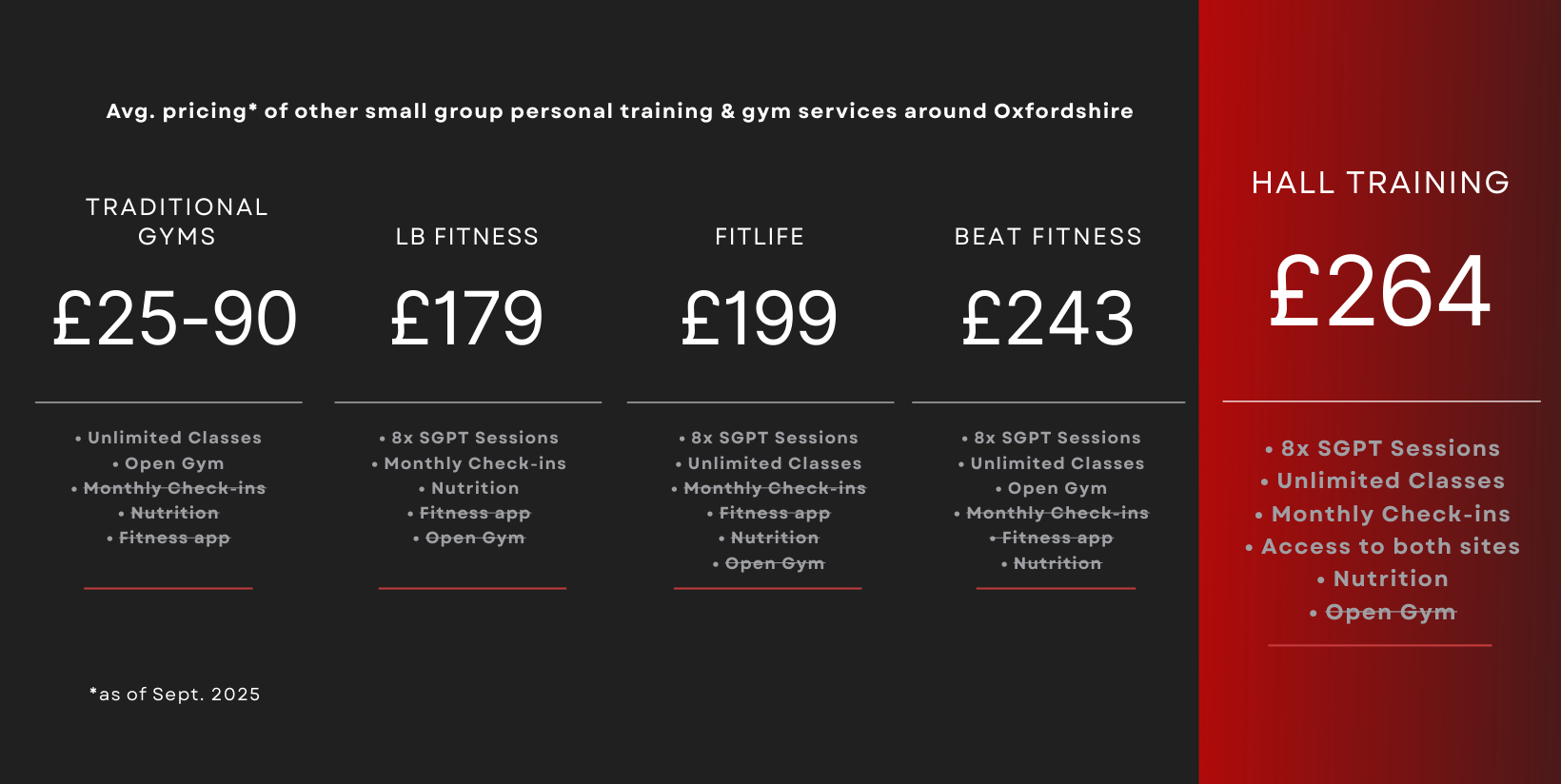
Gyms and SGPT providers such as:
- PureGym, Anytime Fitness and Bannatynes sit between £25 – £90 per month
- LB Fitness at £179
- FitLife at £199
- BEAT Fitness at £243
- with Hall Training at £264
The services at the lower end typically emphasise access – unlimited large-group classes, and gym usage – while services at the upper end include structured small group coaching, regular check‑ins, and varying levels of support. Our most popular package includes 8 small-group personal training sessions each month, unlimited classes, monthly check‑ins, nutrition guidance, fitness app, and flexibility to book across both of our sites.
In short, you’re investing at the premium end of regional pricing because you’re buying a joined‑up coaching system designed to deliver results, not just sessions.
The Hotel Analogy: Why “Cheap” Often Becomes Expensive
Imagine booking a hotel for an important business trip. Hotel A advertises £89 per night, while Hotel B costs £159. The budget option seems obvious (right?!) until you arrive…
The budget option looks appealing until you realise you need to add-on Wi‑Fi, breakfast, parking, and gym access (I love a good hotel gym). Then factor in the lost sleep from a poor bed, the patchy internet during a client call, and the time you spend solving problems you didn’t plan for. The cheaper room ends up costing more – in money, time, and energy. This exact dynamic exists in personal training.
Budget providers might advertise lower session costs, but members often find themselves paying additional fees for nutrition consultations, programme modifications, progress assessments, or supplementary classes needed to achieve their goals.
More critically, inadequate programming or inexperienced coaching leads to plateaus, injuries, or abandonment of your fitness goals entirely. The true cost isn’t just financial, it’s the months or years of missed progress, declining health, and loss of confidence that comes from choosing solely based on price.
Why We’re Proud to Be the Most Expensive
I’ve been in the fitness industry for twenty years now, and I’m proud of our premium positioning – we don’t apologies for our pricing – in fact, we celebrate it. Our pricing isn’t determined by what our competitors are charging or individual budgets, but by the exceptional value we deliver:
- A Proven Track Record
We were Oxfordshire’s first and original small group personal training studio, pioneering the model that others now follow.
- Continuous Investment in Excellence
Every month, we invest significant hours and resources in professional development, attending international seminars, mentorship programs, and advanced certifications.
- Global Knowledge Network
We travel worldwide to learn from industry leaders, bringing cutting-edge techniques and methodologies directly to your training sessions.
- Comprehensive Approach
Unlike session-only trainers, we provide complete lifestyle coaching, nutrition guidance, habit formation, and long-term success strategies.
The Real Value Equation
When you choose Hall Training, your monthly investment isn’t just another monthly direct debit payment that’s going on eight hours of personal training – it’s funding a system that’s built on twenty years of experience and delivers outcomes.
- Ours coach designs and updates a plan around your goals, training age, movement quality, and schedule.
- We track meaningful metrics and adjust the programme when your life demands it, not when a calendar says so.
- Nutrition guidance is practical and personalised, focused on habits you can sustain rather than rigid rules you’ll abandon.
- You train in a space designed for coached sessions, and education around lifting – not queuing for equipment.
- You’re supported by a community that pulls you along when motivation dips.
- Lastly, you benefit from experienced and knowledgeable professionals in their field, coaches who take the time to know you and know how to progress you quickly without unnecessary risk.
The Expertise Investment: What £264 Actually Gets You
Our pricing reflects a fundamental commitment that cheaper options simply cannot match: continuous professional development and uncompromising expertise.
- Ongoing Education
while competitors focus on quantity of sessions, we invest heavily in staying at the forefront of exercise science, nutrition research, and coaching methodology – This isn’t just professional development, it’s insurance for your results. When you’re investing time and money in your health, you need coaches who understand not just today’s best practices, but tomorrow’s emerging research
- The Experience Factor
Our higher price point also reflects something you can’t quantify in a pricing table: experience working with clients who’ve tried other approaches first. We’ve seen what doesn’t work, why plateaus happen, and how to prevent the frustrations that lead people to abandon their fitness goals.
-
Comprehensive Systems Approach
While many competitors offer individual services, our pricing reflects a comprehensive all-in-one package designed for sustained success. Sessions available every hour and access to both our sites isn’t just convenience, it’s recognition that life is busy, so your schedule demands flexibility. Our integration of nutrition, programming, and progress tracking aren’t three separate services, they’re a unified approach that accelerates results.
This Is Why People Choose Hall Training Over Alternatives
Our members come to us because progress is deliberate, not accidental. They consistently tell us why they choose us over anywhere else:
We’re a personal training buiness that pride ourselves in delivering:
-
Results-Driven Approach: We focus on measurable outcomes, not just attendance
-
Personalised Attention: Every session is tailored to your unique needs and progress
-
Professional Excellence: Our trainers maintain the highest industry standards
-
Comprehensive Support: We’re partners in your entire wellness journey
-
Long-Term Success: We teach sustainable habits, not quick fixes
Risk-Free Discovery: Our 30-Day Accelerator Programme
Starting your fitness journey shouldn’t feel like a leap of faith. That’s why we offer our initial 30-day accelerator programme – a carefully structured month designed to help you determine if Hall Training is the right fit for your goals, lifestyle, and preferences.
Over the month you’ll train in our small‑group format, meet the coaching team, experience the community, and see how our sessions fits around your schedule and into your day-to-day life. You’ll also receive practical nutrition guidance and a simple progress framework so you can see what’s changing, and why. At the end of 30 days you’ll know, with evidence, whether the people, the place, and the programmes are the right fit for you! We prefer to earn your trust through outcomes rather than paperwork.
Value Is About Results, Not Just Price
So the question isn’t: “Why does Hall Training cost more?”
It’s: “Does the extra investment give me more progress, more confidence, and more consistency?”
If you’re someone who values their time, wants to see results and live a long and healthy life, then the answer is yes!
And so, we don’t compete on price because we compete on outcomes. Our members don’t choose us because we’re the cheapest – they choose us because we consistently deliver the outcomes that justify their investment.
So, the real question you should be asking is: “what’s the cost of another year of mediocre results, wasted time, and unrealised potential?”
The Ultimate Guide to Ice Bath Timing: When Cold Therapy Actually Works (Science-Backed)
The Ultimate Guide to Ice Bath Timing: When Cold Therapy Actually Works (Science-Backed)
Why the “before vs. after” debate misses the point – and how to time your cold exposure for maximum results
I’ll be honest – two years ago, I thought ice baths were just another wellness trend. Fast forward to today, and cold water immersion has completely transformed how I handle stress, recover from workouts, and approach challenges both in and out of the gym.
But here’s where it gets interesting: the timing of your ice bath can make or break your results.
You’ve probably seen the contradictory advice online. “Ice baths are amazing for recovery!” one expert claims. “Ice baths destroy your gains!” another warns. The truth? They’re both right – it just depends on when you use them.
After diving deep into the research – both scientific and anadotal (and experimenting on myself), I’ve put together this comprehensive guide to cut through the confusion. Whether you’re chasing performance gains, faster recovery, or both, here’s everything you need to know about timing your cold exposure.
Your Quick Reference Guide
Just want to skip to the actionable takeaways? Here’s your cheat sheet:
Ice Bath Protocols
For Performance (Pre-Exercise)
- 30 minutes before training
- 2-5 minutes in 5-12°C water
- Best for: Endurance events, high-intensity & strength sessions, competitions
For Recovery (Post-Exercise)
- At least 4 hours after strength training
- 10-15 minutes in 8-12°C water
- Use immediately after only if you have back-to-back sessions
Sauna Protocol
For Performance & Recovery (Post-Exercise)
- 15-30 minutes post-exercise
- 50-70° temperature (Infrared sauna) | 70-90° temperature (Finnish sauna)
- Enhances rather than blunts training adaptations
- Never before intense training sessions
However, you’re like me and want to know more around the scccience and the specifics, then read on – let’s start with the science of heat.
Why Timing Changes Everything
The confusion around ice baths stems from one crucial misunderstanding: cold exposure triggers different physiological responses depending on when you use it.
Post-exercise ice baths excel at reducing inflammation and muscle soreness – perfect for competition recovery. But they also suppress the very proteins your muscles need to grow stronger. Studies show cold water immersion immediately after strength training can blunt muscle protein synthesis for up to 48 hours.
Pre-exercise cooling, however, tells a completely different story.
The Science of Pre-Cooling: Your Secret Performance Weapon
Here’s what most people don’t realise: your body’s ability to perform isn’t just limited by energy – it’s limited by heat.
As the body warms, fatigue sets in, making it harder to sustain pace or output. Energy from muscle contractions is converted into thermal energy, raising core temperature. Heart rate drifts upward, perceived exertion rises, and the body slows us down to prevent overheating. If our body gets too hot, the brain signals us to stop – protecting us from hyperthermia.
Research insight: A study of 23 men showed that those who cooled down fastest after exercise had the greatest cardiovascular fitness levels (Jastrzebska et al., 2022)
Think of it as your body’s built-in safety mechanism. When internal temperature gets too high, your brain essentially says: “Slow down, or we’re in trouble.”
The Stanford Breakthrough: Targeting Your Body’s Cooling Gates
Stanford scientists Dennis Grahn, PhD and Craig Heller, PhD made a game-changing discovery in their research dating back almost 20 years. In a series of experiments, they found that extracting heat from specific body regions could dramatically enhance performance by postponing fatigue. (Grahn et al., 2005)
The secret lies in targeting arterio-venous anastomoses (AVAs) – specialised blood vessels located in:
- The palms of your hands
- The bottoms of your feet
- The upper part of your face
These AVAs act as your body’s primary heat exchange highways. Unlike regular capillaries, AVAs can dilate up to 10 times their normal size, allowing massive amounts of blood flow for rapid heat transfer. When you cool these specific areas, you’re essentially turbo-charging your body’s natural cooling system.
The Stanford results were staggering:
- 40% improvement in bench press performance
- 144% increase in pull-up work volumes
- Sustained performance over multiple training sessions
A Practical Solution: Full-Body Immersion
Whilst the Stanford protocol involved targeted cooling devices for palms and feet, this approach isn’t exactly gym-friendly. Enter the ice bath, which is a more accessible solution that targets all your body’s cooling zones simultaneously.
Full-body cold water immersion provides comprehensive cooling that:
- Activates at least two (possible all) major arterio-venous anastomoses (AVA) sites at once
- Rapidly reduces core body temperature
- Provides a more practical gym or home setup
Studies on whole-body pre-cooling consistently show:
The Pre-Cooling Advantage
By starting your workout with a lower baseline temperature, you can:
- Delay the onset of heat-related fatigue
- Maintain higher power outputs for longer
- Push harder before your body’s safety mechanisms engage
- Stimulate natural testosterone and luteinising hormone release when combined with exercise (Sakamoto et al., 1991)
One particularly fascinating study from Australia tested cyclists using hot water immersion before exercise and found performance dropped by 15%, reinforcing the protective role of heat-related fatigue. (Dennis et al., 2022)
It’s In Your Head – The Mental Game
Beyond the physiological benefits, pre-exercise ice baths offer a powerful psychological advantage. Cold exposure activates the anterior midcingulate cortex (aMCC) – the brain region associated with willpower, tenacity, and resilience. (Huberman PHD., 2024)
Athletes and long-lived individuals consistently show larger aMCC regions, and the only way to grow this area is through deliberate discomfort – aka. doing hard things. Stepping into an ice bath cold enough to scare you – and staying in just long enough to regain the breath and calm the nervous system – is a powerful way to build aMCC-driven resilience. That 2-4 minutes in ice-cold water? It’s literally training your brain for mental toughness before you even touch a weight.
Post-Exercise Recovery: When Cold Plunging Shines
This is not to say we should write off post-exercise cold plunges entirely. Used strategically, they’re incredibly powerful:
Use Ice Baths Post-Exercise When:
- Competing in back-to-back events (same day or within 48 hours)
- Prioritising training recovery over muscle growth or strength
- Managing high training volumes – 2x per day sessions.
- Dealing with excessive inflammation
Avoid Ice Baths Post-Exercise When:
- When strength or muscle growth is the primary goal
- You’re in a building phase of training
- Recovery isn’t immediately critical
The sweet spot? Wait at least 4 hours after strength training to avoid interfering with muscle protein synthesis and the body’s natural repair process, whilst still gaining anti-inflammatory benefits.
The Sauna Solution: Heat That Actually Helps
We’ve talked a lot about the cold and it’s benefits before exercise, inculding strategic cold after exercise, both having their place. But one modailty which oftern get overlloked is the sauna, which consistently delivers post-workout, but like the cold, timing is absolutely critical here.
Why Pre-Exercise Sauna Backfires
Never use sauna before intense training – it’s performance suicide: Heat exposure before exercise creates a perfect storm of performance limitations:
- Accelerates time to fatigue by pre-loading your thermal stress
- Increases risk of overheating from an already elevated baseline
- Shuts down pyruvate dehydrogenase – a key enzyme essential for muscle contraction
- Severely limits ATP production, starving your muscles of energy when they need it most
Our Australian research confirms this: athletes subjected to hot water immersion before bicycle sprints saw performance decreases of 15%. When your body is already fighting heat stress, adding exercise intensity becomes an uphill battle your muscles simply can’t win.
Post-Exercise: Where Sauna Shines
Unlike ice baths, saunas enhance rather than blunt exercise adaptations when used post-workout:
Proven Sauna Benefits:
- 9% improvement in VO₂max (5 minutes of sauna post-exercise increased VO₂ max by 2.6 mL/kg/min) (Earric et al., 2022)
- 44% improvement in cardiovascular fitness (Earric et al., 2022)
- What’s remarkable is, these improvements were in addition to exercise alone, highlighting sauna as a powerful complementary tool (CRF, BP, cholesterol).
- 200-500x increase in growth hormone aiding repair and fat metabolism (Kukkonen-Harjula et al., 1989)
- 10mmHG reduction in systolic blood pressure (over 3 weeks) (Gaynor et al., 2018)
- Reduced muscle soreness without impacting muscle and strength gains.
Additionally, a study on endurance runners found that 30 minutes of sauna (3x per week for 3 weeks) increased run time to exhaustion by 32% compared to controls. The effects were linked to increased blood plasma (7.1%), red blood cell count (3.5%), and total blood volume – all of which support nutrient and oxygen delivery to muscles.
The mechanism? Heat stress creates a hormetic response – a controlled stress that makes your body adapt by becoming stronger. The increased blood flow, growth hormone response, and enhanced protein synthesis actually amplify your training stimulus. Post-exercise sauna creates beneficial hypoxic stress for your muscles. As blood vessels dilate to bring blood to the skin for cooling, less oxygen reaches the muscles, creating an additional adaptive stimulus that mimics altitude training effects.
Key insight: Heat + exercise = performance killer. Exercise + heat = performance enhancer.
Red Light Therapy: The Flexible Option
Unlike temperature-based therapies, light therapy – specifically red and near-infrared light (NIR) – can be applied both before and after exercise. Although awareness in the general community is still growing, more than 3,000 peer-reviewed studies highlight its wide-ranging benefits. At Avanto° Wellness, we use red and NIR light to help people feel and perform at their best. It can improve skin tone, ease aches and inflammation, boost brain function, and increase energy at a cellular level. Beyond everyday health, it can also make a real difference to exercise performance and recovery – helping you train harder, recover faster, and feel stronger.
- Before training: Boosts ATP production, exercise performace and mitochondrial activity. (Aver Vanin A et al., 2016)
- After training: can support an increase in muscle mass gained after training, and decrease inflammation and oxidative stress
without interfering with adaptations. (Ferraresi C et al., 2016)
- Anytime: Promotes skin health, wound healing, and reduces inflammation.
Your Personalised Protocol
For Maximum Performance:
- Ice bath: 30 minutes before high-intensity training for 2-5 minutes at 5-10°C
- Red light therapy: 12 minutes using our Avanto° “Energy” preset
- Train as normal
- Sauna: 15-25 minutes post-exercise at 60-70°C
For Muscle Growth Focus:
- Ice bath: 30 minutes before training (increases testosterone, power, and strength output)
- Train with enhanced performance capacity
- Sauna: post-exercise for enhanced adaptations and growth hormone response
- Red light therapy: post-exercise for recovery support without interference
- [Wait 4+ hours post-exercise, then ice bath if desired for recovery]
For Performance & Recovery:
- Train as normal
- Sauna: 10-15 minuntes at 45-55°C – a theraputic temp. to help balance adaptations from exercise and recovery
- Ice bath: 10 minutes at 8-12°C
- [Optional] Red light therapy: can be used pre or post-exercise using our Avanto° “Energy” or “Wellness” preset depending on the desired goal.
- [Wait 4+ hours post-exercise, then ice bath if you want to optimise hypertrophy]
The key insight for muscle growth and performance: pre-cooling actually supports your goals by allowing you to train harder and heavier whilst boosting anabolic hormone production. The concern about blunting adaptations applies specifically to immediate post-exercise cold exposure, not pre-exercise protocols.
For Competition/High Volume:
- Pre-cool before events
- Ice bath immediately after for rapid recovery
- Sauna when you have 24+ hours until next session
The Bottom Line
The ice bath debate isn’t about whether cold therapy works – it’s about matching the right tool to your specific goal and timing it correctly.
Cold exposure is powerful medicine, but like any medicine, dosage and timing determine whether it helps or hurts.
Want to break through performance plateaus? Try pre-cooling. Need to bounce back from intense competition? Strategic post-exercise cold therapy has your back. Building muscle? Skip the immediate post-workout ice bath, but don’t skip the sauna.
Most importantly: Listen to your body, track your results, and adjust accordingly. The best protocol is the one you can consistently execute whilst monitoring how your body responds.
Discover More
Would you like to discover how strategic cold (and heat) exposure could transform your training and recovery? I’d love to hear about your goals and help you create the perfect protocol. Contact us at Avanto° to discuss your specific needs, or join our newsletter community for science-backed wellness insights and to receive a 50% off code on your first cold plunge and sauna experience.
Do I Really Need a Personal Trainer?
Motivation or Knowledge – What’s Really Holding You Back?
The idea for this blog came to me after chatting with a lady who recently reached out for help.
Approaching sixty and newly retired, she’d spent decades in a fast-paced corporate career where her time was precious. Exercise had always been squeezed into the gaps – short bursts here and there when she could…
sidenote: if you’re reading this and thinking, “I never have the time to exercise” then you need to first check this blog!
…now, with time in abundance, her days look very different: hours spent in the garden, daily walks, and some light resistance exercises in her living room.
On the surface you’d look at her routine and think: she doesn’t need a personal trainer. She’s active, balanced, and consistent.
And to an extent, I’d agree. But as our conversation developed and I reflected on her story, I realised she highlighted something I’ve seen throughout my two decades in the fitness industry: most people who benefit from personal training fall into one of two camps.
The Two Types of People Who Benefit Most From Personal Training – Which One Are You?
Camp 1: Motivated but Lacking Knowledge
This lady clearly belonged here. Driven, disciplined, and not afraid of putting in the work, but when it came to knowing which exercises to do, how to structure them, or how to make progress over time, she was lost.
And she’s not alone. According to a Nuffield Health study of 2,000 UK adults:
- 55% of gym-goers admit they don’t know what they’re doing when exercising.
- 20% copy someone else’s workout just because they looked confident or appealing.
The majority don’t know even the basics of their health metrics:
- 65% don’t know their BMI.
- 75% are unaware of their resting heart rate.
- 88% don’t know their body fat percentage.
- Almost half have no clear goal in mind, and of those who do, 74% don’t set a timeline for achieving it.
So while motivation may not be the issue, using your time effectively is. That’s where structured guidance makes all the difference.
Camp 2: Knowledgeable but Lacking Motivation
The second camp is the opposite. Thanks to YouTube, Instagram, and AI-powered apps, it’s never been easier to find a diet plan or a workout routine that’s aligned to your goal(s). You can become an “expert” in just a few hours if you know where to look.
But having information isn’t the same as following it. This is where many people struggle. Research shows:
- 38% of adults say a lack of motivation is the main barrier to living a healthier life.
- 35% say they’re simply too tired to exercise.
- And a survey from UKActive showed 41% of us skip the gym after a busy workday, opting for the sofa instead.
In fact, a blog I wrote earlier this year showed, even among those who join gyms full of good intentions, 50% stop attending within six months, and around 80% cancel their membership within a year.
The truth is, discipline and accountability are harder to come by than information. As one user on Reddit put it:
“I have all the tools, know exactly what to do, but I lack motivation, dedication, and conviction.”
This is where personal training steps in; not to teach you what you already know, but to keep you on track when motivation dips.
So… Do You Need a Personal Trainer?
If you recognise yourself in either of these camps, the answer is probably yes. Whether you’re motivated but unsure what to do, or knowledgeable but lacking consistency, working with a trainer gives you structure, clarity, and accountability – we all require a kick up the backside once in a while.
At Hall Personal Training, we specialise in helping people bridge this exact gap (in addition to giving them a gentle kick). Our small-group personal training and one-to-one nutrition and progress reviews combine expertise with encouragement – giving you the plan, the support, and the accountability you need to finally get results you can stick with.
Because at the end of the day, it’s not just about knowing what to do, it’s about having the right people and support network alongside you, to make sure you actually do it!
Fancy knowing more? Why not reach out to learn about our 30-Day Accelerator Programme – an all-in-one approach that combines coaching, nutrition, and accountability. It’s designed to get you up off the couch, accelerate your progress, and set you firmly on the path to your goals…