Fitness events in Oxford across October
With our HQ in the city, we thought we’d best round up all the fitness events in Oxford that are happening in October. Looking for a new challenge? We’ve found plenty that will test your limits this month!
Saturday 7th October, 10:00am
Fancy yourself in Game of Thrones or Robin Hood? The Oxford Archery Training Centre’s autumn term kicks off on Saturday 7th. The term consists of five structured workshops, and you can attend all of them, or just those you fancy. It’s open to all ages!
Saturday 14th October, 12:00
This one’s a bit further away from our usual Oxford stomping ground, but it sounded so good we just had to include it! Windsor Brewery is hosting a 5k and five mile fun along the River Thames, but best of all its followed by a brewery tour, a beer and a food festival – what’s not to like!
Saturday 21st October, 11:30am
For any of our Oxford University student members, the university Polo Club is running taster sessions on the Saturday and Sunday of this weekend. For £30, you get transport, nibbles and drinks as well as time to practice polo swings. Could this be your next fitness pursuit?
Saturday 21st October, 10:00am
Love Halloween, love being outside? Then you’re in luck. Thames Valley Orienteering Club have arranged a spooky orienteering session at beautiful Waddesdon Manor. There’s no set path to follow, you’ll have to make your own way around the 3k or 5k course, and there will be plenty of spooky surprises!
Friday 28th October, all day
If you fancy something with a bigger thrill, Newbury’s Zombie Run is returning at the end of the month. It’s a 5k inflatable course, complete with zombies. Don’t fancy the run? You can even enter as a zombie to infect the runners!
Various times throughout October
Every Saturday at 9:00am, Oxford’s park run sets of from Cutteslowe Park and Sunnymead Park.
Fitness events in Oxford across July
Not only are we lucky enough to live in one of the most beautiful cities in the country, Oxford also has a host of fitness events going on each month. Here are a few events you can check out in July!
Sunday 9th July, 10:00
Join Cancer Research’s Race for Life at the University Parks in Oxford. Open to ladies only, there’s a 5k and a 10k course, with everyone raising money to beat cancer.
Sunday 9th July, 09:50
Run through and around beautiful Adderbury (near Banbury) on a 5k, 10k or half marathon course, with plenty of off road running!
Wednesday 12th July, 19:30
This is definitely something we can get behind. Open to all levels, this one hour yoga class is accompanied by a bottle of beer. Just book a ticket, bring a yoga mat and you’re away. Tickets are £12.00
Sunday 16th July, 9:00
Burford Bolt 5/10k in Marlow
A challenging 10k course, including both tarmac and woodland in beautiful Marlow. There’s a 5k course too if you’re not feeling too adventurous!
Wednesday 19th July, 7:30
Waddesdon Manor Summer 5k
Fancy giving a 5k a go? Why not do it in the beautiful grounds of Waddesdon Manor with the Vale of Aylesbury Athletic Club??
And of course, there’s the Oxford park run every Saturday at 9am, held in Cutteslowe and Sunnymead Park.
National pizza day – can pizza fit in a high protein diet?
Just realised it’s National Pizza Day but forgotten to order your protein pizza from Musclefoods.com? All may not be lost. Our junior trainer Rosie has been on the hunt for a high street alternative.
Scouring through the super markets to find a ‘healthy pizza’ or at least a pizza relatively high in protein, low in calories and low in carbs and that would still taste half edible (I know…. Its not a lot to ask for) was more of a challenge than I had anticipated.
Muscle foods.com seemed to be the only place that actually stocked this ‘idealistic pizza’, but I was on the hunt to find a similar pizza from the supermarkets!
With all the hundreds of different types of pizzas available on supermarket shelves, I thought there must be least one that would meet the muscle food pizza nutritional standards. Muscle foods pizza’s nutritional value per 100g is 187 Kcal, 6.7g Fat, 9.2g Carbs and 19g Protein. For a pizza, that’s pretty good!
The plan
- Begin the supermarket pizza prowl
- Buy the 3 highest Protein, lowest calorie pizzas I could find available on the supermarket shelves of Oxford
- Finally cook, eat and assess the sensory attributes and not get too fat with all the pizza eating! (It’s meant to be ‘healthy pizza after all, right?)
I started off looking in M&S ,and I’ve got to say the pizza looked rather yummy and I had high hopes I would be taking a pizza home to eat from here, but unfortunately none of the pizzas came close to what I was looking for nutritionally. I moved on briskly, straight into Tesco, which actually had 3 pizzas that I was torn between; finally my last stop, Sainsbury’s and this was definitely the winner in terms of the most pizza’s meeting the nutritional requirements.
So after a fairly laborious pizza hunt and a hell of a lot of label reading, I had finally found my pizza contenders.
The final 3:
1. Tesco Spicy Meat Feast Pizza
2. By Sainsbury’s Thin and Crispy BBQ Chicken pizza
3. Sainsbury’s Basics Cheese and Tomato Pizza
Firstly, the nutritional comparisons, I looked at the nutritionals per 100g:
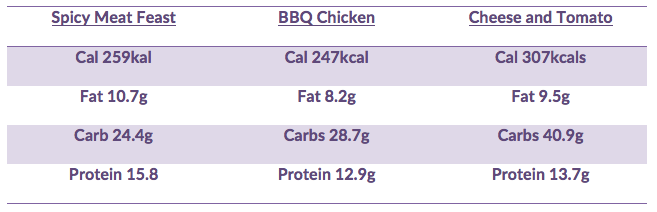
Nutritionally, it was a close chose between the spicy meat feast and BBQ chicken, as both were similar in calories and carbs but meat feast had slightly more protein, and BBQ chicken slightly less fat. I ended up giving them joint first place.
So now to the best part of reviewing pizza… the taste test!
First the spicy meat pizza: I really enjoyed the heat from the jalapenos and the yummy the thick layer of tomato sauce. I also liked the tang from the spicy beef. However if you are not a chili lover, you will not get on too well with this pizza, as it was pretty hot!
Next up, the Cheese and tomato basic pizza, hmm well I wasn’t too excited about eating this one as it looked pretty bland and boring and I can’t say it tasted much better. It was a little bit like a sad cheese and tomato toasty (where the filling has been applied rather sparingly). I actually ended up adding some spinach and chicken to the pizza to make it a little more palatable and to boost up the protein content!
Lastly my favorite of the 3 pizzas, the BBQ chicken, I thought this pizza had a lovely crispy base, a nice even layer of cheese and tomato sauce and slightly smoky taste from the BBQ chicken.
So the final verdict…
After accounting for taste, nutritional value and ultimately the pizza I would be most likely to buy on a regular basis, I have to say the clear winner was the by Sainsbury’s BBQ chicken.
I cant say I’m totally convinced that it is quite up to the standards of the muscle foods high protein pizza, but the BBQ chicken with only 247kcal, 8.2g fat, 12.9g protein and at ½ the cost of the online muscle foods pizza, is a pretty good supermarket winner.
Anyway I hope you enjoy national Pizza day, Eat as much pizza as I have, oh and definitely try the BBQ chicken pizza from Sainsbury’s.
Happy Pizza eating!
As winter arrives and the cold weather sets in there’s only one type of food that helps to warm our bellies – carbohydrates. Today I want to talk about a group of carbohydrates known as ‘grains’.
Grains are any food made from wheat, rice, oats, cornmeal, barley or another cereal. Bread, pasta, oatmeal, breakfast cereals, tortillas, and grits are all examples of grain products.
Grains can be divided into 2 groups:
- Whole Grains – Whole grains are untouched and contain the entire grain kernel ― the bran, germ, and endosperm. Examples include wholewheat flour, bulgar wheat, oats and brown rice.
- Refined Grains – Refined grains are grains that have been milled, a process that removes the bran and germ. This is done to give grains a finer texture and improve their shelf life, removing a lot of the dietary fiber, iron, and some B vitamins. Examples are white flour, white bread, and white rice.
Most grains have been given a bad rap over the last few years with some ‘experts’ claiming that consuming them causes weight gain, abdominal bloating, cardiovascular disease and even cancer. Eating any foods in excess will inevitably cause weight gain and sometimes bloating, but to say grains are a danger to one’s health is completely absurd and certainly not true! If anything, I can only see grains being beneficial to health as they’re useful sources of minerals, antioxidants and fibre, which should all feature as part of a healthy diet, alongside lean proteins and healthy fats. So, to reap the benefits, I’ve made a guide to some great grains:
Amaranth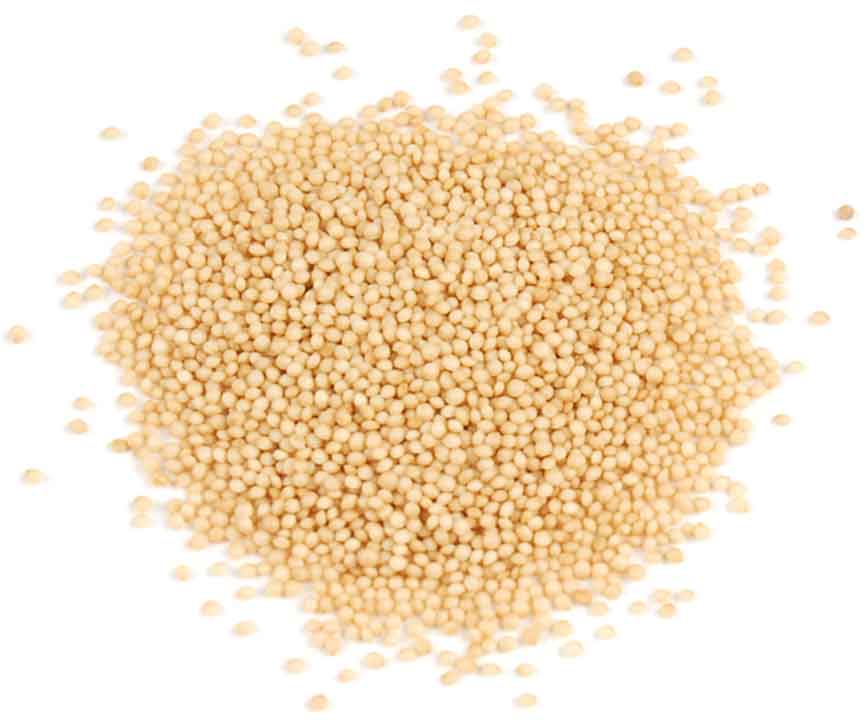
Amaranth is usually rich in magnesium, which is required for muscle relaxation and helping the body to manage stress; calcium, which helps to maintain bone density; iron which carries oxygen round the body, and lysine (some evidence suggests it helps counter the effects of cold sores but more importantly it helps to reduce calcium loss and therefore good for bone health).
Tip: It is in the same family as quinoa and beetroot and contains no gluten. In fact it’s technically not a grain at all but cooks like rice or can be used as a substitute to popcorn.
Barley
5 Upper Body Exercises You Probably Never Knew Existed
The key to any successful fitness programme is variety. While all of the ‘standard’ exercises and lifts, such as the bench press and squat, are key, there are many more little-known exercises that could also help you achieve your goals.
To help with your workout inspiration, here are five upper body exercises you probably didn’t know existed, but should definitely include in your next workout!
1. Standing Cable Pallof Press
Origin: This exercise was introduced in 2006, and named after the Boston-based physical therapist, John Pallof.
Targets: It works the core’s ‘true’ fuction – stability over movement. It resists the trunk going into side flexion (bending to the side) and extension (bending backwards), working the core and abs hard! It also helps to bring the hips into a strong posterior pelvic tilt position (hips tucked underneath) along with keeping your abs braced.
Who can do it? It’s an exercise that can be both regressed and progressed for any level of ability. Standing (feet neutral) is probably the most basic version of this exercise. Once you’ve mastered this you can then play around with feet position (split stance) and then move into a kneeling position.
2. Z Press
Origin: This movement is named after strongman Zydrunas Savickas.
Targets: Core, shoulders – requires hip mobility, trunk strength, hamstring flexibility and lumber strength, as well as thoracic spine mobility.
Who can do it? This is a much harder exercise than your standard overhead press, and if you expect to lift an equal amount of weight as you would during your overhead press then you will be disappointed! It is best attempted by those familiar with weightlifting. Make sure you keep your heels and the back of the knees in contact with the floor and then perform the movement like a standard overhead press.
If you struggle to keep the legs straight and the lower back stiff, then try widening your foot position slightly, which will make room for your hips, or place a small step under your bum to reduce the degree of hip flexion. This exercise requires a huge amount of trunk stability and hip mobility, and if you find you’re lifting less than half the weight for your standing overhead press then you need to work on your truck stability and hip mobility before tackling it.
3. Kneeling Zottman Curl
Origin: Named after the 19th Century strongman, George Zottman.
Targets: all of the muscles that flex your elbow joint. The concentric portion (as you curl the dumbbells up) primarily targets the biceps, with them being in a mechanically strong position when your palms are facing upwards. At the top of the exercise, rotate the wrists, switching to a pronated grip (palms down). As we lower the weight, we readily engage the brachioradialis (a muscle which runs from the forearm to the upper arm) and brachialis (the muscle located beneath the biceps), effectively combining two exercises in one.
Who can do it? Anyone; those new to weightlifting should just start with a smaller weight! We find the Zottman curl has a strong carry over for chin up or pull up strength especially in females, due to the biomechanics of the lift.
Typically you’ll see people performing this in a standing position. Personally, I prefer a kneeling position as eliminates the ability to cheat or force the weight up by swinging from the back or using the legs. When in a kneeling position I find it places more emphasis on the core and glutes by holding a posterior pelvic tilt position.
4. California Press
Origin: Believed to have been named by members of Gold’s Gym in California back in the ‘70s.
Targets: It’s a hybrid exercise that’s a cross between the close-grip bench press and lying triceps extension. It’s a popular assistance exercise among the powerlifting community, particularly by lifters who need to increase the size of their triceps and strength to bring up their bench press weight.
A good starting weight for this exercise would be a halfway weight between what you would lift when you close-grip bench press and what you would use when performing lying triceps extensions. If you find yourself going too heavy too soon, you’ll more than likely compromise technique and it’ll revert back to being a close-grip bench press.
Who can do it? This is best practiced by somebody familiar with weightlifting, who has experience in both the close-drip bench press and lying triceps extension.
5. Pendlay Row
Origin: Named after former Junior World Champion in Powerlifting and Collegiate National Champion in Olympic Weightlifting, Glenn Pendlay.
Targets: Maximal back strength and explosiveness – great for improving deadlifts!
Who can do it? This exercise should only be attemped by those with a strong core and lower back. Starting and stopping each rep from the floor minimises the time the weight is suspended, allowing for a split second recovery and easing the burden on the lower back. This allows for a greater amount of weight to be lifted compared to the bent over row. However, due to the body’s position and pull from the ground, the body is having to resist the bar’s downward force meaning you’ll need a strong core and low back if you want to be pulling sufficient weight. It should be performed with lower reps (4-8) and an explosive manner.
Hopefully this post has given you a few ideas on how you can spice up your next programme. Watch this space for five lower body exercises you should be using too!
Is the sugar tax really going to halt child obesity?
With the release of last week’s budget, it seems everyone is talking about the sugar tax. Over the last few days I’ve read several opinions on whether this is a good idea and ultimately, whether it will help to halt the obesity crisis – the million-dollar question!
The Government’s new tax on sugary drinks will be split into two bands: the first for total sugar above 5g per 100ml, and the second for when total sugar exceeds 8g per 100ml. To give you some context, Coca Cola contains 10.6g of sugar per 100ml, while your typical orange juice has 8g.
The tax won’t be placed on pure fruit juices or milk based drinks. But in an effort to drive down childhood obesity, is this the right approach?
There’s no denying it: our consumption of sugar-sweetened beverages (SSBs) has risen in recent decades, and there is evidence to suggest that this increase is having an impact on obesity and the rising number of cases of type 2 diabetes (Hu. 2013). But sugary drinks alone are not the root of the problem.
The number of articles, statements and scientific studies linking sugary drinks to weight gain makes it easy to point the finger, and come to the conclusion that sugary drinks should be eliminated. In theory, this makes a lot of sense, but when you compare the theoretical data with the observed data, you can see that the actual weight gain associated with sugary drinks is in fact ten times less than was originally theorised, and actually, less than 2% of weight gain can be attributed to drinking sugary drinks (Kaiser 2013)!
It’s only in the last ten years or so that sugar has been demonised for our increasing waistlines. Interestingly, our total consumption of sugar in the UK has actually fallen by 20 per cent in the last 30 years (Barclay. 2011)! In fact, it is our eating patterns as a whole that are to blame. If you look at the most recent data on calorie consumption, we are both eating more (approximately 445 calories more) but also moving less than we were 40 years ago (Church TS, et al).
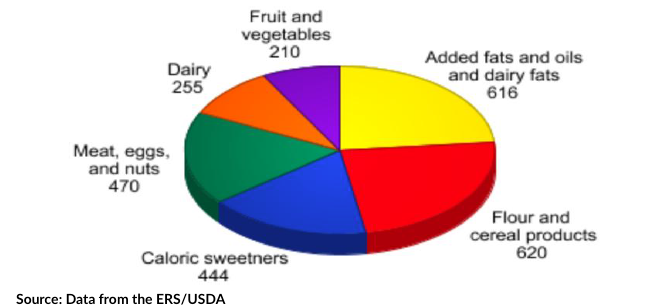 Out of the additional 445 Kcals we’re now consuming only 10 percent are from caloric sweeteners
Interestingly out of the 445 extra calories we’re now consuming, less than 10 percent are from sweeteners/sugar; that’s only 45 calories! The remaining calories can be blamed on our increased consumption of refined grains such as french fries, potatoes, crisps and baked goods, along with fats and oils .
Now, placing a tax on sugary drinks does indicate that the Government are realising the extent of the obesity crisis and starting to do something about it. But let’s be honest, the price isn’t going to increase so dramatically that it will force those who buy them to find a healthier alternative. In fact, a lot of the ‘healthier’ alternatives are probably going to have just the same impact (if not worse!) than if you were to choose a sugary drink.
Milkshakes, flavoured waters and off-the-shelf cold coffees can contain nearly as much sugar, if not more, than your average can of soda and they tend to be higher in calories! In fact, if you compare a standard 471ml bottle of chocolate milkshake to a can of coke you’ll find the milkshake has an extra 203 calories. Yet these drinks are exempt from the tax!
If we are serious about tackling childhood obesity, then we must not be naive enough as to think that pushing up the cost of fizzy drinks is going to have a noticeable impact. It is more important to focus on the issue of over-eating in general, and reducing our consumption of delicious but unhealthy foods such as refined grains and fatty foods (Choo 2015). It’s also crucially important that we remain active and encourage our children to put the iPad down, get up off the sofa and out into the fresh air. Only then do I believe we’ll stand a fighting chance of tackling the obesity crisis.
A few possible solutions:
Drink sugar-free alternatives: Now I can understand your immediate reaction to this – “diet drinks cause cancer!” – Well, we now know from the science that unless you’re drinking close to 5 litres of diet soda a day or you’re born with a rare inherited disease (phenylketonuria) you needn’t worry. In fact, there’s emerging evidence to show diet drinks may actually reduce the risk of obesity and weight gain, increasing satiety and reducing food intake. You can read our blog post on sweeteners and diet soda here.
Reducing screen time: The amount of time kids (8-18 year olds) are exposed to electronic devices or lit screens has increased by almost 2 1/4 hours from its level 5 years ago, taking the average amount of time children are exposed to electronic devices to nearly 8 hours per day (Kaiser)! For at least some of that time, they could be being active.
Get kids moving more: The Department of Health recommends at least 1 hour of moderate to vigorous exercise per day, of which only 24 percent of girls and 32 percent of boys (among 2-15 year olds) in England are achieving. One benefit of taxing fizzy drinks is that the money raised will be going towards sports equipment for schools, which should help encourage kids to be more active on a daily basis.
Any move to tackle the obesity crisis must be praised, but the issue is much more deeply rooted in our lifestyles than what we drink. Any serious attempt to tackle the crisis must face up to this fact, and make real efforts to encourage change.
About Chris Hall
As the founder of Hall Training Systems, it is my mission to provide you with the very best personal training experience. I set up Hall Training Systems as Oxford’s leading personal training service in nutrition, performance and weight loss, ensuring I can deliver the very best in training techniques. You can find me on Facebook, Google+ or why not even give us a Tweet @Hall_Training
James Bond has been gracing our screens since 1962, and has become a symbol of the British gentleman. The quintessential bad boy, every woman wants him, while every man wants to be him. We are used to seeing Bond in action behind the wheel, out in the field and even in the bedroom, but what does Bond get up to in the gym?
As well as dashing looks and charisma, 007 needs total body strength, explosive power and a fast sprint speed to keep his licence to kill. Here are our top ten exercises you need to get Bond Body Ready:
- The Pull Up
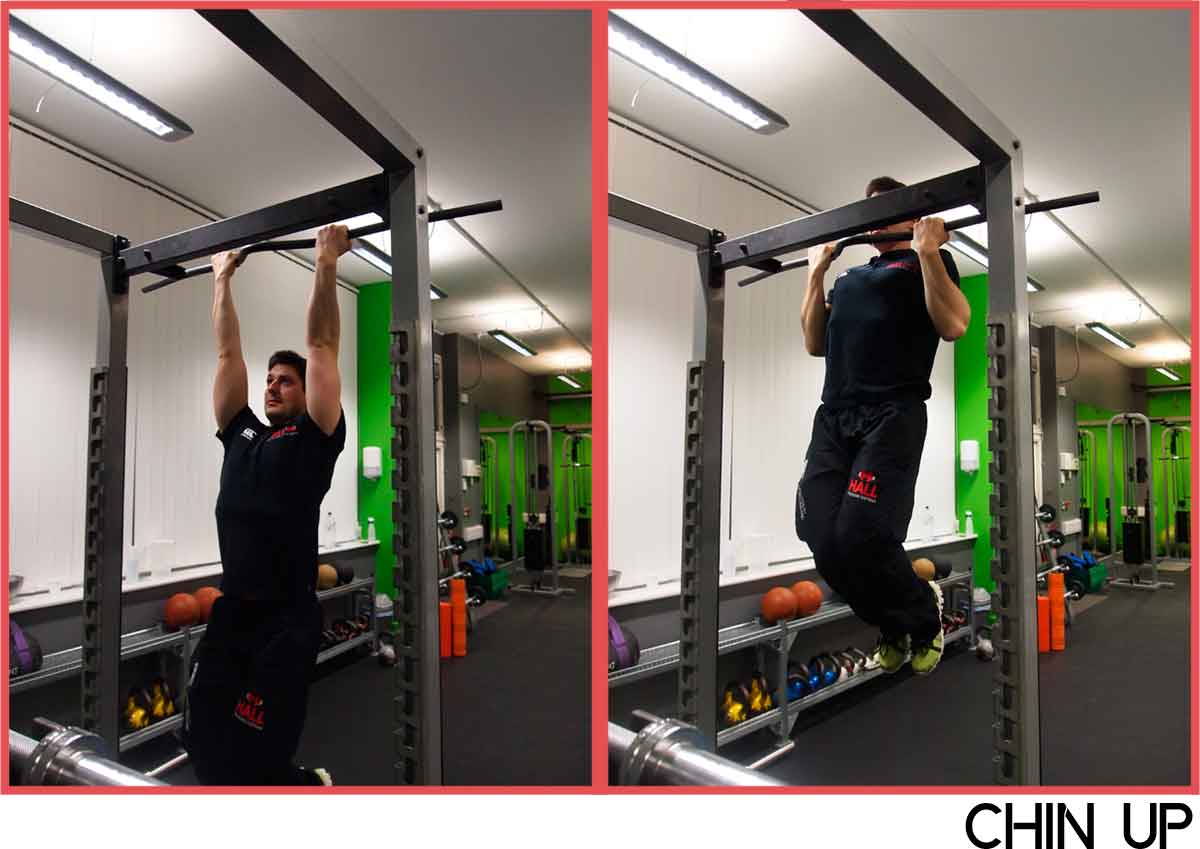
Why: Pull-ups will help develop Bond’s lat (back) and grip strength ready to climb a lift shaft or pull himself onto a helicopter. Another benefit is the range of progressions. If a pull-up (with palms away from you) is difficult to master, start with some chin-ups and build up from there. If they’re easy and you can knock out 20 in a row in true Bond style, put a weight belt on, or lower yourself down more slowly. You’ll be ready to clamber up scaffolding in to time.
- Garhammer Raises/Hanging Knee
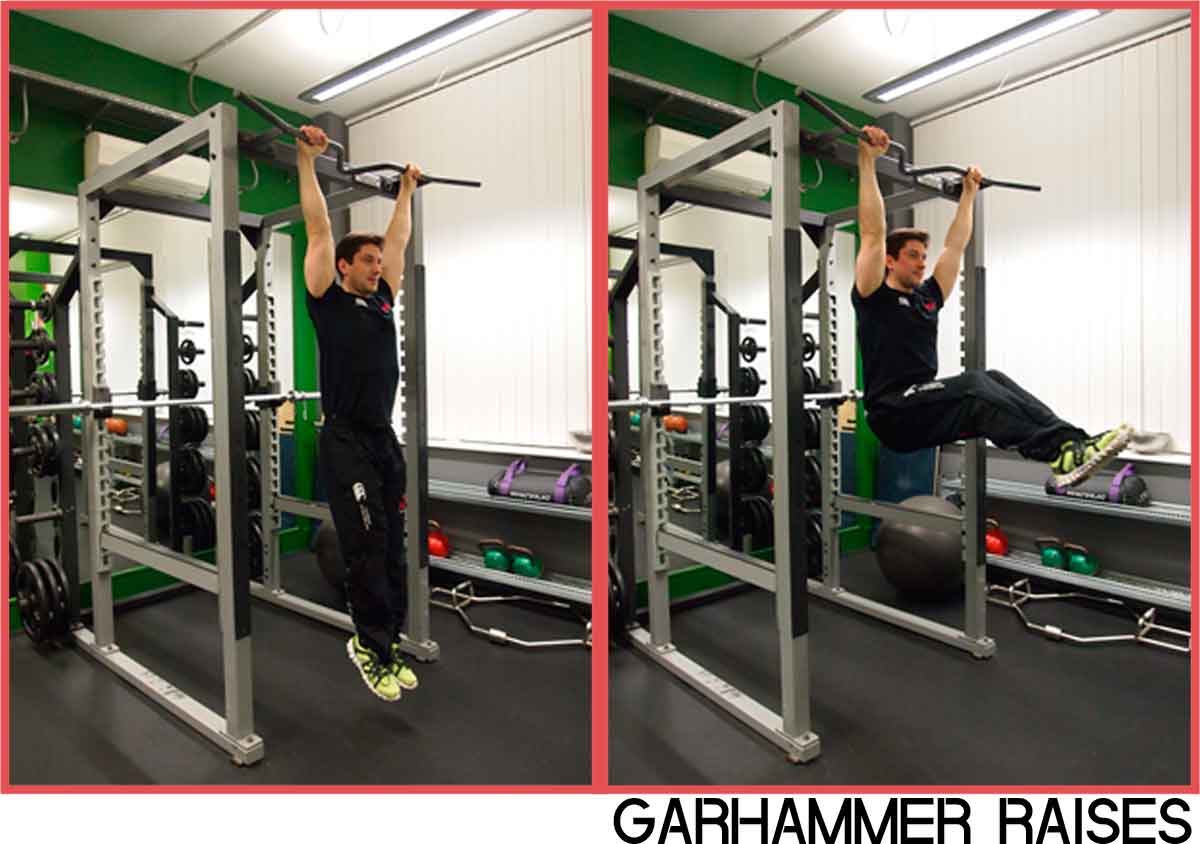
Why: These are very useful for developing the lower abdominals and increasing core strength, and would be essential for escaping when you’re chained hanging to a drain pipe, or creating an explosive kick when hanging from a building. Sit ups are another option for developing impressive abs: striding out of the sea onto a pure white beach is one of Bond’s favourite past times, and if you want the 007-life, you need to look the part! Plus they are a key part of the field agent fitness test, as we saw in Skyfall.
- Box Jumps
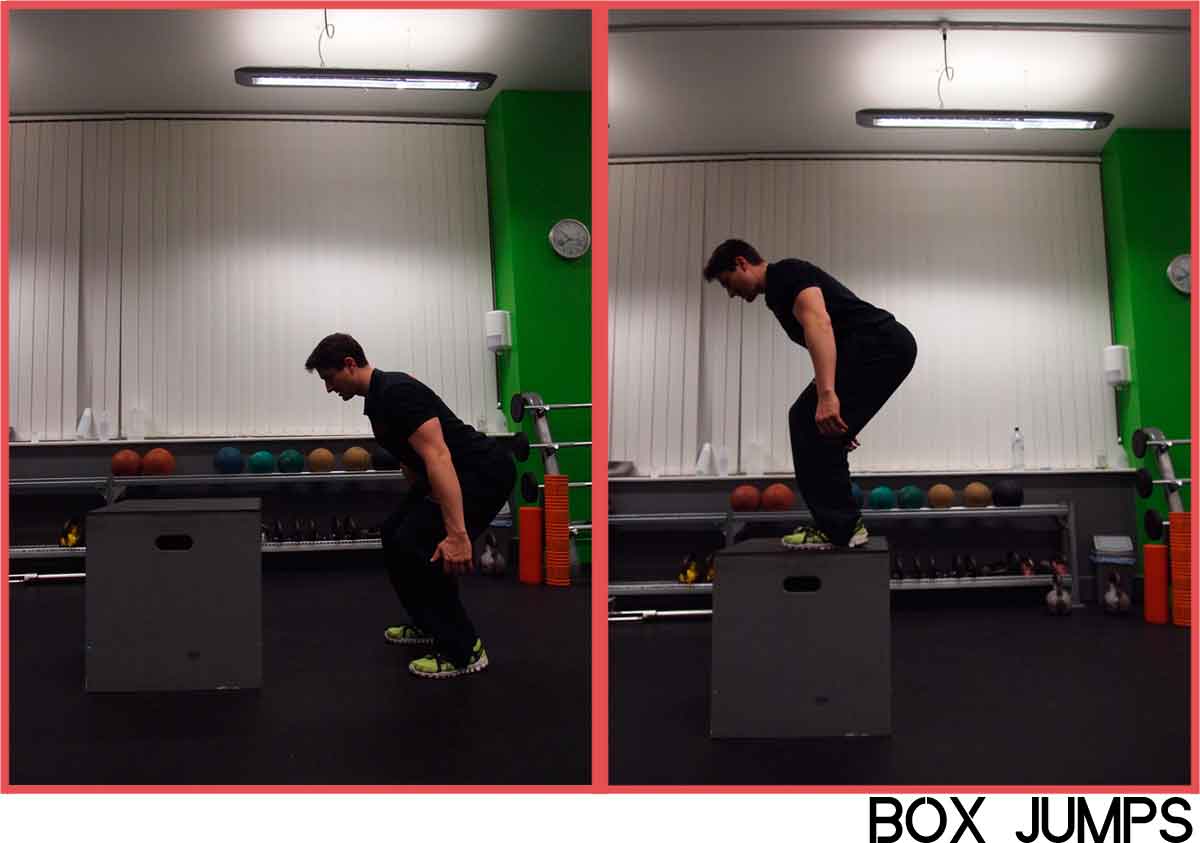
From Bean to Bar: The Health Benefits of Chocolate
It was last week I headed down to Hotel Chocolat in Covent Garden for a chocolate making experience. Chocolate is my Achilles Heel, I can’t resist it, so I was really excited to find out some more about how it is made and what exactly goes into it.
I thought it was only fair that I shared some of this knowledge with you, as whenever I ask clients which foods they feel they need to cut out, chocolate is pretty high on the list. While this can be sensible (we all know how hard it is to stop eating it once you’ve started) it’s not all bad news for chocolate lovers. Chocolate, especially dark chocolate, has some fantastic health benefits.
What I learnt yesterday is that there are only three types of cocoa beans in the world. They are the noble Criollo, the common Forastero and a hybrid between the two, the Trinitario. Criollo and Trinitario are often referred to as fine or flavour cocoa beans, while Forastero is considered the ordinary or bulk bean and provides 90% of the world’s chocolate!
Once the beans have been collected, fermented and roasted, the shell is separated from the bean itself, or the nib. I hadn’t appreciated how simple the chocolate making process actually is: the chocolate nibs are ground down. They turn from beans into a liquidy paste, and separate from the fat they contain: cocoa butter. This is skimmed off, then, for dark chocolate, sugar is added to the paste. If your chocolate is 70% dark chocolate, then 30% of it is sugar. For milk chocolate, sugar and milk power are added. This most important part of the process to be aware of nutritionally. The darker the chocolate, the more health benefits and the less sugar (i.e. additional calories) you are consuming!
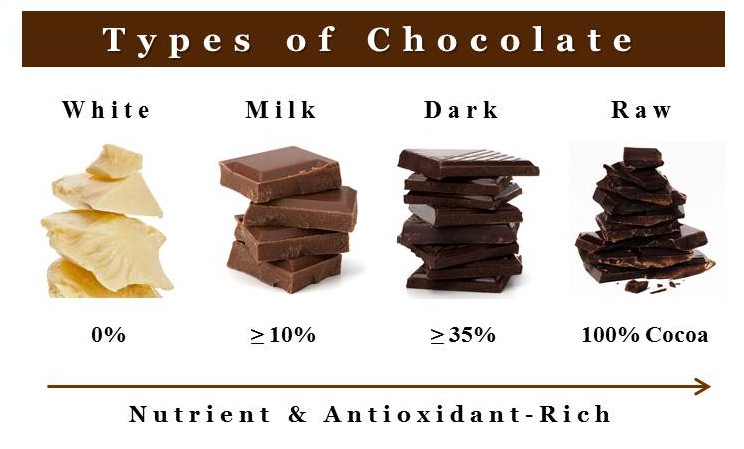 Once the sugar has been added, manufacturers (should) add cocoa butter. This is the only fat which melts at body temperature, hence why good quality chocolate melts in your mouth. Many manufacturers sell this off to beauty companies for use in cosmetics, and replace it with less healthy fats such as vegetable oils. Always check the back of the packet to make sure you know what goes into your chocolate and to see whether it contains vegetable oil or a fat subsitute! This substitution of fats is especially common in warmer countries, where the chocolate would melt on the shelves if it melted at 37 degrees.
If you’re eating good quality chocolate, with at least 70% cocoa content, there’s no need to feel too guilty, especially when you consider all the good it can do your body and mind! Here are my top five surprising health benefits of chocolate:
1. It boosts your mood
Good quality chocolate contains phenylethylamine (PEA), which is the hormone your brain creates when you’re falling in love with somebody. PEA works by encouraging your brain to relase the nerotransmitter dopamine, helping to lift your mood.
2. It’s packed full of minerals
Many people suffer from various mineral deficiencies. It’s amazing how many of these missing minerals a 100g bar of dark chocolate can contain. It’s full of zinc, magnesium, potassium and iron. A 100g serving of dark chocolate contains 76% of your daily recommended allowance of zinc and a whooping 146mg of magnesium! Given that 57% of the US population does not meet the US RDA for dietary intake of magnesium; chocolate could be a very simple source of obtaining an adequate amount of this mineral.
3. It improves brain power
As well as minerals, chocolate contains Flavonols, which act in a similar way to anti-oxidants. One of their roles is to improve circulation and blood flow to the brain. A 2009 study asked participants to count backwards in groups of three from 999. When they’d consumed cocoa they did it more quickly and with less mistakes, and better still didn’t find it so tiring!
4. It helps your body work better
Cocoa has numerous benefits on the body. It can help to reduce strokes, lower cholesterol, limit the risk of cardiovascular disease, and makes arteries more flexible.
5. It can help with weight loss
A neuroscientist called Will Clower claims that melting a square of dark chocolate on your tongue twenty minutes before you eat triggers the hormones that tell you you’re full, thus reducing the amount of calories you consumer over all.
While I wouldn’t recommend guzzling a whole bar of chocolate every day, the odd square of dark chocolate here and there is certainly nothing to worry about, and may even improve your health!
About Chris Hall
As the founder of Hall Training Systems, it is my mission to provide you with the very best personal training experience. I set up Hall Training Systems as Oxford’s leading personal training service in nutrition, performance and weight loss, ensuring I can deliver the very best in training techniques.
You can find me on Facebook, Google+ or why not even give us a Tweet @Hall_Training
Range of motion: Full vs. Partial. Which is better when it comes to muscle size and strength?
Admit it guys and girls, we’re all guilty of it. There has been a time in most of our lifting careers when ego has got the better of us and we’ve favoured the weight over the technique. I’m outright here to admit I was one for sure. At the start of my lifting career, I only lifted using short/partial range of motion (ROM). I remember my first ever weight training book by Pete Sisco & John Little, called Power Factor Training – A scientific approach to building lean muscle mass. It was a book and a system developed around the method of using partial reps to train a muscle in a shortened state for maximum hypertrophy. I saw the word ‘scientific’ and so thought it must be gospel! Unbeknown to me about the real science behind proper lifting techniques and muscle hypertrophy.
However, since then 11 years have passed and I’ve grown wiser of the lifting community. Developing a greater understanding, knowledge and application of examining the bro-science against the actual science. So, when I was clearing up tonight I stumbled across my old Power Factor Training book which ignited an unanswered question. Does working a muscle in its shortened range of motion (aka partial reps) have any greater benefit on a muscles size & strength over a full range of motion?
Well, let’s take a look at the evidence for a moment…
Due to the greater difficulty in measuring muscular cross-sectional area (size/strength at its largest point) over a long-term period, there are very few studies comparing the results between short ROM over full ROM however, here are the ones I dug out.
The first long-term study (12-weeks) compared the effects of parallel and quarter squats over full range back squats. Their findings showed that full range back squats produced higher increases in quadriceps muscle cross-sectional area than a quarter squat. (Raastad, 2008)
In 2012, a 10-week study [1] evaluated strength and muscle gain differences between full ROM and partial ROM when performing preacher curls (see figure 3). Researchers asked the 40 untrained males to perform preacher curls twice per week for 10-weeks. One group lifted the weight from 0 to 130 degrees (full ROM) whilst the second groups lifted the weight from 50 to 100 degrees (partial ROM). At the end of the 10-weeks the researchers discovered the following results:
• The full ROM group increased bicep thickness by 9.52%.
• The partial ROM group increased bicep thickness by 7.37%.
However, the difference between hypertrophy of the two groups was not significant.
In 2013 Bloomquist and his researchers compared the effects of partial ROM (0-60 degrees) and full ROM (0-120 degrees) on thigh muscle cross-sectional area when performing a back squat.
Both groups were asked to do 3-4 sets of 3-10 reps both to failure and then not to failure. Their results found the group who performed full ROM increased total quad muscle cross-sectional area across the entire sites of the quadriceps, whereas the partial ROM group only saw increases across two heads of the quadriceps and at the most proximal sites – the site nearest the hip. Additionally the full ROM groups also noticed a greater muscle cross-sectional area at the back of the thigh (hamstrings) than the group who performed partial reps [2].
Lastly, another study done in 2012 by McMahon looked at partial ROM vs. full ROM on three knee extension exercises using 80% of 1RM on the squat, leg press and leg extension. The researchers found that the vastus lateralis muscle cross-sectional area increased significantly in both groups. They also noted the full ROM group displayed greater relative gains in the vastus lateralis muscle cross-sectional area compared to the partial ROM group. However, the difference between groups was only significant at the end of the 8-weeks, with the full ROM group displaying a 15% increase compared to the partial ROM group, showing only a 10% increase in the muscles size and strength [3].
While the research is still limited in this area it does seem that working a muscle across its full ROM is more beneficial to its size and strength than working it across a partial range. Nevertheless, it’s not to say one should forget partial work all together; after all it can be a great tool in overcoming ‘sticking points’ in a lift. However, I do believe ROM should be dictated by exercise type, individual lever length and training outcomes. It should not be dictated by weight, a hungry ego or some pseudoscience you’ve read in a fancy book!
Sources:
[1] Pinto RS, Gomes N, Radaelli R, Botton CE, Brown LE, Bottaro M. Effect of range of motion on muscle strength and thickness. J Strength Cond Res. 2012;26(8):2140-5. doi: 10.1519/JSC.0b013e31823a3b15.
[2] Bloomquist K, Langberg H, Karlsen S, Madsgaard S, Boesen M, Raastad T. Effect of range of motion in heavy load squatting on muscle and tendon adaptations. Eur J Appl Physiol. 2013;113(8):2133-42. doi: 10.1007/s00421-013-2642-7.
[3] McMahon GE, Morse CI, Burden A, Winwood K, Onambélé GL. Impact of range of motion during ecologically valid resistance training protocols on muscle size, subcutaneous fat, and strength. J Strength Cond Res. 2014;28(1):245-55. doi: 10.1519/JSC.0b013e318297143a.
Fitness events in Oxford across January
The Christmas tree has been taken down, the decorations boxed up and another year has passed. For most of us, we welcome in the year of 2015 with all good intentions of being healthy and making a start on our resolutions. However, this can be a somewhat tricky and daunting time with so many avenues to explore. With so much alcohol consumed over Chritsmas Dry January is proving to be a great place to start. Having said that New Year is often about having to give something up, when why can’t it be a time to take something up; a new hobbie perhaps? Well, when it comes to health and fitness we have it sorted. I’ve made it easier for you this New Year and have listed a few popular avenues that you can explore as I bring you a review of Oxford’s sporting and fitness events. There’s something for everyone!
From all of us here at Hall Training Systems; wishing you a Happy New Year and let 2015 be the year where we get Oxfordshire moving!
Fitness events this month around Oxfordshire:
Nutrition Seminars
About: Myself Chris Hall will be hosting short 45mins seminars on popular trends, topics and myths surrounding nutrition and diet.
Where: Reebok Crossfit store, Cornmarket street, Oxford
When: first one is on Saturday 31st January @ 12:00pm then each month thereafter
How much: FREE
Contact: to express interest, or to book please email either:
Cossima.Scown-Geary@reebok.com
info@halltrainingsystems.com
New Abingdon Slimming World Group
About: If you are like me and have tried diet after diet and haven’t yet had the success you want, then look no further as I have found the answer. Slimming World!
Where: Abingdon Cricket Club
When: Next on 6th January @ 7:30pm then every Tuesday thereafter
How much: N/A
Contact: amyslimmingworld@hotmail.com
Tai Chi Classes
About: These are traditional Chinese methods of moving meditation and therapeutic exercise which can free up the joints, reduce stress, increase flexibility and improve posture.
Where: The Complementary Healthcare Practice, Abingdon
When: 2nd January at 11:00am then every Friday thereafter
How much: £4.00 per class
Contact: enquires@abingdontherapies.co.uk
Group Personal Training
About: An affordable way to access personal training through circuit based classes
Where: Gladiator Fitness Studio, Marston
When: 3rd January @ 2:00pm
How much: £7 per person or £65 upfront for 10 sessions
Contact: mindovermatterfitnessoxford@gmail.com
Yoga Classes
About: Gentle, flowing yoga to help you stretch, tone, relax and de-stress
Where: The Clifton Centre, Bicester
When: 6th January @ 6:15pm then every Tuesday thereafter
How much: N/A
Contact: elaine@yogabeing.co.uk
Oxford City Girls Football
About: Girls football, all abilities welcome
Where: Oxford City Stadium, Marston
When: 8th January @ 5:30pm then every Thursday thereafter
Contact: burden1564@sky.com
About Chris Hall
As the founder of Hall Training Systems, it is my mission to provide you with the very best personal training experience. I set up Hall Training Systems as Oxford’s leading personal training service in nutrition, performance and weight loss, ensuring I can deliver the very best in training techniques.
You can find me on Facebook, Google+ or why not even give us a Tweet @Hall_Training