Georgey’s 12 week transformation – week 12 (the final week)
The final week of my diet was actually the easiest. I had really got into an eating pattern that worked for me and that I could stick to. The odd craving for certain foods (nachos) was there, but I could work through it knowing that I was so close to the end.
An unexpected feeling however was the sudden lack in motivation. I found myself unwilling to go and do some cardio at lunchtime on the Thursday because I knew it wouldn’t make a visual difference for my photoshoot. Likewise, I reckoned I could get away with eating a few biscuits without it making a difference either. I skipped the biscuits and did the cardio but it definitely felt like the hard work was over, and the main challenge was just to make it to the weekend. I hadn’t been expecting that.
The day of the photoshoot was one of the scariest ever. I was so nervous I just wanted to stay in bed and avoid the situation all together! But when I got there I had an amazing time. I don’t usually wear any make-up – a quick lick of mascara and I’m out the door, so I felt like a Princess when I was all dolled up. I hardly recognised myself! Looking a bit like a satsuma due to my excessive spray tan probably didn’t help on that front…
Having one person (the photographer) focus completely on me was unnerving to begin with, and I felt really self-conscious, but eventually I managed to relax into it a bit and we managed to get some photos that I am really proud of. The definition in my abs was better in the shameless selfies I took in the mirror in the morning, but the overall change from Week 0 to Week 12 is evident and I look like a totally different version of me.
I have been trying to think of a few lessons I’ve learned during this process in case they are helpful for anyone else. And in summary, I think these are the most important:
1. Be ready – if it’s not the right time for you to take on something like this, then don’t. You will probably end up messing it up and then feeling even worse. Yes to a certain extent, you just have to pick a date and stick to it, but it’d be better to pick a time when your calendar is clear of any major upheavals or huge social events, and a time when you’re not likely to be hugely stressed by anything else.
2. Get your head straight – This transformation ruled my life for twelve weeks, and at times it was really difficult mentally. You need to be prepared to put the gym and your nutrition first for the period you choose to work over, and I mean really put it first. That means getting up at 5:30 to defrost your freezing car and go to the gym session you really don’t want to go to, when every muscle in your body aches and you are beyond exhausted, only to miss lunch with your friends to do cardio on your lunchbreak, and then probably head back to the gym again that evening. It definitely means avoiding or adapting the majority of social occasions. If you’re not ready for that level of commitment, then this is definitely not for you.
3. Get a support network ready – I could not have done this without the amazing Hall Personal Training team, and I really mean that! Knowing that the team, especially Michael, would be there when I turned up in the morning forced me out of bed. After all, he had to defrost his car to make it in for me too! They were there to answer any questions, cheer me on when I made good progress, and constantly help me improve my training technique. Without them I am quite sure I’d have caved after the breakdown in Week 5. Make sure everyone in your life is ready to come second and eat around your weird eating habits, and make sure they are ready to offer the support you’ll need on the way. You cannot do this on your own. Chris needs a shout out for picking me up from my heap on the floor on several occasions and encouraging me to carry on – the patience!
4. Don’t do too much too soon – This is especially true when it comes to your nutrition. Make sure somebody who knows what they are doing writes you a guide, and make sure it’s adapted every two weeks depending on your progress. I could not have survived all twelve weeks on the crazy calorie deficit I was in at the end, but because I was guided through the process I didn’t have to. Instead I made small, steady cuts every two weeks, and this made my diet feel normal and manageable towards the end. Don’t burn out with your training either. De-load weeks are the best, even if they throw you out of your routine a bit.
5. Take pride in the results you’re seeing – Don’t be miserable about every cake you are missing out on, or for me, every glass of wine and bowl of nachos. Instead, look at the changes you can see and be excited about the end result. Staying positive about the process and trying to see the best in it even at the worst times is essential. If I managed to convince myself I like staring out of the window doing endless cardio with achy feet, you can too.
6. Don’t do exercises that crush your soul – You will work out what they are for you, and that may seem like an exaggeration, but at the very end reverse lunches and Bulgarian Split Squats bought me to tears, broke my spirit and ruined the rest of my session. It’s not worth it. Find a substitute and make sure you’re enjoying your training. Michael, if you’re reading this and give me another split squat, we won’t be friends for much longer. It’s going to take me at least six months to recover mentally.
We are just waiting for the final photos to come back now, but I can share my final results. Over the period I lost 3.2 kg (not very much), but that meant putting on 2.5kg of muscle and dropping 6.4kg of fat. I lost just shy of 10% body fat, and had one breakdown. I think I did several million squats, several thousand deadlifts and had just one major breakdown. I lost count of the minor ones, but I can’t remember them. That’s the main thing – it passes, you forget the bad and are left feeling 1000% better.
So, what’s next? Well, I should really write you a Week 13-14 blog post, detailing my excessive post-diet food consumption (whoops), and then probably one the week after about how I (hopefully) manage to start reverse dieting rather than inhaling everything I see – wish me luck. But what’s next for me is carrying on with this journey. I wanted to achieve more than I did, and I am going to keep going. Just because the twelve weeks is over doesn’t mean my fitness journey is, but whatever your goals are, I wish you all the best on your own journey.
Michael will also being writing a blog post about how he structured my training, and Chris will write one about how he looked after my nutrition, so there are some more technical takeaways on their way.
I am more than happy to answer any questions if anyone has any, just drop me a line: Georgey
Until next time,

Blue Monday – can exercise help?
It’s Blue Monday, believed to be ‘the most depressing day of the year’. Christmas is over, many people are regretting the extra chocolate they munched over the festive period, feeling bad about the diet they haven’t stuck to, and it’s still dark and cold, and a long time until the summer. Even with Oxford’s glorious sunsets, things can look pretty bleak.
Obviously there’s a huge difference between feeling a bit down because it’s January and suffering from clinical depression, which will affect sufferers at any time of year, not just because the Christmas break is over – that’s a distinction that is often lost when Blue Monday is discussed. However, there is an entire body of research showing how exercise can help to reduce the symptoms of depression, whether it’s a fleeting dip in mood or a more sustained medical condition. Nobody will claim it’s the silver bullet, but it’s difficult to argue with the fact that for many people, it can be a real help.
Depression is estimated to affect 2.6 in 100 people (1), which means that in Oxford there are nearly four thousand people suffering from the condition, as well as those who will suffer from low periods not classified as depression.
Often, depression is treated with anti-depressant drugs, or with talking therapies including Cognitive Behavioural Therapy or mindfulness. As well as reams of medical research looking at the benefits of these traditional therapies for depression, there is a lot of effort that has gone into looking at whether exercise can be a beneficial treatment. Even exercise alone is widely believed to be better than receiving no treatment (2).
But why does exercise have this effect? Well, there are several reasons:
1. It releases beneficial chemicals in your brain
It’s common knowledge that when you exercise, endorphins are released leading to a phenomenon known as ‘Runner’s High’. This is the same chemical that is released when you laugh. Endorphins also act as a sedative and a pain blocker, further emphasising their benefit.
2. It is associated with improved self-worth and body image
One of the great things about exercise, whether weight training or cardio, is how quickly you can see progress. If you’re new to exercise then running 5k may be a struggle, or you may find it difficult to lift weights with good form. After even a few weeks of consistent effort jogging 5k will be notably easier, and you will find that the weights you are using will have become heavier. This is immensely satisfying, and can help to improve feelings of self-worth but also body image, when the associated physical benefits of training start to kick in.
3. It can be sociable
When you’re feeling low, getting out of bed to go to the gym may be the last thing you feel like doing. But if you’ve signed up for a class or arranged to meet a friend, or even a personal trainer then the sense of accountability should increase, making it easier to take that all important first step out of the door.
4. You’re in control
By choosing to exercise you are choosing to make a positive step for your mental health. Having a sense of power over your recovery can banish those feelings of helplessness and being trapped that often creep in.
5. It’s sustainable
Once exercise becomes habitual, it stops being an effort to get to the gym or go for that run – in the most part anyway! Everybody will have bad days when they don’t feel like training, but ensuring that you take the next opportunity to go, or just soldiering through, will ensure that exercise becomes a sustainable part of your daily or weekly routine, so you consistently feel the benefits.
So what next? You may have been reading this blog post thinking, ‘great, exercise may help me feel better, but where do I start?’
There are so many options here and it’s crucial you find something you enjoy. If the thought of running on a treadmill for thirty minutes fills you with dread, then it’s unlikely you’ll enjoy it, or stick to it.
Why not see what exercise classes there are in your local gym, or see if there’s a local running club? If you’re intimidated by the more intense classes then give something like Zumba a go and ease yourself into it. Find a friend who could do with some extra accountability and agree to meet them at the gym at a certain time. If you want to take your exercise regime more seriously, why not look into semi-private or even 1-on-1 personal training to escalate your results, and increase that all-important incentive to turn up to your sessions?
There are a million and one different ways to exercise. Once you’ve taken that first step, it should get easier. Give several things a go, find one you like and set moderate and achievable goals. If for you that means exercising once per week then great – start there and build up. The key is taking a step in the right direction.
Are ‘slow’ metabolisms behind the ‘Obesity Crisis’?
What you’re in for – 1000 words
– 7-10 minutes reading time
Why are we having an obesity crisis?
This is the great health question of our generation.
Many arguments have been made and presented in response to the ever-growing concern about our health and that of our children. Sugary drinks, the excessive consumption of carbohydrates, ‘good’ calories vs ‘bad’ calories.
Some arguments are more relevant than others.
What’s clear is that with 61.7% of the United Kingdom’s population being either overweight or obese (1) and so much fog around the cause of obesity, a much needed solution has yet to be found.
In this article I’ll be examining the argument that ‘slow metabolisms’ are the root cause of obesity and weight gain.
So, buckle up, because we’re about to tumble down the rabbit hole…
What is ‘Metabolism’?
Firstly, it’s important for us to define what our metabolism actually is. We can do this by splitting it up into four sections;
RMR (resting metabolic rate) – This makes up the amount of calories or energy used during periods of rest or low periods of activity such a sleeping, or likewise, watching Netflix when you should be sleeping.
NEAT (non exercise activity thermogenesis) – This component of metabolism is everything in between total rest and absolute activity. Think walking, maintaining good posture and if you’re one of those really annoying co-workers, fidgeting.
The curve ball with NEAT is that it can vary between 15-50% when it comes to making up an individual’s metabolism! (2) But more on that later.
EAT (exercise activity thermogenesis) – You guessed it. This is the amount of calories we expend or burn performing physical exercise.
TEF (thermic effect of food) – Finally, it takes energy to digest the food we eat. Ironic right? It costs calories to eat calories. The amount of energy we burn digesting food falls under this bracket of metabolism.
It’s these four components that make up how much energy we burn on a daily basis, or as the people in lab coats like to call it, our total daily expendable energy.
This total daily expendable energy is important, because it determines the “energy out” side of the energy balance theory.
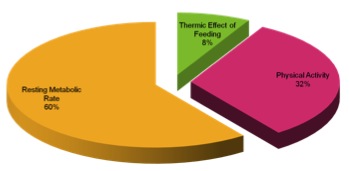 Diagram courtesy of James Krieger, weightology.com
In order to lose weight, we need to enter a deficit of calories or energy.
In order to gain weight, we need to enter a surplus of calories or energy.
If you bring in more energy than you expend, you’re likely to gain weight.
Energy in, versus energy out.
How do ‘normal’ weight individuals and obese individuals’ metabolisms differ?
If our differing metabolisms do play a fundamental role in the cause of obesity, it’s important that we identify which of its four components are to blame.
While it’s common to assume that it’s our resting metabolic rate (RMR) that dictates whether we’re under or overweight, and more often or not this is the component often referred to when we speak of our metabolism, the research shows us something very different.
While resting metabolic rate (RMR) is variable between people, and even two individuals at the same weight, height and age can have an upper variance threshold of 10 – 15% the difference in RMR between ‘normal’ weight individuals and post-obese persons is frightfully insignificant across the board, estimated at around 100kcal/p/day (3)
What this tells us is that while there may be small discrepancies between the resting metabolic rates between those who suffer, or who have suffered from obesity, a range of 100kcal/p/day is certainly not the cause of excessive weight gain.
If we however, cast our eye across the non-exercise activity thermogenesis component of metabolism, a very different picture is painted.
The power of NEAT
Rather than large differences in resting metabolic rate between ‘normal’, obese and post-obese persons, the largest difference in energy expenditure can be found within NEAT.
In fact, person to person this component can vary immensely, in some cases up to 2000kcal per day! (4)
That is a lot of energy, and it would significantly alter the energy balance between two people, thus more broadly promoting either a caloric deficit, or a caloric surplus. In real terms this is the difference between entering a period of weight loss or a period of weight gain.
The real kicker is that despite RMR being relatively similar across the board in ‘normal’, obese and post-obese persons, NEAT tends to be much lower in the obese population.
It’s important to stress here that it’s ridiculous to take this data and jump to the conclusion that those who have entered an obese category are simply ‘lazy’, as a lower NEAT count has been found to have many contributing factors.
‘Compensators’ for instance may see a reduction in NEAT after performing resistance exercise in an effort to conserve energy, which has been found to be driven at biological level, not psychological. (5)
So what does this mean for my metabolism?
What we can take from this is good news.
While it’s entirely possible that an individual’s RMR could be unfavourable towards losing weight (which studies such as the recent ‘Biggest Loser’ made headlines with), if the largest discrepancies in metabolic differences come from NEAT, rather than RMR, then we have a real chance to reset the balance.
While of course it is folly to presume a disease as complex as obesity can be cured simply by ‘moving more’, research has shown us that it’s possible to make significant changes in body composition by including habits as simple as reaching 10,000 steps per day. (6)
Rather than focusing on trying to increase RMR, which even with some of the most intense protocols only yield small increments, our time and effort would be far wisely spent doing all we can to increase NEAT.
We can increase our metabolism simply by moving more. Forget green tea tablets, moving more and being active, is the cheapest, most effective metabolism booster you’ll find.
Conclusions
Are some metabolisms slower than others? Entirely possible.
Should I focus on trying to increase my resting metabolic rate? Absolutely not.
Where can I better utilise my time and effort to boost my metabolism? Aim for 10k steps per day (approx.5 miles), and limit the amount of time you spend sitting down or are sedentary as often as possible.
Obesity is a complex topic and a frustrating journey for a great many people. There is however hope for those who are under the impression that their metabolism is ‘broken’ or simply ‘slow’.
The chances are, even if your resting metabolic rate is lower than is optimal, it’s still entirely possible to make positive lifestyle changes through low grade, daily activity and monitoring a calorie reduced diet.
And if you happen to be reading and suffering from obesity…
Know that it’s not easy, and each journey comes with it’s own setbacks and obstacles, but be empowered in the knowledge that you can change.
You are not broken. You are not alone and you can do this.
If you’d like to chat, go hit that email button and let’s grab a coffee. It’s on me. When I’m not writing, I can be a great listener.
References
1. 2013, “Statistics on Obesity, physical activity and diet:England 2013” The Health and Social Care Information Centre
2. 1986, Ravussin et al. “Determinants of 24 hour energy expenditure in man. Methods and results using a respiratory chamber.” Journal of Clinical Investigation Dec; 78(6): 1568-1578
3. 2008, Rosenbaum et al. “Long-term persistence of adaptive thermogenesis in subjects who have maintained a reduced body weight” American Society for Clinical Nutrition
4. Black et al., 1996
5. Di Blasio et al., Menopause, 19(1):23-32, 2012
6. 2006, Schneider, PL et al. “Effects of 10,000 steps per day goal in overweight adults” American Journal of Health Promotion Nov-Dec;21(2) 85-9
Georgey’s 12 week transformation – week 11
So, I have one week of this diet and training plan left. I should really be done by now but I had a week off over Christmas so have tacked an extra week on the end. Half of me is really relieved it’s about to be over, the other half of me has got used to living like this. I am used to being hungry, I quite like going to the gym on my lunchbreak as it breaks up the day, I don’t mind getting up to train in the mornings as I’ve been doing that for three years anyway.
Once next week is over, I won’t be able to spring straight back to what I was eating and how I was training before this. I will have to ‘reverse diet’, and gradually cut out the cardio and increase my calories. This basically translates to carrying on as usual but with a tiny bit more freedom. I think that will be a nice balance between the lifestyle I have now adapted to and the lifestyle I had before I started.
Christmas wasn’t too much of a disaster. I managed to keep my training up to about 80% of what is usual/what was planned, but my eating wasn’t quite as good as I’d hoped it would be. In all I think my training offset the damage but I didn’t make any progress, which is definitely not the worst case scenario. This is all down to my personality type. I am probably a bit too black and white for this kind of process. This is helpful when it comes to sticking to the diet, but I’m either ‘on’ with diet-mode or ‘off’, and Christmas was definitely off. I couldn’t get back into the swing of things until I came back to work this Tuesday.
So now it’s the final push. I am doing four weights sessions per week and at least three hours of cardio, and introducing some interval training. As well as that, Chris and I try to get out for a long walk every weekend, so physically I am quite drained. Mentally I’m feeling better than I have been for ages, and am quite tempted to say that this process, which started out feeling ridiculously tough, is actually okay once you’ve adapted to it. It’s just that the adaptation phase wasn’t very fun.
One thing I’ve learned is that twelve weeks is too long to run this kind of programme for and stay 100% committed to it. It’s a quarter of the year and in that time you’re bound to have social events. I’ve had my birthday, Christmas, four Christmas parties, an anniversary, New Year’s Eve, etc. to contend with. For most of these events I managed to be really sensible, but planning a transformation over Christmas wasn’t the best idea I’ve ever had. My advice to anyone wanting to do something similar would be to gradually and sustainably diet down to a point at which their ideal weight/body fat percentage is in reach, and then absolutely blitz it for six to eight weeks. That’s a length of time you can plan around and stay committed for. If you try to diet for any longer then unless you’re a superhero or fitness model, or have a really specific purpose (i.e. stage competition) then you’d be wise to accept and expect a tiny bit of flexibility. Staying 100% motivated for quarter of the year is tough.
Going into next week I am feeling really positive. I know I won’t reach the goal I had set out to, but I have learned more about my body now, and know that once I get to a lower body fat percentage the rate of fat loss drops dramatically. I wasn’t realistic about that to begin with, and so am instead concentrating on the progress that I’ve made. We will be shaking up my training which I am looking forward to a lot – I can’t stand to do another deadlift – and just generally trying to take every opportunity available for exercise and good diet during the final push. So close now.
Until next week,
Thinking about Dry January?
So now that Christmas is over I’m sure that a few of us will be thinking about cutting out alcohol for a while or maybe doing “Dry January”. We’ve all heard or read numerous different things about the effects of alcohol, both good and bad. This blog will give you the unbiased information including what alcohol is, the effects it can have on the body, and how you can make smarter choices while still enjoying a tipple.
What is alcohol?
The active ingredient in alcoholic drinks is called ethanol, and this is the part that gets you drunk. Ethanol for alcohol is produced by the fermentation of certain sugars from plant material (i.e. grapes or grains). Yeast is the catalyst for this process, which creates ethanol and carbon dioxide.
What negative effects does alcohol have on the body?
As most of us have probably experienced, alcohol can help you lose your inhibitions and become more confident and self-assured. However, on the flip side of this, it can severely impair cognitive function and judgement, which can lead a person to act in a potentially dangerous way.
Liver problems are common with excessive consumption of alcohol. This is because one of the main functions of the liver is to neutralise toxic substances that enter the body, so it’s susceptible to alcohol damage. Heavy binge drinking can lead to cirrhosis of the liver, which is irreversible and leads to numerous other health problems.
The brain is something that we should all know is affected by alcohol! It is affected on both an acute and chronic level. In worst case scenarios, it can severely impair brain function, lead to an increased risk of dementia, cause brain shrinkage in elderly or middle aged people and even stop people from living independent lives.
As a personal trainer, it wouldn’t be right if I didn’t mention the effect that alcohol can have on weight gain. Alcohol is known as ‘the fourth macronutrient’ alongside protein, carbohydrate and fat. Alcohol contains more calories per gram than both protein and carbohydrate. Also, unless you are drinking pure ethanol there will be even more calories in the drink from the sugar that is present. Many people don’t realise how many calories they are consuming, leading to weight gain. As always, there are many contributing factors that can cause differences in the effects, like the type of alcoholic drink and drinking habits.
As well as the impact that alcohol can have on the liver, brain, and weight gain there can also be negative impacts on the following:
- Cardiovascular health
- Depression
- Cancer
- Type 2 Diabetes
- Pregnancy
- Alcohol Dependency
Are there any positive effects?
But it’s not all doom and gloom as far as alcohol is concerned. “Light to moderate alcohol consumption reduces the incidence of coronary heart disease (CHD), ischemic stroke, peripheral arterial disease, CHD mortality, and all-cause mortality, especially in the western populations” (Movva & Figueredo 2013). Red wine in particular has a number of health benefits, one being that it is extremely high in antioxidants.
With regards to type 2 diabetes, research has shown that moderate consumption of alcohol can help the symptoms of diabetes by reducing insulin resistance and also to reduce the risk of developing diabetes, unless it is consumed in large amounts, which increases the risk.
There is also research to show that moderate alcohol could actually reduce the risk of dementia, especially in elderly people.
Putting it all together
The truth is that most of the negative effects are a result of heavy drinking whereas light to moderate consumption of alcohol can actually positively impact most of these areas of health. As such, my overall conclusion will be left with Abraham Lincoln who once said “It has long been recognized that the problems with alcohol relate not to the use of a bad thing, but to the abuse of a good thing.”
Season(ings)s Greetings – The health benefits of various festive spices
At Christmas, all the shops on Oxford High Street seem to be selling food and drinks with more flavourings than usual – gingerbread latte’s, cinnamon hot chocolate – but not all of them are bad for you. Our personal trainer Pete has looked at the health benefits of some of the top Christmas flavours, so you can eat them to your heart’s content!
\\\\r\\\\n
Cinnamon
Ok, so here is some good news about cinnamon… as well as being delicious, cinnamon actually has a number of potential health benefits. One of the major properties of cinnamon is that it can help to reduce blood sugar levels, with some studies showing up to a 29% reduction in patients with type 2 diabetes (Kirkham et. al. 2009). As well as this it has also been shown to have antioxidant, anti-inflammatory, anticancer and lipid lowering properties. Why not sprinkle some on your next coffee?
\\\\r\\\\n
\\\\r\\\\n
Turmeric
For those of you who don’t know what turmeric is, it’s the spice that makes curry yellow. Along with numerous other compounds, turmeric contains a substance called curcumin, and this is where the good stuff comes from. Curcumin is hailed as an incredible antioxidant (Menon & Sudheer 2007) and a highly potent anti-inflammatory (Jurenka 2009). With lots of chronic western diseases there are often elements of inflammation that play a role, so it is therefore no wonder that curcumin has been linked to aiding numerous different conditions. There have also been several studies that indicate it can also help brain function along with reducing the risk of heart disease and cancer. Use some turmeric in your post-Christmas Turkey curry to feel the benefits!
\\\\r\\\\n
\\\\r\\\\n
Cayenne pepper
Now in cayenne pepper, the jazzy ingredient in this is known as capsaicin. Capsaicin has been shown in different studies to increase fat burning and to suppress appetite. Interestingly, there are different effects depending on tolerance levels, those people who did not regularly eat peppers saw a reduced appetite and an increase in fat burning by adding red peppers to meals. However, people who were accustomed to spicy food saw no significant effects. There have also been some studies on animals that have shown to help with some forms of cancer (Jang et. al. 1989; Mori et. al. 2006) but his has not been proven in humans yet so more research is needed before we can truly believe that. Perfect for spicing up your meat or vege over the Christmas period.
\\\\r\\\\n
\\\\r\\\\n
Ginger
Unfortunately, I am not a fan of a ginger, but for those of you who are, let me tell you about all the good things ginger can do for you. The biggest is the effect it can have on nausea. Whether this is caused by sea sickness, morning sickness or chemotherapy, studies have shown that just 1 gram or more of ginger can successfully treat the problem (Ernst & Pittler, 2000). As well as aiding with nausea, ginger also appears to help with pain management and has powerful anti-inflammatory properties (Black et. al. 2010). Ginger can be found everywhere over the festive period!
\\\\r\\\\n
\\\\r\\\\n
Garlic
Finally, we have garlic, and luckily the benefits of garlic are much better than it’s smell. Interestingly both the smell and most of the health benefits both come from the same compound which is called allicin. Garlic can be used primarily for preventing the common cold (Josling, 2001). It has also been shown to reduce total cholesterol and/or LDL cholesterol for those who have high cholesterol (Silagy & Neil, 1994) and to lower blood pressure for individuals with high blood pressure (Ashraf et. al. 2013). Why not put some garlic in with your roast potatoes?
\\\\r\\\\n
So there we go – plenty of healthy festive seasonings to inject some spice into your Christmas recipes and give your health a boost too!
\\\\r\\\\n
Season’s greetings!
\\\\r\\\\n
References:
1. Kirkham S, Akilen R, Sharma S, Tsiami A. The potential of cinnamon to reduce blood glucose levels in patients with type 2 diabetes and insulin resistance. Diabetes Obes Metab. 2009;11(12):1100-13. doi: 10.1111/j.1463-1326.2009.01094.x.
2. Menon VP, Sudheer AR. Antioxidant and anti-inflammatory properties of curcumin. Adv Exp Med Biol. 2007;595:105-25;595:105-25.
3. Jurenka JS. Anti-inflammatory properties of curcumin, a major constituent of Curcuma longa: a review of preclinical and clinical research. Altern Med Rev. 2009;14(2):141-53.
4. Jang JJ, Kim SH, Yun TK. Inhibitory effect of capsaicin on mouse lung tumor development. In Vivo. 1989;3(1):49-53.
5. Mori A, Lehmann S, O’Kelly J, et al. Capsaicin, a component of red peppers, inhibits the growth of androgen-independent, p53 mutant prostate cancer cells. Cancer Res. 2006;66(6):3222-9.
6. Ernst E, Pittler MH. Efficacy of ginger for nausea and vomiting: a systematic review of randomized clinical trials. Br J Anaesth. 2000;84(3):367-71.
7. Black CD, Herring MP, Hurley DJ, O’Connor PJ. Ginger (Zingiber officinale) reduces muscle pain caused by eccentric exercise. J Pain. 2010;11(9):894-903. doi: 10.1016/j.jpain.2009.12.013.
8. Josling P. Preventing the common cold with a garlic supplement: a double-blind, placebo-controlled survey. Adv Ther. 2001;18(4):189-93.
9. Silagy C, Neil A. Garlic as a lipid lowering agent–a meta-analysis. J R Coll Physicians Lond. 1994;28(1):39-45.
10. Ashraf R, Khan RA, Ashraf I, Qureshi AA. Effects of Allium sativum (garlic) on systolic and diastolic blood pressure in patients with essential hypertension. Pak J Pharm Sci. 2013;26(5):859-63.
Georgey’s 12 week transformation – weeks 9 & 10
This week my blog posts have had to make way for a fantastic blog post by our personal trainer Becky, on Weight Gain Over Christmas, a subject which seems particularly relevant to me this year!
Over the last two weeks I have had three Christmas parties: my own work one, our Hall Training team one, and one with the team at Studio PT in Summertown. I’ve actually been very impressed with myself, as over the three of them I drank two glasses of champagne and two small glasses of red wine. Those of you who know the old me would know that would just be me getting started at a Christmas party usually! But what I’ve found is that I’m not actually missing alcohol anymore. I’m perfectly happy with water or a Coke Zero, and don’t have any worse a time not having any booze. This is a really nice realisation for me and my drinking habits will definitely be different going forward!
It’s my birthday today and we’re going out for a nice dinner with my family. I’m going to try and eat quite sensibly but still enjoy myself and follow the same logic on Christmas Day too. It’s a hard time of year to diet with all the social occasions, but it’s not as hard as I thought. This is down to one word which actually sums up my last two weeks: guilt.
When I started this process I knew it would be mentally tough, but I wasn’t quite prepared for the way it would distort my thinking. When I was younger I struggled with an eating disorder, at times very severe, for seven years. This diet process hasn’t caused me to relapse – although I have had a couple of wobbly moments – but a lot of the thinking processes are the same. For those who compete or take on a short and extreme transformation process like this, everything has to revolve around food for a period. This means extreme guilt when I eat something ‘wrong’, like the half a mince pie I ate last night. It also means feeling like a failure even though I know I’ve done well.
When I started this process I had a certain goal in my head. In all honesty it was unrealistic and I knew it, but I thought it would be best to be over-ambitious than under-ambitious. These last two weeks I have had to come to terms with the realisation that I’m not going to get there, and the difficulty comes in recognising the progress I have made. It’s been since my last blog that everyone has started to say that they can see I am looking leaner, that I’m looking good, but to be honest I feel exactly the same as I did when I started. My perspective has started to go and it feels as if I’ve failed completely because I haven’t reached the goal I set. I am trying hard to reverse this feeling and concentrate on the positives, but it’s something I’ve heard from others in the fitness industry and who compete – you never feel lean enough. That’s something everyone should be prepared for before they start something like this. Not trying and feeling a bit rubbish about yourself is one thing – you’re not doing anything to make a change. Trying really hard for ten weeks and still feeling rubbish is a totally different thing to get your head around. Support from friends who have been through similar (and much more extreme) processes is invaluable.
But on the bright side, I still have a couple of weeks left. My training is better than ever, I will be able to rest a lot over the Christmas period, I think my abs are there somewhere, and when I’ve finished I will have done exactly what I set out to do – show people how hard it is to really apply yourself for a 12-week period and get a solid six pack. Now to try not to eat all the other mince pies at Christmas…
Wishing you a Merry Christmas!
The Truth Behind Christmas Weight Gain – It just may surprise you!
With Thanksgiving behind us and Christmas and New Year only days ahead, it’s an exciting but also nerve-wracking time for those trying to maintain weight lost over the year or even for those wanting to continue to lose weight.
It is commonly reported in the tabloids that most people put on a shocking 5 lbs. or 2.2kg over the Christmas period. It’s not uncommon for our clients to avoid weighing themselves to try and avoid the damage. But does this statistic actually hold up?
Well, the good news is that it may not. A study focusing on the holiday period found that weight gain between September and March was actually pretty insignificant. Weight was taken in the pre-holiday period, holiday period and post-holiday period in 195 adults. It found that holiday weight gain came to an average of only 0.48kg, not nearly as high as reports above [1]. Another more recent study looking at weight gain over Thanksgiving, Easter and Christmas in different countries also backed the above study, showing weight gain of between 0.6-0.8kg over the holiday periods [2].
Most of the weight gain you may see straight after the festive period (the week bewteen Christmas and New Year) is water weight from the extra salt and carbohydrate consumed through all the meat,chocolate and alcohol – Yum! So, some might say we should all stop fretting and enjoy the Christmas period for what it is. A time to enjoy ourselves a celebrate another year!
Though there is another way to look at it. It really has become a ritual in most countries to relax as the year comes to an end, with the plan being to start fresh and tackle the world (and your waist line!) in the New Year. It is a cycle that we all follow year in year out. But if we do this every year and then don’t quite manage to stick to the diet that’s planned, there’s a chance that this cycle is causing a slow increase in our weight year-on-year that goes unnoticed until five to 10 years down the line.
Weight gain in adulthood is common. No one is expected to be the same size they were at 18 when they turn 30. But why?
This is when that 0.6-0.8kg holiday weight gain may be more significant than it seems. 165 participants in the first study above came back for a follow up the following September. It was reported that most had not lost this small holiday weight gain since the last festive period. Now going into another holiday period, they will be facing another almost 1kg weight gain. Making a total of almost 2kg. Again it may seem insignificant, but go 10 years down the line and it’s looking more important. Something to keep in mind as the New Year rolls in.
At Hall Training our advice would be to kick back and relax over the holiday period, enjoy your time with family and friends. The marginal weight gain is worth it to save yourself from being miserable, but get back into gear in the New Year and find that old training/eating regime to prevent the slow increase in weight year-on-year. As the famous saying goes, “It’s not what you eat between Christmas and New Year that’s important, but what you eat between New Year and Christmas”.
References:
1. Jack A. Yanovski, Susan Z. Yanovski, et al. A prospective study on holiday weight gain. N Engl J Med. (2015)
2. Helander EE, Wansink B, Chieh A. Weight gain over the holidays. N Engl J Med. (2015)
Georgey’s 12 week transformation – week 8
I’ll be to the point: my weekend in Belgium didn’t go exactly as planned. Although my eating was okay (the calories lacking from my mussels were balanced out my all the steak and frites I ate, and my breakfasts were perfect), I drank far too much beer. Luckily this occurred only on the Saturday, and I was too tipsy to manage any dinner, so my calorie count was probably about right, even if my nutrition was miles off. I came back half a kilo heavier than I was before I left, and didn’t drop any body fat on Monday. Bear in mind this was doing 45 minutes of cardio per day when we were out there… this leaning up malarkey isn’t easy!
BUT since we got back, I have dropped two kilos. That stubborn scale weight finally seems to realise that my body is getting rid of fat and now it’s playing catch up. I arrived back in the UK to another de-load week, but as I was feeling strong I kept the intensity up a bit and also maintained my three hours of cardio. I’ll find out what the results are tomorrow but like last de-load week, it was lovely to take a small step back and have a bit of a rest.
I only have four weeks left (argh!) of the transformation programme. I can certainly see a difference from when I started, and because there is such a finite time period left my motivation is through the roof. Those of you who know me will know how much I used to hate cardio – suddenly I love it. It’s my best friend. I can happily do an hour on the cross trainer listening to my super-cheesy playlist. In fact, I went to do two cardio sessions today. That’s right, two. I don’t recognise myself. I need a new hole in my belt. What has this diet done with the real Georgey?
By the end of Week 9 I don’t think I will be quite so upbeat. We have just painstakingly calculated how many calories I will need per day if I want to get to my target, and the deficit is pretty big. Forget that, it’s actually massive. As well as creating the deficit through even less food and even more cardio, I will also have four weights sessions and one metabolic session to do. That means at least twelve trips to the gym each week, which is a lot, even if you want to do cardio twice per day. It’s only four weeks that I need to keep it up for though – the end is in sight and having put in so much hard work already I really hope I end up looking how I want to! There’s still a long way to go, hence the brutality of the regime.
No more beer or trips to Belgium for me! Just lots of chicken, turkey and green veg… Have a mince pie for me!
Until next week,
Tobi’s Top 10 Essentials to have in your gym bag.
Need last minute ideas for your Christmas list, or want to stock up on stocking fillers for your gym loving other half? Fear not – our junior trainer Tobi has given us a list of his top ten gym bag essentials. In no particular order, here they are:
- A Good gym towel – Nobody likes to lie on a bench or sit on a resistance kit with someone else’s sweat on it. Wiping that sweat off your forehead or the kit you are using will keep everything hygienic and stop you getting evil looks from the next gym user.
- Water bottle – Although most gyms have water stations, I think it’s essential every workout bag contains a water bottle. Research recommends that you drink 500ml of water 2 hours before exercise to promote hydration (Convertino et al. 1996). It also suggests that we should be drinking at regular intervals while we’re working out to replace the fluids lost through sweating.
- Gloves – If you’re into your resistance training then I highly recommend wearing gloves to prevent blisters and calluses forming on your hands. They may not be essential all the time, but heavy lifting can sometimes be painful for your palms, and the gloves should help.
- Watch (with stop watch function) – For those that take their training seriously, a watch is a good way to monitor your time when training. Trying to count seconds accurately in your head can be tricky and when counting seconds for rest periods, sometimes we may be give ourselves too much rest time (guilty).
- Phone with a circuit/HIIT counter – Some mobile apps are great for circuits/HIIT training. My top app to download is “Seconds”. There’s a free version to download and you can input your workout times, rest between sets and rest between intervals. The full version which costs £3.99 will save your previous circuits and timers. Well worth the purchase.
- A good playlist – Working out to music that you like can improve your performance. A study last year compared running to music that you prefer and music that you may not like (Cole & Maeda 2015). It found that participants ran further when listening to music that they had chosen. From personal experience, I know that I work harder when I am listening to songs that I like.
- Lifting straps – There’s nothing more frustrating than being limited by your grip. You know your legs could work harder but you can’t physically hold the bar. Lifting straps can be really helpful in getting through the last few reps.
- Liquid chalk – For the same reason above, but liquid chalk also helps with exercises like pull ups and chin ups or when you have sweaty palms. A must have if you tend to get a bit hot and sweaty during your workouts, which let’s face it, we all should be!
- Resistance bands – Sometimes you may need to use a bit of kit that somebody else is on, or have a particularly long rest period, or just want to keep moving between sets. Resistance bands are a great way to get some non-taxing work in, and are an essential part of a good mobility or stretching routine. A red band and a purple band should set you up well.
- Exercise Diary/Log Book – This goes without saying, without it how will you know if you are progressing in your lifts or improving in your run distances? Unless you have a photographic memory then I will be forever jealous. I never leave the house without mine as I need mine to tell me what I am training, what exercises I need to be doing and what weights I should be lifting.
- BONUS ITEM (if your bag is big enough!): Foam Roller – I recently invested in a foam roller and I must say it is one of the best purchases I have made. The benefits of foam rolling – or Self Myofascial Release – are widely known; reduced soreness after activity, improved recovery and muscle relaxation just to name a few. Spend 10-15 minutes after your workout rolling out any areas of soreness and knots.
So there you have it. I hope this blog has been helpful in giving you an idea of what to include in your own gym bag. What weird and wonderful things do you keep tucked away in your bag? Let me know in the comments section.