Caffeine addict or chronically stressed? You need Adaptogens.
So today’s Friday’s Fun Fact is a little different as in all honestly this week has been crazy, with no real time to come up for air.
Stress this week has certainly been my accompanying partner, after launching Cheltenham, the arrival of two new trainers and being asked to speak at a Virgin Sport event – we’ve not spread out the workload too well! The greatest stress is knowing things aren’t going to slow down, and I’ve been relying on caffeine and coffee to keep me going.
But is that a good idea? Probably not… if you’re a caffeine addict too, read on.
Let’s be clear about one thing, I like caffeine and I absolutely love coffee, I’m not arguing with that, but relying on caffeine or other stimulants as an energy boost for a long-term solution is a little like relying on petrol to start a campfire.
Your ability to produce energy is like a campfire. You look for good-sized logs that will burn for a long time, providing a consistent amount of heat. You can use the campfire for warmth, to cook and even for protection. The wood you gathered burns steadily and you have a good supply of additional wood to add to the fire when necessary.
Throwing petrol on your campfire may cause the fire to burn brighter and hotter (for a moment), but it’s not safe or well-controlled. It quickly burns up the logs used to make it, leaving you with a pile of burnt-out ashes before you even had time to gather up more fire wood – no amount of petrol is going to relight those ashes and fix the problem.
So, if we’re heading into stressful times we need to ditch the petrol canister and go out to find our supply of fuel, otherwise we’re likely to ‘burn-out the fire.’
But is there anything that can help to tackle the stress? Well, Adaptogens could be the answer.
What are adaptogens?
Adaptogens are plant or fungus compounds that can both support the body against the effect of stress, and also strengthen and rejuvenate the body after prolonged exposure to stress. Whether you’re in a state of high stress or low stress, adaptogens can help to restore balance. (Panossian A & Wikman G. 2010).
Western-style research into the compounds didn’t begin until 1947, when the Soviets were looking for compounds to strengthen and protect their soldiers (Brekhman, I.I Dardymov, I.V 1969).
They found that these compounds helped regardless of the source of the stress (chemicals, environment, stress from physical activity, psychological stress etc.). When adaptogens were used, they saw a decrease in illness, faster recovery from physical exertion, and an improved level of homeostasis and wellbeing.
As well as the above, adaptogens have also been shown to:
• increase mental performance and physical work capacity in sleep deprived people (Shevtsov VA. et al. 2003)
• reduce symptoms of both anxiety and depression (Andrade et al. 2000) with Ashwaganda showing up to a 56% reduction in symptoms in people with anxiety (Cooley K et al. 2009)
• help improve life and work-related stress (Edwards D, et al. 2012)
• Rhodiola Rosea has been shown to help people to improve performance on work-related tasks by about 20% (Darbinyan V, et al. 2000)
• What’s more is that adaptogens have been shown to take effect within as little as 30 minutes, with the benefits continuing for at least 4-6 hours (Panossian A. 2005)
If, like me, you’re reading this thinking they’re exactly the type of firewood I need to light my fire and they sound awesome, then here’s a list of your most popular adaptogens:
Asian ginseng*
Holy Basil
Ashwagandha*
Cordyceps
Schisandra
Siberian ginseng
Reishi
Shiitake
Rhodiola Rosea*
*most extensively studied adaptogens in the scientific literature.
Now, the next time you’re having to deal with choric periods of stress stop throwing the petrol over the fire by spending your time at the coffee machine, but rather gather up some fire wood and start taking one of these adaptogens.
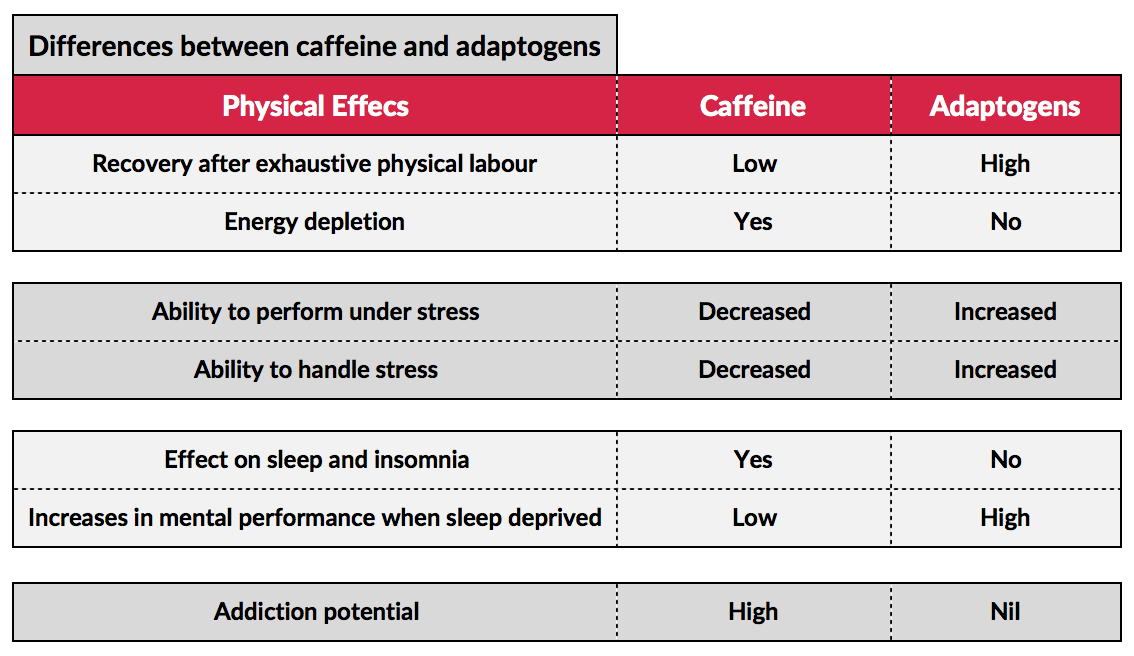
Here’s a brief list I’ve pieced together comparing the differences between caffiene and adaptogens based on the scientific evidence and work Alexander Panossian’s done over the years on adaptogens:
Is muscle soreness a reliable indicator of a good workout?
If you’ve ever picked up a weight and swung it around a few times you’ll inevitably wake up the following day thinking, “Oh my God, I can hardly move…”
This is known as Delayed Onset Muscle Soreness (DOMS). Presenting itself 24 to 72 hours after exercise, it’s most commonly seen in people who are new to training or those who have been inactive for long periods of time (MacIntyre, DL. et al. 1995).
For individuals new to training, waking up in pain often has negative connotations and can be worrying, especially if you aren’t made aware of it and if you don’t understand the mechanics behind it.
Nevertheless, for those of us who are regular gym-goers we relish the pain and look forward to the prospect of waking up sore, as for us it’s a psychological indictor of a good session and hard work.
Now it may be an indicator for us psychologically, but what about physiologically? Can we use muscle soreness (DOMS) as a gauge to reliably indicate how successful our workout was?
Well to answer this we should first need to define what DOMS is and why it occurs.
Originally, DOMS was thought to be caused by a build-up of lactic acid and metabolic waste that comes from training, but this has now largely been refuted. Although the exact mechanism still isn’t well understood, we do know DOMS is brought about through unaccustomed eccentric muscle action, causing a disruption of connective and/or contractile tissue (Cheung, K. 2003).
It is not a singular mechanism but rather a result of several mechanisms beginning with micro-trauma, and followed by an inflammatory response in the muscle (Lewis, PB. 2012).
In short, DOMS is an inflammatory response to tiny tears (micro-trauma) in the connective tissue caused by training.
It’s worth noting exercises that emphasise the eccentric contraction of a lift will have the greatest influence on DOMS, more so than concentric or isometric contractions (Faulkner, JA. 1993).
Why DOMS manifests itself as pain remains somewhat unclear, it may be attributed to some form of self-protection mechanism to prevent further damage, as DOMS has been shown to impair force output for up to 24 hours following exercise, as well as altering walking and running biomechanics (Paschalis, C. et al. 2007) (Vila-Chã, C. et al. 2012).
This is one of the reasons we tend to discourage people from training the same muscle group two days in a row, and rather have a rest day or perform a split-body routine.
So, knowing that DOMS is a response caused by trauma and damage to a muscle, can we be right in thinking that DOMS leads to more muscle growth and a sign of a great workout?
Well no, as I’m afraid it’s not quite that simple.
Yes, there’s a strong correlation between DOMS and exercise-induced muscle damage. However, when we’re looking to build muscle (hypertrophy) there are three key mechanisms we need to factor in: mechanical tension, metabolic stress muscle damage.
Muscle damage does lead to hypertrophy but it’s only part of the puzzle, as hypertrophy can still occur without it, via mechanisms one and two – mechanical tension and metabolic stress. (Schoenfeld B. 2010).
A recent paper published in the Journal of Strength and Conditioning stated:
“Although DOMS may provide a general indication that some degree of damage to muscle tissue has occurred, it cannot be used as a definitive measure of the phenomenon,”
and then went on to conclude:
“It remains debatable as to whether DOMS is an accurate gauge of muscle damage.” (Schoenfeld B, Contreras B. 2013).
So, although DOMS may provide some indication of muscle damage, it’s definitely not a reliable indicator and it won’t always reflect the magnitude of the damage, or occur at all.
If you’re using your ‘soreness’ as way to measure whether you’ve had a productive session then you need to think again, as studies have shown that even after a single bout of exercise DOMS can be significantly reduce in subsequent sessions (Nosaka, K. 2001), and these effects persist for at least several weeks (Clarkson, PM. 1992).
This would explain why soreness is common at the beginning of a new programme or to someone who’s new to exercise, but eases as time goes by.
My take home message:
DOMS is a result of training and is something we should neither be worried about nor obsess over.
As handy as it would be to use DOMS as a way of measuring your workout’s productiveness, it’s both unreliable and terribly inaccurate.
It’s also worth mentioning that certain techniques such as foam rolling (as I discussed last week) can reduce DOMS, along with adequate sleep, nutritional intake and supplementation – protein post workout has proven to be effective in reducing DOMS post-exercise (Shimomura Y. 2010) along with the consumption of caffeine prior to training, another win for coffee lovers! (Hurley CF. 2013).
Foam rolling – is it a waste of time?
It seems whatever gym or health club you walk in to, you’re bound to see people rolling around with a look of pain on their faces as they incur the torture of the foam roller.
Ten years ago, when I first started out in the fitness industry, it was difficult to find any gym that had foam rollers… now, I can guarantee you’ll struggle to find a gym that doesn’t have them.
So why the sudden boom, and what attracts us to want to roll around on the floor using something which quite frankly, causes me to grit my teeth in an expression of pain?
Well the answer lies in releasing myofascial – a fancy way of saying: improving the flexibility of the fascia tissue that surrounds our muscles.
Foam rolling, or Self-Myofascial Release (SMFR) as it’s more commonly referred to in the fitness industry is the term given to a specific form of manual therapy that is intended to release the fascia tissue, allowing for an improvement in range of motion and flexibility. Many trainers and therapists will recommend foam rolling as a way to improve flexibility, reduce muscle soreness and ‘break down the fascia tissue.’
I’ll be the first to admit, ten years ago when I use to recommend to clients they ‘rolled out’ I used to say:
“it was like using a rolling pin to roll out dough,” and told them that:
“a foam roller essentially helps to roll out clumped up and knotted fascia tissue to help reduce adhesions and make it more elastic.”
Oh how wrong I was, as now we now know that’s not the case! Advances in science have shown us we cannot simply ‘release’ fascia. Not unless you apply 2000lbs of force per square inch (Lawrence A. 2016), something I’m pretty sure a foam roller cannot deliver… I know it hurts but that pain would be something else entirely.
So, if we’re unable to release this fascia manually, why do we see noticeable changes in flexibility and the way our muscles feel when we roll? As let’s be honest, several minutes on a foam roller and we feel great.
Well, the mechanism by which self-myofascial release works is unclear. Currently, the best evidence supporting it points towards a neurophysiological mechanism involving muscle activity for acute changes, in other words, maybe it’s all in our heads. Rolling on a roller sends signals to our brain, which in turn tells the central nervous (CNS) to relax the muscle.
Physically, you do increase blood flow to the rolled-out area, which will help to turn over any metabolic waste and help push through new oxygenated blood, having a positive effect.
Now if foam rolling works through a neurophysiological mechanism, does this mean the results people observe are a placebo, let’s take a look shall we?
• Improvements in range of motion and flexibility
It seems there is evidence to show foam rolling does lead to greater improvements in range of motion and flexibility, however these improvements are short lived.
When I say short lived, I mean the benefits in ROM after having foam rolled only seem to last for up to 10 minutes (Škarabot J et al. 2015). Nevertheless, if you intermittently foam roll after static stretching then these improvements in flexibility can last significantly longer (Behm, D. 2017).
There’s also evidence to show that there’s a cross-over flexibility effect. This means if you were to work on rolling out one area of the body, you would see improvements in another area (to a lesser extent than rolling the specific area).
Grieve et al. (2015) assessed the effects of using a tennis ball to roll out the bottom surface of the foot and subsequently reported improvements in hamstring flexibility.
Kelly & Beardsley (2016) found increases in the opposite ankle after the leg was foam rolled, suggesting a cross-over effect.
• Improvements in muscle soreness
Here at Hall Training we recommend you spend a couple of minutes after your session rolling out the muscles you’ve just worked to help reduce what’s known as “Delayed Onset Muscle Soreness” or DOMS. Research has found that spending time rolling out after exercise does lead to a dramatic drop in pain caused by DOMS (Vaughan and McLaughlin. 2014) (Pearcey GE. 2015).
– the only caveat here is the time needed to significantly see a reduction in pain associated with DOMS is anywhere between 3-20 minutes.
• Improvements in performance
Historically, many strength coaches would prescribe static stretching prior to resistance training to help athletes increase their ROM and improve joint mobility. However, improvements in ROM are only really observed when stretching for 45 seconds or more, which also the time when static stretching can produce undesirable short-term reductions in athletic performance – decreased strength and increased risk of injury (Kallerud and Gleeson, 2013).
One of the reasons foam rolling has taken off is its ability to increase flexibility without having detrimental effects on performance (Sullivan, K.M et al. 2013) (Behm, D. 2017).
• Possible improvements in cardiovascular system
I have emphasised the word ‘possible’ here as it’s the only study of its kind and with a small sample size but, scientists in Japan found the use of foam rolling led to improvements in arterial stiffness of the lower leg and improvements in Peripheral Artery Disease (PAD), a disease in which the arteries in your legs or arms are narrowed or blocked, which leads to poor circulation and risk of stroke of heart disease (Okamuto. 2013).
So there you have it, the real reasons why foam rolling has an effect on our flexibility, and a few other bonuses that are associated with it. All-in-all, it’s not so much of a waste of time.
My important and easy take home points:
1. For improvements in acute flexibility and ROM
As little as 5-10 secs of rolling is needed – easy (Sullivan, K.M et al. 2013).
I you require greater increases in flexibility that last longer (more than 10 minutes) then:
• 30-60 secs of rolling is required to which you can combine with 30-45secs of static stretching (Škarabot J et al. 2015) (Behm, D 2017).
2. For reduced muscle DOMs
Foam rolling for at least 3 minutes and up to 20 minutes after training seems to be required (Vaughan and McLaughlin. 2014) (Pearcey GE. 2015).
3. Improvements in flexibility without a detriment to performance
Foam rolling prior to training 30-60 seconds. Can combine with static stretching for further increases in ROM but keep to under 1 minute (Sullivan, K.M 2013) (Behm, D 2017).
4. Improvements to cardiovascular health
Although there is evidence to suggest foam rolling can lead to improvements in circulation and CV health, it does require you to roll 30 minutes at a time, something I feel is a little long and rather dull – your best bet would be to go out for 20-30 minute stroll, as the effects will be similar (Okamuto. 2013).
5. In a hurry…?
Then take advantage of cross-over effect – roll out the bottom of your feet to help release the hamstrings (Grieve et al. 2015) or, if you roll out one leg you’ll see improvements in the other leg too (Kelly & Beardsley 2016).
Attention: if you’re still someone who’s spending time rolling out their IT Bands then stop! As you really need to look at this before you continue wasting your time.
If you’ve come across something known as the IT band, then you will probably have heard a number of different and conflicting terms used to define both what it is and its purpose.
If you’ve never heard of it then great, as the below is all you need know!
Firstly, let me tell you what it isn’t!
The IT band isn’t:
• anything to do with IT, and provides no use whatsoever for computing or electronics
• the latest pop or rock band to hit the UK charts
• nor is it a type of radio frequency
So what do people think it is?
Well, the IT band, or “ITB”, refers to the Iliotibial Band. Now most people in the fitness industry will tell you the ITB is “a ligament that runs down the outside of the thigh, from the hip to the shin.” You may also hear trainers refer to it as “a muscle”, however, both statements are false.
For starters, ligaments are used to connect bone to bone, and if you know anything about the IT band and where it originates, you’ll know it doesn’t attach itself directly onto a bone.
It’s also important to note the IT band isn’t a muscle, but based on the way personal trainers talk about stretching it and rolling it, you could be forgiven for thinking it is. Whether other personal trainers realise it or not, the IT band is neither a ligament nor a muscle.
But what is it really?
The IT band is made up of fascia tissue, and multiple muscles insert onto IT (see what I did there). The two major muscles that make up the IT band are the gluteus maximus and the tensor fascia latae (TFL), which make up both the anterior and posterior portion of the band at the hip.
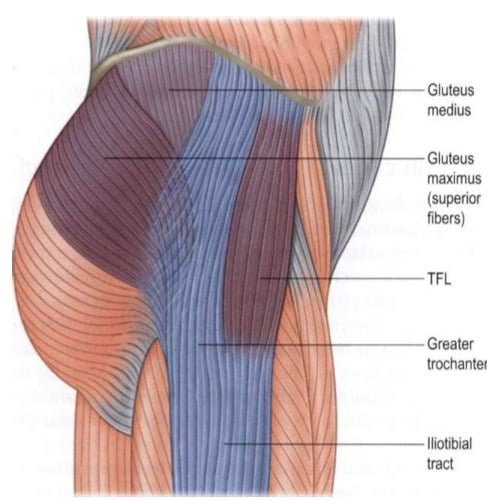
(image from Anatomy Trains by Tom Myers)
The IT band then runs the length of your thigh and inserts onto the lateral aspect of your tibia – a fancy way of saying to connects to the outer part of your shin bone. Down here, the anterior portion of the IT band connects onto the tibialis anterior, while the posterior portion connects onto the peroneus longus.
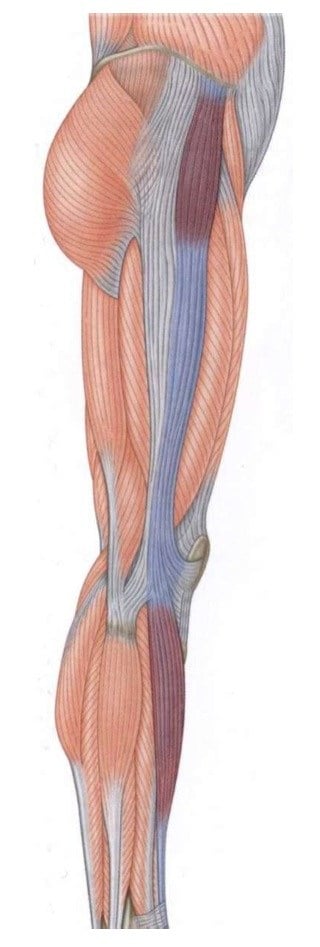
(image from Anatomy Trains by Tom Myers)
Its function is therefore to make a connection between these muscles, the TFL and the tibialis anterior, and another connection between the gluteus maximus and peroneus longus. This connection helps to transport force from the lower extremity to the upper extremity – i.e. the knee to the hip and vice versa, as well as providing stability at both the hip and the knee.
As you can now see, the TFL, gluteus maximus, tibialis anterior and peroneus longus insert into this band creating one long fascial tendon, which has the same contractile force of steal.
Complaints of having a ‘tight IT band’ are often confused with having tightness in the surrounding muscles. Due to the structure of the IT band, we now know it cannot become ‘tight’.
Due to the makeup and density of the IT band, methods such as foam rolling, stretching and even massage used to help release it are worthless, and will only bring about extreme pain with little to no success.
Instead, focus should be given to the muscles that insert onto the band such as the TFL, which can become extremely tight and overworked if there’s an imbalance between the TFL and tibialis anterior (remember these two muscles are connected on the anterior portion of the IT band).
You’ll find runners tend to have the biggest problems with IT band pain; as Whitey Lowe explains:
“the IT band is under its greatest tension during the first third of the stance phase in running or walking. There is increased tension on the ITB when decelerating the body’s momentum, such as walking or running downhill.”
If a runner over-strides, with the foot striking well in front of the hip, then the heel and leg must act as a braking mechanism before then accelerating off. Over-striding can place unnecessary force through the IT band, and if the glutes are weak or underactive then the TFL will absorb a lot of this force at the hip.
The other muscle to look out for is the vastus lateralis (the outer muscle of your thigh). This muscle lies underneath your IT band and if tight, can place pressure against the IT band, causing discomfort. Resistance training specialist, Michael Goulden, from Integra Training has found that releasing or foam rolling the vastus lateralis helps to relieve many cases of a ‘tight’ IT band.
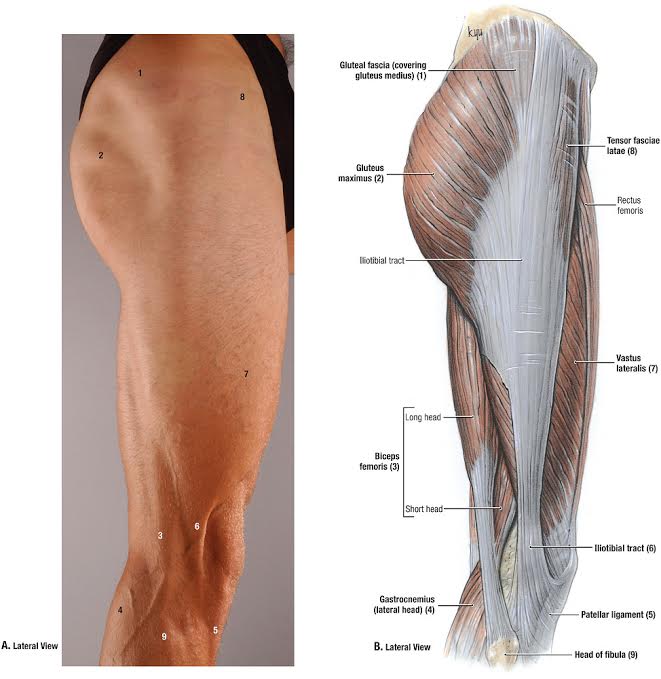
(image from http://web.duke.edu/)
So, there you have it! You now know the IT band isn’t a ligament, a muscle or a poorly named 80s pop band.
Instead, it’s a band of fascia tissue made up of a number of muscles all inserting into it. We also know that if pain arises in the IT band that it’s not the band itself, but an imbalance between the muscles surrounding the band, namely the TFL and vastus lateralis being too tight, and the glutes max (more than likely) being too weak.
Next week, I’ll be delivering a video on how you can stretch the ‘IT band’ or rather the muscles that make it up to help effectively reduce the symptoms of typical ‘ITB Syndrome’.
How many calories do we burn when weight training?
Today’s Friday Fun Fact is a question I’ve wanted to find an answer to for a while: just how many calories do we burn when weight training?
Heart rate monitors and fitness trackers can provide us with some basic numbers, and are great at determining how many calories we’re burning during some light to moderate cardio work, but when we do any strength training or perform high intensity interval work, they’re pretty useless!
You see, heart rate monitors estimate our energy expenditure through the linear relationship between power output (how much work you’re doing per unit of time) and the amount of oxygen consumed (which is equivalent to energy expenditure during aerobic exercise). Because the relationship between heart rate and oxygen consumption is linear, you can use your heart rate to estimate total energy expenditure.
However, this linear relationship crumbles under very high intensities, like when you’re sprinting or doing some resistance training, which is why they’re not reliable.
When it comes to measuring these kinds of activity, fitness trackers aren’t much better. Although they may sense movement, they have no way of determining how much load (weight) you’re lifting. For example, a Fitbit worn on the wrist will likely show the same number of calories burnt whether you perform a squat with ten kilos or a hundred kilos – not very rewarding for you.
So how can we estimate energy expenditure during resistance training?
Before answering the question it’s important we highlight the word “estimate,” or rather, replace it with the word “guesstimate.”
When it comes to weight training, variables such as gender, age, weight, loading parameters, programme design (traditional sets vs. supersets) load on the bar, range of motion etc. will all have an impact on the amount of energy used during a session. So, when we look at this we can only really guesstimate the number of calories based on the evidence that’s been documented in the literature.
When we look at the literature the number of repetitions performed is our best predictor at guesstimating energy expenditure in each session.
• A study by Kelleher et al, comparing supersets to traditional sets, found the total energy expenditure ranged from 260 to 279 calories across 240 reps – that’s about 1.1 calories per rep.
• A study published in the Journal of Strength and Conditioning Research looking at eight single set exercises found energy expenditure to range between 70 – 135 calories across 120 reps – that’s about 0.6 calories per rep.
• Hunter et al, took subjects through 8-10 exercises for two sets each (total of 160 reps), and found their average energy expenditure to be 113 calories – that’s 0.7 calories for each rep.
• Lastly, a study that looked at the relationship between rest intervals and total number of calories burnt on a leg press over five sets of 10 reps (50 reps) found an approximate energy expenditure of 90 calories – 1.8 calories per rep. However, when the same subjects then performed dumbbell chest flys for the same number of sets and reps, only 50 calories were burned – 1 calorie per rep (Farinatti, 2011).
As you can see there’s quite a range, with majority of the literature suggesting you burn between 0.5 and 1 calories per rep.
How do you know whether it’s really 0.5 or 1 calorie per rep?
To guesstimate the total number of calories you’ve used during a session I would hazard a guess using the following guidelines:
1 rep = 1 calorie when:
• Favouring super sets over tradition single sets
• As part of a circuit
• Compound exercises in favour of isolation exercises
• Larger muscles over smaller muscles
• Sufficient load is used i.e. nearing repetition maximums
• Rest intervals are incomplete
• Using stimulants pre-workout, such as caffeine before training
1 rep = 0.5 calories when:
• Single sets are performed
• Rest intervals are longer (+1 min)
• Smaller muscle groups are utilised
• Lighter loads are used
• The majority of your session is built around isolation work
The next time you’ve finished a workout and slumped over in a corner of the gym waiting to catch your breath, take a moment to tally up your reps, and match them against the points above to see how many calories you’ve burnt – it may just motivate you crank out a bonus 5 sets of 20 reps on the leg press as a finisher – after all, that’ll be 100 extra calories you’ve just used!
The five factors of optimal exercise selection
Following on from his last blog post on Hypertrophy mistakes everyone makes and how to avoid them, our personal trainer George looks at five key factors for exercise selection. A warning, this one is pretty in-depth, but will be perfect for anyone looking to improve their anatomy or hypertrophy knowledge. If it goes over your head, don’t panic! It’s up to your personal trainer to have this knowledge and make it work for you.
You’ve all heard of programme design, but how about exercise design? It’s probably not something you’ve come across, but hopefully come the end of this blog post you’ll have a few more tools in your belt to start tinkering with some of your favourite exercises. Heck, you might even need to throw some out completely!
Just to be clear before we begin, using only one or two of the following factors to explain something is likely going to get you into trouble, the key is to understand all pieces of the pie. After all, if all you have is a hammer, everything looks like a nail.
Most of these topics aren’t mainstream and they’re pretty ‘un-Instagramable’ – so, settle down, buckle up and prepare to have your mind-blown!
I’ve popped in a couple questions just to lighten things up – you’ll find the answers at the very end.
Joint Mechanics
Understanding joint mechanics gives you an indication of where an exercise increases and decreases in perceived weight throughout a movement.
It’s important to know the distance of the load from the axis, in our case, the joint; the further the weight is from the joint, the heavier the load ultimately becomes, so more force has to be imparted by that muscle. This is effectively what moment arms are.
A note on cables; cables create a constantly changing force angle on the lever (arm). That is, the load will appear to be heaviest when the cable is at 90o to the arm – play around with this yourself and let me know what you find.
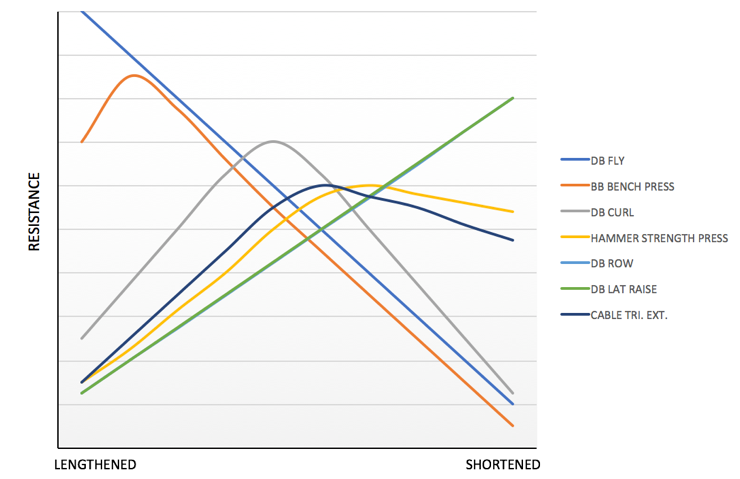
Example: A dumbbell fly is fundamentally the same as a dumbbell press but with the lower arm extended, increasing the moment arm and making the load ‘heavier’.
Question 1: Which creates more torque at the joint; 5kg held horizontally at 0.5m or 5kg held horizontally at 1m?
(hold that thought, answers can be found below)
Muscle Mechanics
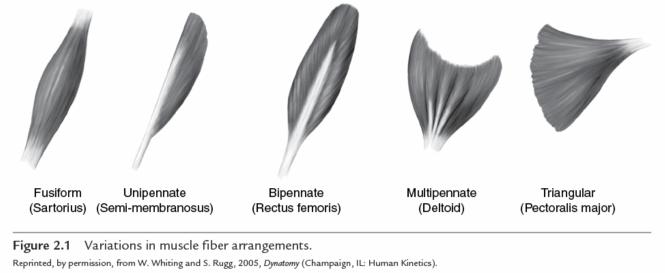
A muscle is not a muscle! Throughout the body, we have a number of different muscle types, and I’m not talking fast twitch vs. slow twitch here. Muscle fibres only pull in the direction in which they run, due to fibre direction and insertion points, each type differs in where its max strength lies.
Fusiform – e.g. Biceps
- One line of pull – fibres run directly from one end to the other, converging at a common origin and insertion
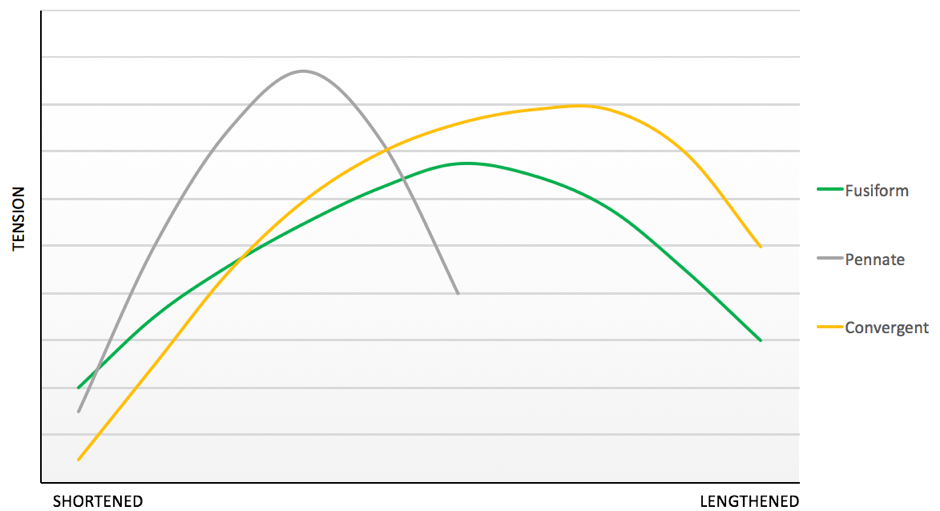
- Provide a contractile ability that is strongest in the midrange. Their strength curve almost replicates your typical bell curve.
- Provides more range of motion and speed, but reduced force capability
Pennate – e.g. Quadriceps, Hamstrings, Triceps, Deltoids
- Contain a mini-tendon within the muscle belly – muscle bellies within muscle bellies ey’! Their fibres run ‘slanted’ between these tendons, therefore do not contract directly from origin to insertion.
- Have an increased advantage to pull in a more lengthened position
- Suffer a drastic drop off in advantage as the muscle contracts and shortens
- Provides less range of motion and speed but higher force capability
Convergent – e.g. Pectorals, Latissimus Dorsi
- Originate at varying points and converge at a single insertion, therefore provide an almost infinite number of lines of pull
- Have a greater advantage in a more lengthened position due to the fibres having a better line of pull towards the originQuestion 2: Which muscle type(s) might benefit from a higher proportion of lengthened loading?
Resistance Profiles
Resistance profiles shows how tension/force changes in the muscle throughout the range of motion of a particular exercise in isolation.
Going back to our above example, a dumbbell fly is increasingly heavier the further the load (weight) gets from the joint, and lighter the closer it becomes.
Strength Curves
The typical bell curve we all associate with strength curves is correct, well 80% correct. However, the muscle mechanics we spoke about earlier have the ability to shift our strength curve more toward an extreme range advantage, shortening the curve entirely or increasing the total peak tension.
Question 3: How does the strength curve for a pennate muscle differ from the others?
Neuromechanics
What you intend to do with the weight is vital to where tension is placed! A steady and controlled movement of an object has a constant mass throughout, whereas acceleration causes something to feel heavy from the start and lighter as it begins to move.
In order to overcome some gaps caused by all four of the previous factors, we can add in the use of momentum and design a more effective exercise. Just to add; ‘explosive’ and ‘accelerating’ do not mean throw!
Example: Dumbbell lateral raises are ridiculously hard at the top. We can accelerate the weight through to the top, where it naturally gets harder.
Information Overload? Where Do I Start?
I know, I get it – it may take a couple of reads and a few weeks of mulling over (it will, trust me). But truly understanding each of these areas and being able to instinctually integrate them into your programming is THE ultimate skill! Giving you the principles behind these five factors and how to use them is far more beneficial than giving you specific ‘to-dos’.
Going back to our original statement; “The most effective exercise for a given muscle is one that has the ability to perfectly match the output capability of that muscle throughout its entire range of motion.” – as I briefly explained in my last blog.
Maximally efficient exercises and ultimately, workouts, can be achieved by understanding how each of these factors interact with one another, and then making adjustments accordingly to match output capability.
Here are some examples to get you started…
Example 1: If an exercise is hardest where a muscle is mechanically weaker, it might be beneficial to decrease the difficulty there OR increase the difficulty where the exercise is easiest to balance things out.
Example 2: If a muscle is drastically stronger in a more lengthened position, it might pay to spend more time there with some partial reps.
There we have it – I did say only understanding one or two of these would get you in trouble, didn’t I?
“The more I learn, the more I realise how much I don’t know.”- Albert Einstein
Answers
Q1: 5kg held horizontally at 1m
Q2: Both pennate and convergent
Q3: More force created but over a shorter range of motion
Five tips to increase diet adherence
For some people, sticking to a calorie controlled diet and losing weight can be an easy task, but for most of us (myself included) it can be a bumpy road with many setbacks along the way.
This is completely normal and you shouldn’t become disheartened if you fall off the band-wagon; the important thing is to recognise when you’ve fallen off, why you fell off and what you’re going to do to get back on it.
A study published this year in the The Society of Behavioural Medicine looked at the reasons people lapsed on a diet. I’m not going to bore you with the specifics as it’s the sexy stuff we’re really interested in.
So here we go; over a one year period it was found that:
• Unintentional food intake was the most common reason people lapsed i.e. the foods you know aren’t good for you but you love them anyway (pastries, cakes, ice cream, chocolate and crisps)
• Lapses were highest when at home – 46% of lapses occurred at home compared to at work or when eating out.
• The most common time for a lapse was in the evening – between 6:00pm and 9:00pm
• The risk of lapsing was higher at the weekends compared to weekdays
• Feelings of hunger and deprivation, and the availability of delicious foods were also associated with an increased risk of a lapse
The researchers also discovered that people who were stressed, angry, lonely, sad or bored lapsed more frequently than those who had a more rounded emotional state.
Now, if you’re anything like me then ninety percent of your lapses coincide with these findings.
Personally, I find it much harder to stick to my diet when I’m working from home and over the weekend than during the week. Come the evenings, it’ll be around 8:30/9:00pm when I start craving the chocolate and all things sweet. These cravings are then further exacerbated when I’m bored, stressed or when I know I have bar of Dairy Milk sat in the fridge door – it can be so hard sometimes!
So when it comes to diet lapses you have two options. The first is to adopt a mind-set of “oh well, science says I’m bound to fail, this is out of my control.” The second is to look at the strategies above, see which ones you identify with and then use this information to help prevent further lapses.
If you can build in a few strategies to help reduce or better yet, prevent a dietary lapse, then you’ll be onto a win and a far more successful weight loss journey.
Here are a few examples:
1. Access to delicious and highly desirable foods was the biggest cause for people to lapse. Find ways to control your access to these foods, simply by removing them from your cupboards and not letting them enter your home. Also try limiting your exposure and visibility to them through photos on social media, television ads and cooking programmes – programmes such as Bake Off really aren’t going to help supress your cravings for these types of foods!
2. People are most likely to lapse when at home – If home is the place where you find self-control difficult then ask yourself why? Why are you more tempted by foods when at home than anywhere else? Is it because of boredom, access to delicious foods, loneliness, habit, or lack of routine? If you’re able to find what pulls that trigger you can then think of ways to prevent it. Through working with clients I’ve found boredom, access to tempting foods and habit to be the main reasons they lapse when at home. Why not set yourself a new healthy habit. When you’ve got home and relaxed for a while, why not go for a daily 20-minute walk to increase your step count and prevent you eating?
3. The window between 6:00pm-9:00pm is the dangerous time for diets! This makes a lot of sense as most people will be returning home from work, often feeling stressed, hungry and tired, so will pop the kettle on for cup of tea, in which case biscuits are usually nearby, or they may pour themselves a glass of wine (or two, three, and four… oh God, I’ve drunk the bottle).
Habit plays a huge role here as there are many actions such as walking through the front door, popping the kettle on, sitting down to watch TV, that all spark an unconscious cue for self-reward. Being aware of these actions and the cues they spark can really help you to reduce the acts of self-reward, and therefore what’s being put in your mouth. – If you wish to know more on why habits exist and how they can be changed, I strongly recommend the book: The Power of Habit by Charles Duhigg.
4. Emotional state dictates whether a person is likely to lapse. If we’re bored, stressed, lonely or sad we tend to reach for the snack cupboard to help cheer ourselves up. Last week I talked about how tryptophan can help alleviate some of these emotional-based carvings.
Boredom and stress seem to be the biggest culprits for food cravings. Boredom often occurs in the evenings when we’re sat around with nothing really to distract us. Plan your evenings with activities such as going for a walk after dinner, attending a local book club, signing up to a team sport, or even going to the gym. These will help to provide structure and alleviate boredom, all while taking your mind off food.
5. The feelings of hunger and deprivation led to a greater lapse rate – Opt for higher satiety foods to help minimise the feelings of hunger and deprivation, which impact lapse risk. Meals that are high in protein and fibre will help to keep you feeing fuller for longer. Also, look at foods with a high-ranking Fullness Factors (FF); these are foods that are more likely to satisfy your hunger with fewer calories. Examples include potatoes, watermelon, beansprouts, eggs, popcorn, porridge and steak.
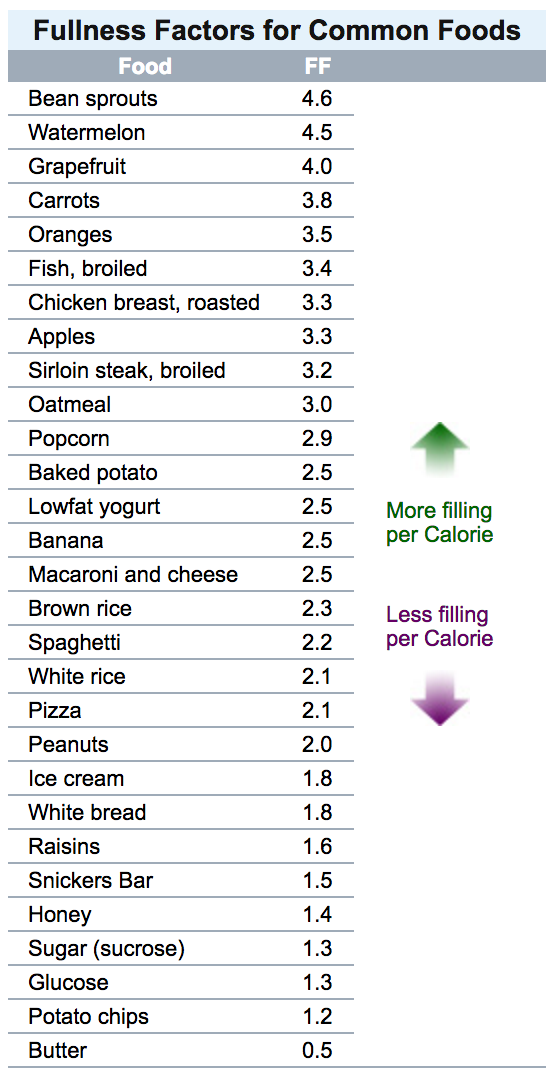
source: nutritiondata.self.com
These are just a few strategies you can put in place to help ensure you stay on track. Admittedly, it would be unrealistic to expect everyone who starts on a diet to adhere to it 100% of the time, we’re only human after all. So it’s important to be aware there will be times when you encounter a lapse, and although you may not be able to fight it you can reduce it. Swapping certain foods for others can help reduce the caloric intake of a lapse.
Here are some great food swaps that you can use:
• Ice cream swapped for Alpro ice cream
• Slice of cake swapped for a protein bar (try a Grenade bar)
• Crisps swapped for popcorn
• Glass of wine or beer swapped for gin and slim line tonic
• Sugary beverages swapped for diet versions
• Crackers or biscuits swapped for oatcakes or rice cakes
There you have it, a few stretgies that may just help prevent you from having a minor stumble off the band wangon.
References:
Forman, E.M., et al. Ecological momentary assessment of dietary lapses across behavioral weight loss treatment: characteristics, predictors, and relationships with weight change. Ann Behav Med. Mar 9, 2017 [Epub ahead of print]
Tryptophan – The secret to curbing carb cravings!
Do you crave carbohydrates when you’re dieting? Well, this could be why…
Tryptophan is an amino acid that is converted to 5-HTP, which in turn up-regulates the production of serotonin – the happy hormone of the brain!
Low levels of tryptophan will undoubtedly lower the uptake of serotonin, and expose you to:
• increased susceptibility to depression
• increased craving for sugary foods
• low mood
• increased aggression
• increased hunger – these symptoms seem to be a lot more magnified in women
Unfortunately, tryptophan does get depleted when dieting, by as much as 15-20% when calories are set at 1,200 or lower (Strasser. 2015). It’s a big reason why it becomes very difficult to actually stick to a diet and not be tempted to binge and overeat.
Why?
Well, it’s important to know that increases in glucose and insulin in response to a high carbohydrate consumption will trigger an increase in brain tryptophan and serotonin synthesis (Benton. 2002).
If you’re someone who experiences any of the above symptoms when on a calorie-controlled diet then it may well be worth increasing your consumption of tryptophan. Only recently, scientists from the University of Barcelona were able to show that treatment with tryptophan-rich protein foods improved emotional processing, mental energy levels and reaction time in middle-aged women.
Taken in dosages of 400-1,000mg/day, it has been shown to:
• reduce food intake (up to 18% more than placebo in a 1989 study w/ obese women | Ceci. 1989)
• increase weight loss – found in a 12-week study with obese women (Cangiano. 1992)
• reduce the food intake – specifically carbohydrate intake in both male and female with type II diabetics (Cangiano. 1998).
Where can I find Tyrptophan?
You can either choose to supplement tyrptophan in the form of 5-HTP (the easiest way) or to increase your intake of tryptophan rich foods for example:
• Elk
• Spinach
• Eggs
• Spirulina
• Soy protein
• Crab
• Halibut
A go-to supplement I recommend would be this one as it’s rather potent at 200mg per cap!
So, if you find yourself ‘pulling your hair’ out when dieting or dreaming about dancing doughnuts and prancing pretzels, it may be a sign that your serotonin levels are a little low and upping your tryptophan may not be a bad idea.
Internal Cues: Bridging mind to muscle
Last Friday I talked about the mind-muscle connection, and how if we think about a specific muscle working, we can in fact increase its activation and the amount of force or effort it’s exerting on a load.
Today, I want to talk about how we can spark this link from mind to muscle and establish this all important connection.
It’s no secret; people who are new to training tend to have a poor biomechanical feedback mechanism, meaning they find it difficult to feel a muscle when exercising it. As their training age progresses, so too does their ability to engage the right muscle for the exercise.
In all the years I’ve been a personal trainer I’ve (typically) found the muscles we’re unable to see i.e. our glutes, lats, upper back and hamstrings, tend to be harder to feel and engage compared to those that we can see, such as the biceps, quads, abs and shoulders.
So, how can we teach people to start engaging their muscles and to improve their mind-muscle connection?
Well there are two tricks we can use,
1.Internal and External Cues
2.Touch
all of which have proved to be very beneficial. But today I want to talk about internal and external cues.
Cues can typically be categorised into those that have an internal or an external focus. Internal cues are instructions that direct a person’s attention towards a part of their body, such as muscles and joints. External cues have a more external focus, instructing a person to focus their attention on their surroundings, outside of the body. These are generally used when the goal is to produce power or increase performance.
Generally speaking internal cues help to:
• maximise muscle contraction
• maximise muscle activation
• improve technical form
whereas external cues help to:
• maximise strength
• maximise power, speed, velocity and acceleration
• maximise precision and coordination
External cues have been shown to be far superior to internal cues for maximising performance (Bredin, Dickson & Warburton 2013). If you’re an athlete or competitive sportsman/woman then focusing mainly on external cuing would certainly be the way to go however, we’re not athletes (well, I’m certainly not).
Most of us are simply looking to be able to effectively activate certain muscles in the right order, at the right time – cue internal cueing.
For years, bodybuilders have been implementing the use of internal cues to help improve the mind-muscle connection. Research has shown by directing your attention and focus internally to a muscle or joint you can increase a muscle’s engagement and the level of contraction (Snyder & Fry. 2001).
Here at Hall Training, we often provide internal cues to our clients to help them to feel and engage certain muscles.
Here are just a few we like to use:
The Lats:
When performing a lat pulldown, we encourage the client to keep their chest up and imagine driving their shoulder blades back and down into their hips, leading with the elbows – internal verbal cues help to increase latissimus dorsi activity compared with no cue (Snyder 2009).
The Glutes:
For glute engagement, we encourage the client to imagine they’re trying to crack a walnut when coming up into hip extension, or to imagine they have a five pound note between their buttocks which they’re trying desperately to keep a hold of – both cues really help to keep the glutes squeezed and muscles contacted. Researchers have reported providing internal cues during a hip extension led to increased muscle contraction (Lewis et al. 2009).
The Pecs:
When performing a bench press, it’s common for most people to feel it in their triceps or shoulders rather than the muscle they’re trying to work, which would be the chest. By instructing the client to push their hands together against the bar as they push upwards, along with imagining the two elbows coming together in an arch motion, it’ll make the exercise more focused on the chest muscles.
Research has also concluded that in response to chest cues, subjects were able to increase the amount of activity (22% increase) placed through the chest muscles during the bench press (Snyder & Fry. 2011).
The Biceps:
For men this is never really an issue, but females tend to have a hard time contracting their biceps. Why? I have no idea, maybe because they’re not as vain as us men! Anyway, one trick we use is to imagine the elbow coming up to meet with the shoulder when performing a bicep curl, and then really squeezing it at the top like a balloon, imagining you’re trying to pop it – these internal focuses help to increase bicep activation and recruitment.
So, there you have it; a few little tricks to help bridge the connection between mind and muscle. The next time you go to the gym, try directing your attention away from what’s around you and start thinking about what’s going on inside you… you never know, it may just help you to feel muscles you never knew existed.
Mind-Muscle Connection: Something worth thinking about!
Many personal trainers, coaches and gym-goers seem to think that if you a lift a weight from A-to-B, the muscles involved in that lift will be activated, while others (more sensible folk) believe a muscle is only really activated in a lift when you’re thinking about it – this is known as the mind-muscle connection.
So who’s right, and do we really need to be thinking about the muscle we’re trying to work, or can we afford to let our mind wander elsewhere?
Well, the research on this topic is limited and mostly anecdotal, however I’ve managed to dig up a few studies that can shine some light on the topic.
The largest study I found was by glute expert, Bret Contreras. He took a group of subjects and using EMG data, found whether the load, cadence, and form dictated muscle activation, or whether it’s possible to mentally steer muscle activation to individual muscles using the power of the mind.
It’s very important to note that the load, speed, grip-widths, stances, bar movements and joint ranges of motion were all kept constant between the two groups as otherwise these factors would ultimately sway the outcome.
The results are somewhat surprising! There’s certainly evidence to support that the mind-muscle connection does in fact exist, but only for certain muscles:
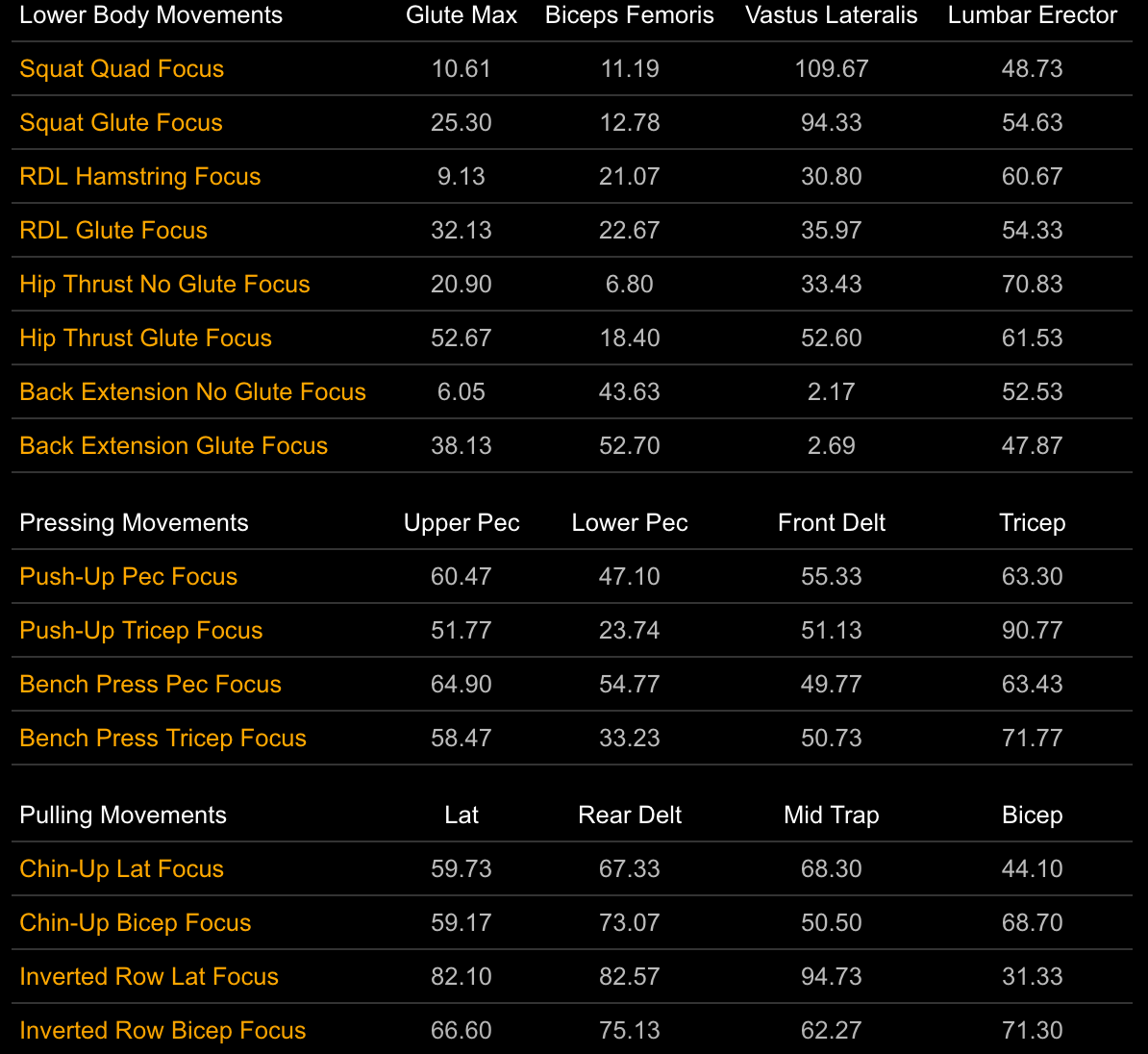
(source: t-nation.com)
The glutes seem to have the greatest influence of recruitment, with a 32% difference in recruitment when thinking about them working to not working. During a back extension, muscle activation only reached 6% when subjects weren’t thinking about them compared to a staggering 38% when they were actively thinking about them. Overall, glute activation was a lot higher when subjects were really thinking about them working during hip extension exercises such as RDL’s hip thrusts, squats and back extensions.
Other muscles that were found to respond well to the mind-muscle link were the pecs and the triceps; focusing on the pecs while pressing limited the work the triceps had to do, placing more load through the pecs. This was easier to do when performing a push up rather than a bench press.
For puling muscles such as the back, mid-traps and the biceps it was really dependant on the movement being performed at the time. Lat activation didn’t change too much during a chin up, but they really came into play when thinking about them during an inverted row.
On the whole there is evidence to suggest there is a mind-muscle connection, and we should really think about muscles working if we want to improve the amount of work they’re contributing in a lift. However, there are a few other things to bear in mind:
- The amount of weight being used – steering your thoughts to a muscle when using lighter weights seems to a lot easier to do than when lifting heavy weights (Snyder & Fry 2012), this may be why the push up trumped the bench press.
- How experienced you are – as with anything, practice makes perfect. Typically, people who are new to training tend to have a poor bio-mechanical feedback, meaning they struggle to feel muscles working when performing an exercise. As your experience in the gym grows, so will your ability to start thinking and contracting your muscles during certain movements. This should then lead to better progression and recruitment! (Moreside JM et al. 2008)(Sumiaki Maeo, Takumi Takahashi et al. 2014).
So there you have, and I personally believe the mind-muscle connection does exist as we see it day in and day out with our clients too. A great way I explain this to clients is to look at the connection like revising for an exam:
When you revise for an exam, it’s one thing reading the information you need to learn, but just because you’ve quickly read it doesn’t necessarily mean you’ve understood it or will even able to recite it. However, if you think about what you’re reading and really visualise it, then you’ll have a much greater understanding and retention rate – muscles are no different. Think about the muscle you’re trying to work and really hone in on it. I guarantee it’ll add a whole new dimension on to your training.
Next week I’ll be talking about how you can create this link between mind and muscle.