How Many Steps Should I Actually Walk a Day?
Stop Aiming for 10,000 Steps: Here Is Your Ideal Daily Step Target (backed by science)
With the rise in popularity of fitness trackers and wearables such as Garmin, Fitbit, and smart rings, we are becoming much more aware of our health and daily movement patterns. Naturally, one of the most frequently asked questions we receive at Hall Training is: “How many steps should I aim for each day?”
Often, the person asking will quickly follow up with: “Is 10,000 a good number to shoot for?” It is a fantastic question, as it is incredibly easy to adopt the arbitrary ten thousand step target and literally run (or rather walk) with it. Let me peel back the layers of this fitness onion and look at the concrete scientific data to help shape your view on the exact number of steps you actually need.
The Myth of the 10,000 Step Target
A short trip through history reveals that the 10,000-step target was never based on scientific research or recommended by health experts. It was actually born from a highly successful Japanese public relations and marketing campaign leading up to the 1964 Tokyo Olympics.
Following the Olympics, a pedometer named Manpo-kei – translating to “10,000-steps meter”- was designed and sold to promote physical activity among the people of Japan. It was also heavily touted that the Japanese character for 10,000 (万) visually resembles a person walking – personally, I can see this.
Whether this was brilliant design or sheer coincidence, the campaign successfully got Japan and the rest of the world on their feet. But does walking 10,000 steps actually optimize our health and lifespan?
The Science of Step Counts and Diminishing Returns
The answer depends entirely on your current baseline level of fitness. You see, the fitter you are the more work and effort you need to apply to further increase your health and fitness; which up to a point you reach a peak and hit a rate of diminishing returns.
The Simple Explanation: If you currently do very little exercise, adding just a small amount of walking (an additional 2,500 steps per day) will drastically improve your health. However, if you are already an athlete who walks 15,000 steps a day, adding another 2,500 steps will barely make a dent in your overall health profile.
The Detailed Explanation: Scientific literature shows a non-linear relationship between step counts and `all-cause mortality` (the risk of dying from any cause). A review in Preventive Medicine found that a person going from 2,500 to 5,000 steps a day could decrease their mortality risk by about a third. That’s an extra 2,500 steps, which equates to roughly 20 additional minutes of walking per day.
Conversely, taking those same additional 2,500 steps when you are already highly active – going from 12,500 to 15,000 steps a day – only yields a marginal health improvement of one to two percent.
Finding Your Ideal Step Target
To help you determine exactly what you should be aiming for, I’ve have broken down the scientific data based on your current activity levels. Sadly, the average UK adult only gets between 3,000 and 5,951 steps per day. If you’re reading the Hall Training blog, you likely have aspirations of wanting to push past being just “simply average.”
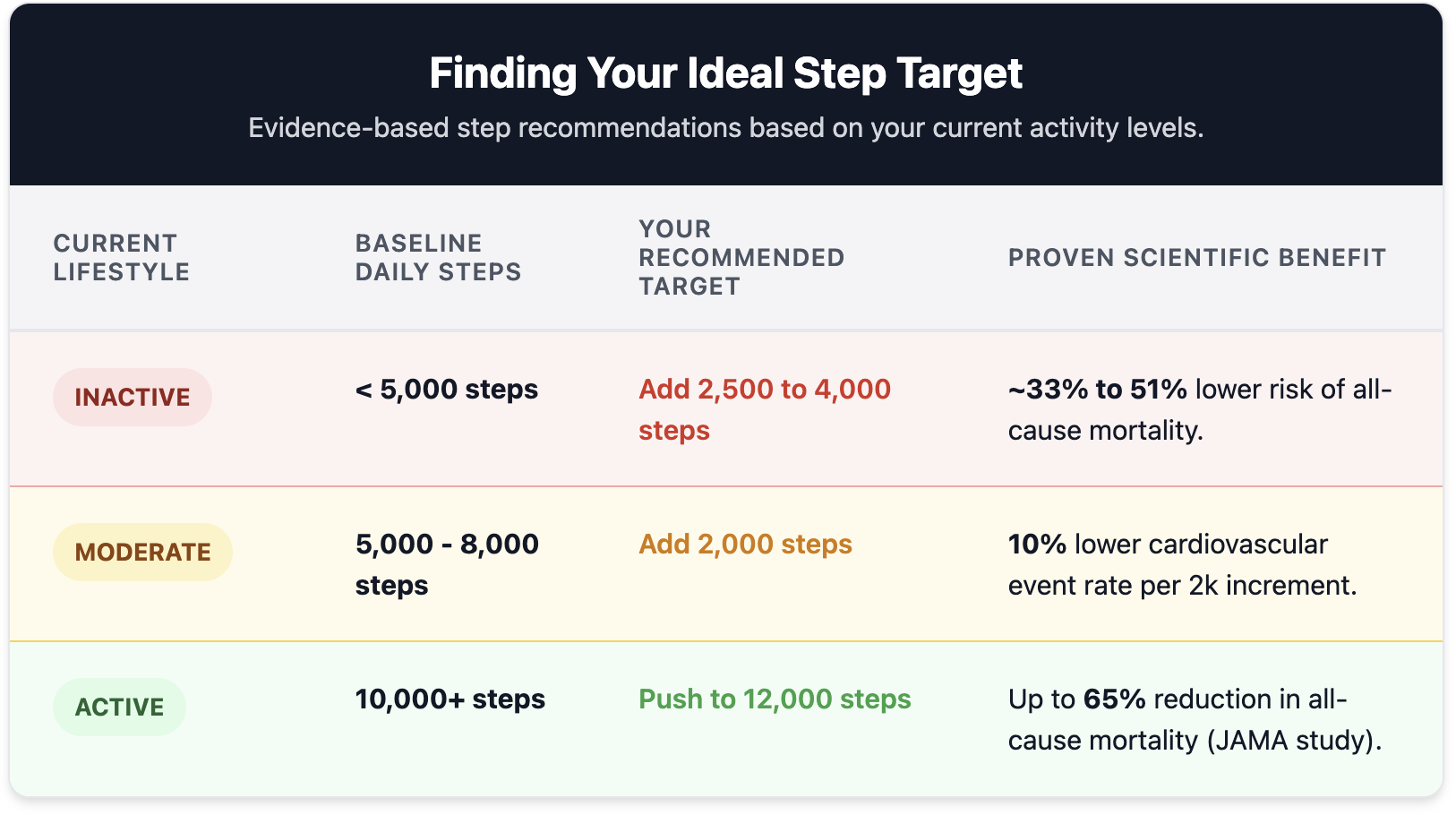
If you lead an inactive lifestyle (<5,000 steps per day), then you have two possible options:
- Shoot for an additional daily step increase of 2,500 steps – this will reduce your risk of dying by around a third.
- Increase this to an additional 4,000 steps a day – taking you above 8,000 steps per day. You’ll soon see the benefits observed in the JAMA study, where participants saw a 51% reduced risk of dying from any caus
For those in the middle – mildly active (5,000-8,000 steps):
- A 2019 review of seven different studies found that every increment of 2,000 steps per day (up to 10,000) was associated with a 10% lower cardiovascular event rate.
- Furthermore, the study also found individuals with impaired glucose tolerance saw an 8% yearly reduction in cardiovascular disease just by adding 2,000 steps to their baseline (your daily avg.)
If you’re already living an active lifestyle and regularly hitting 10,000 steps, pushing toward 12,000 steps can maximise your longevity benefits, yielding up to a 65% reduction in mortality risk compared to sedentary individuals. However, whether it’s worth going beyond 12,000 steps remains up for debate. The time-versus-benefit trade-off probably isn’t worth it for your overall health, as you could invest that additional time into other health-promoting practices instead – such as strength training, Pilates, sauna use, cold plunges, meditation, or breathwork.
The Power of Walking in Nature
Where you walk can be just as important as how much you walk. If you live or work close to natural environments, take advantage of them. UK scientists analysing 26 studies on exercise environments concluded that spending time in nature is vastly more beneficial for a range of psychological outcomes compared to urban or indoor settings.
Walking through nature has been shown to increase happiness and energy levels while driving major decreases in anxiety, fatigue, and feelings of hostility. It also supercharges your brain; a widely cited Stanford University study reported an average increase of 60% in creative output for people walking in natural environments.
Final Thoughts: Time to Level Up
If you’re ready to observe dramatic changes in your fitness, energy levels, creativity, mood, and health, there is no magic pill that compares to the power of walking. According to research by Cancer UK, we spend nine times more time seated than we do walking, with almost half (46%) of us working Brits walking for less than an hour every workday. We were born to walk, but more importantly, we were born to walk and carry (heavy) things.
Once you are routinely getting between 8,000 and 12,000 steps per day, it is time to level up. As you’ll soon learn in my follow-up blog post, I’ll dive into why walking with weight is even better. Grab a pack, load some weight, and let’s carry the load!
Until next time – get outside, get walking!
Summary of Key Points
- The 10k Myth: The 10,000 step rule was a 1964 marketing stunt (Manpo-kei), not a medical directive.
- Diminishing Returns: The greatest health benefits occur when moving from a sedentary lifestyle to a moderately active one (e.g. jumping from 2,500 to 5,000 steps drops mortality risk by 33%).
- Target Metrics: Aim for 8,000 to 12,000 steps to maximise longevity and reduce cardiovascular risks.
- Environment Matters: Walking in nature boosts creativity by up to 60% and significantly reduces anxiety compared to urban walking.
- Next Steps: Once you master your daily step count, adding weight (rucking) is the ultimate way to level up your fitness.
The Post-Plunge Protocol: Why Temperature Is the Missing Key to Red Light Therapy Success
The Temperature Secret That Makes Red Light Therapy 25% More Effective
Welcome to the Future of Recovery
At Hall Personal Training, we’ve always been committed to helping our clients achieve optimal health through evidence-based practices. That’s why we’re excited to introduce you to Avanto° our sister company launched in September to further expand our wellness offerings beyond traditional training.
Avanto° brings together three powerful recovery modalities: sauna therapy, cold water immersion, and red light therapy, all housed in a purpose-built space designed around the latest scientific research. While each modality offers incredible benefits on its own, it’s the intelligent combination and timing of these therapies that creates truly transformative results.
Today, we’re diving deep into red light therapy – one of the most misunderstood and incorrectly applied wellness tools in the industry. You’ll discover why most facilities get the timing completely wrong, and how our evidence-based approach at Avanto° ensures you get the maximum therapeutic benefit from every session – enjoy!
Introduction: What Are Red and Near-Infrared (NIR) Light Therapies?
Red light therapy, also known as photobiomodulation (PBM), involves exposing the body to specific wavelengths of red and near-infrared (NIR) light. These wavelengths, typically range from 600nm to 1000nm, penetrate the skin and underlying tissues, where they influence cellular biology in ways that can promote healing, reduce inflammation, and improve overall health. The science is clear: both red and NIR light directly impact mitochondrial function (our cellular health) and help your body optimise repair at a cellular level.
Scientifically Backed Benefits: What Does It Really Help With?
- Enhanced Mitochondrial Function, ATP Production & Lowers Blood Glucose
Red and NIR light therapy primarily works by activating cytochrome c oxidase (CCO), a key enzyme in the mitochondrial respiratory chain. A 2024 study in Wiley’s Journal of Biophotonics demonstrated that red light (670 nm) increases mitochondrial membrane potentials and adenosine triphosphate (ATP) production, profoundly boosting cellular energy at the source. Remarkably, the study found that just 15-minutes of red light exposeure after a meal, reduced blood glucose by almost 28%.
- Reduced Inflammation and Pain Relief
Red light therapy has been proven to reduce pain intensity by 20-30% by decreasing inflammation and promoting angelistic activity linked to various conditions. This effect is especially valuable for those living with disorders like chronic fatigue syndrome (CFS), multiple sclerosis (MS), and fibromyalgia, all of which are closely tied to inflammation and mitochondrial stress.
- Improved Skin Health and Wound Healing
Red light stimulates collagen production, supports microcirculation, and accelerates wound repair. It is well recognised as a non-invasive, effective tool for improving skin tone and speeding up tissue healing, with a 2024 meta-analysis showing red light therapy increasing wound healing (as measured by wound size reduction) by around 14% to 38% as compared to control intervention – I personally use red light therapy on my kids wounds to speed up the healing and help get them back up on their feet; it really is amazing!
- Special Benefits for Chronic Conditions
Recent research shows promising benefits for people with chronic fatigue syndrome (CFS), multiple sclerosis (MS), and fibromyalgia. For example, a 2023 trial found that whole-body photobiomodulation therapy led to an average 31% reduction in Fibromyalgia symptoms at 6 weeks, and a persistent 18% reduction at 24 weeks as measured by a Fibromyalgia Impact Questionnaire (FIQR), with notable improvements in pain, stiffness, fatigue, sleep, anxiety, and depression, and quality of life.
The Temperature Factor: Why Heat Reduces Red Light Effectiveness
Temperature plays a major role in red light therapy outcomes. Scientific studies reveal that increasing skin temperature (as happens in a sauna) results in more light absorption at the surface, reducing how deeply beneficial red and NIR photons penetrate. This undermines the therapy’s effectiveness at reaching mitochondria in deeper tissues.
Conversely, cooling the skin before light treatment – even with simple cold exposure – substantially increases the penetration depth. Studies demonstrate that cooling the skin before red light treatment can increase light penetration by over 25%. A study published in the Journal of Biomedical Optics showed that cooling the skin makes tissue more transparent to therapeutic wavelengths, allowing more light to reach deeper cells. This improvement occurs because vasoconstriction (narrowing of blood vessels) reduces superficial blood volume, allowing more photons (light particlaes) to travel to deeper tissues where mitochondrial benefits occur.
Recent research from 2025 further confirms that low-powered devices that don’t generate much heat (such as the full body panels here at Avanto°) achieve better tissue penetration than high-powered, heat-generating systems. The science is clear: cooler skin temperature optimises light therapy effectiveness.
This is why red lights installed in saunas represent more marketing than meaningful therapy. The elevated temperature environment directly counteracts the penetration needed for true therapeutic benefit, making it largely ineffective despite the appealing concept of combining modalities.
So, instead of using red lights in hot environments (like a sauna), the best science currently supports red light after cold exposure for maximum benefits.
Our Approach at Avanto: Evidence-Based Red Light Protocols
At Avanto°, our approach is rooted in the latest evidence. That’s why we removed our red light therapy tower out of our sauna and installed full body panels in our changing areas – this way you can receive a full therapeutic dose without heat interference.
Our protocol: Experience a cold plunge first, then apply red light therapy while your skin is still cool and vasoconstriction is pronounced. This sequence capitalises on physiological changes that maximise light penetration, so you get the real, cellular-level and theraputic outcomes you’re after.
Start with Our Reset Protocol: The Perfect Introduction to Science-Based Recovery
If you’re new to red light therapy and cold exposure, our Reset Protocol is the ideal starting point. This carefully designed 25-minute session demonstrates exactly why the post-plunge timing we’ve discussed is so effective.
What Is The Reset Protocol? This gentle yet powerful protocol helps calm your nervous system, release daily pressure, and sharpen mental focus, leaving you ready to tackle whatever’s next on your to-do list.
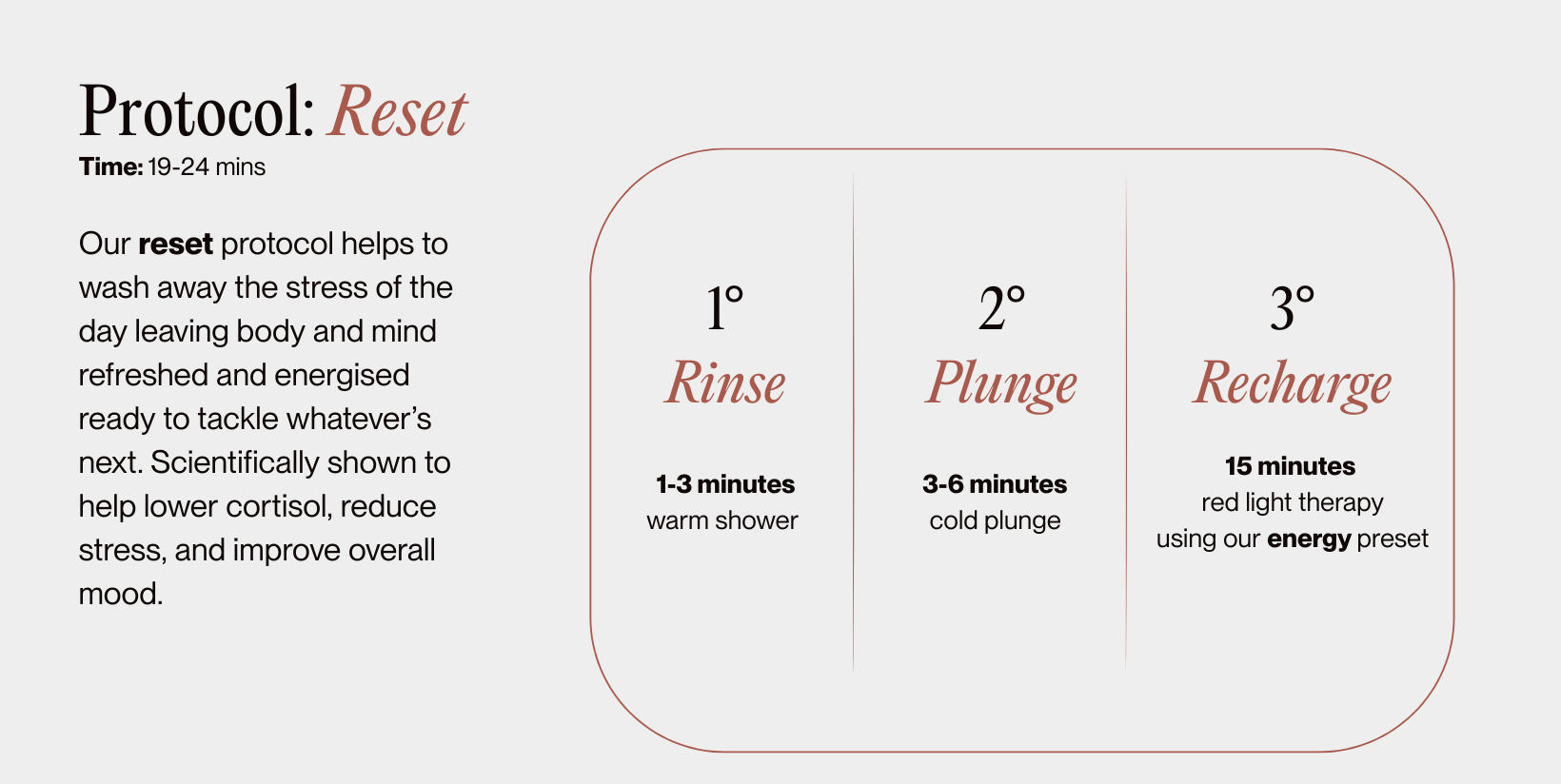
The Science-Based Sequence:
Step 1: Rinse (1-3 mins) – Prepare your body and mind under a warm shower
Step 2: Plunge (3-6 mins) – Cold water immersion to activate your nervous system and create optimal vasoconstriction
Step 3: Recharge (15 mins) – Red light therapy while your skin is still cool to maximise penetration and cellular benefits
This protocol perfectly embodies the temperature science we’ve explored: the cold plunge creates the ideal physiological conditions (vasoconstriction and cooled skin) that allow the subsequent red light therapy to penetrate deeper and deliver maximum benefits. You’re not just getting two separate therapies – you’re getting them in the scientifically optimal sequence.
Perfect For:
- Busy professionals managing stress
- Anyone seeking mental clarity and calm
- A first-thing morning or mid-day ‘reset’
- Those new to contrast therapy wanting to experience the real benefits
Ready to experience it in action? Book your Reset Protocol session here
How Much Is Personal Training at Hall Training? The Complete Cost & Value Guide
How Much Does Personal Training Cost in Oxfordshire?
If you’re searching for personal training in Oxfordshire, you’ve probably typed this into Google: “How much is personal training at [insert gym name]?”
We receive over a hundred enquiries each month from people looking to transform their health, and the first question is always the same: “How much are your personal training sessions?”
- One-off personal training sessions: £35 per session (1 hour)
- Average monthly investment: £264 per month
At first glance, those numbers may look expensive compared with a traditional gym membership. But price without context is meaningless. What matters is what you get for your investment, and whether it helps you reach your goals faster, safer, and more sustainably.
Why Pricing Feels Confusing In Fitness The industry
The fitness industry hasn’t made it easy to compare like-for-like. Introductory offers, hidden add‑ons, long contracts, and cleverly packaged “deals” blur the line between cost and value. For busy professionals in Oxfordshire, the lack of transparency turns a straightforward decision into guesswork. So let me simplify things and show you what the market actually looks likes, and where Hall Training sits within it.
Understanding Oxfordshire’s Personal Training Market
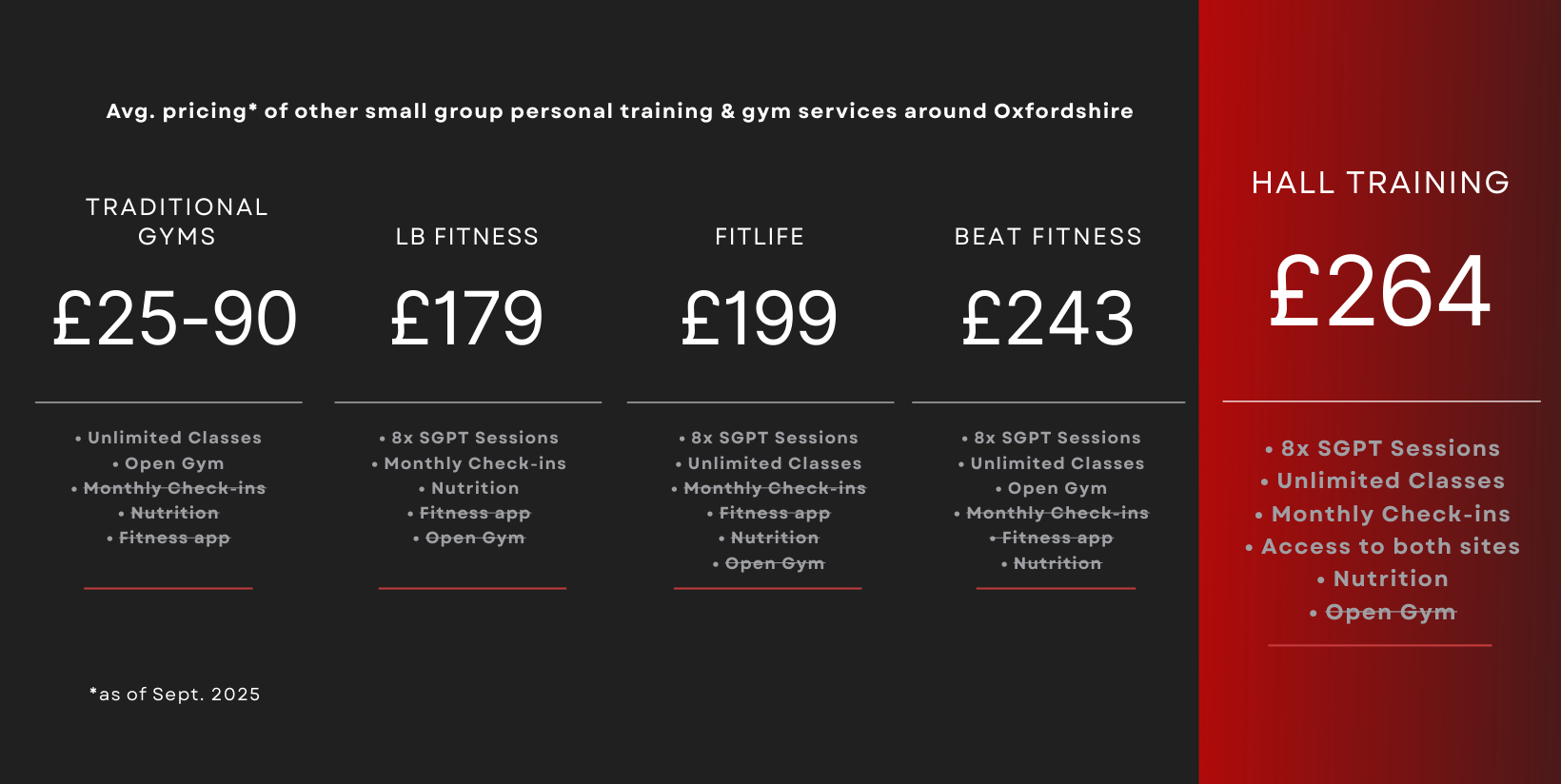
Our review of other small group personal training (SGPT) options along with traditional gyms across Oxfordshire (as of September 2025) shows a clear pricing spectrum:
Gyms and SGPT providers such as:
- PureGym, Anytime Fitness and Bannatynes sit between £25 – £90 per month
- LB Fitness at £179
- FitLife at £199
- BEAT Fitness at £243
- with Hall Training at £264
The services at the lower end typically emphasise access – unlimited large-group classes, and gym usage – while services at the upper end include structured small group coaching, regular check‑ins, and varying levels of support. Our most popular package includes 8 small-group personal training sessions each month, unlimited classes, monthly check‑ins, nutrition guidance, fitness app, and flexibility to book across both of our sites.
In short, you’re investing at the premium end of regional pricing because you’re buying a joined‑up coaching system designed to deliver results, not just sessions.
The Hotel Analogy: Why “Cheap” Often Becomes Expensive
Imagine booking a hotel for an important business trip. Hotel A advertises £89 per night, while Hotel B costs £159. The budget option seems obvious (right?!) until you arrive…
The budget option looks appealing until you realise you need to add-on Wi‑Fi, breakfast, parking, and gym access (I love a good hotel gym). Then factor in the lost sleep from a poor bed, the patchy internet during a client call, and the time you spend solving problems you didn’t plan for. The cheaper room ends up costing more – in money, time, and energy. This exact dynamic exists in personal training.
Budget providers might advertise lower session costs, but members often find themselves paying additional fees for nutrition consultations, programme modifications, progress assessments, or supplementary classes needed to achieve their goals.
More critically, inadequate programming or inexperienced coaching leads to plateaus, injuries, or abandonment of your fitness goals entirely. The true cost isn’t just financial, it’s the months or years of missed progress, declining health, and loss of confidence that comes from choosing solely based on price.
Why We’re Proud to Be the Most Expensive
I’ve been in the fitness industry for twenty years now, and I’m proud of our premium positioning – we don’t apologies for our pricing – in fact, we celebrate it. Our pricing isn’t determined by what our competitors are charging or individual budgets, but by the exceptional value we deliver:
- A Proven Track Record
We were Oxfordshire’s first and original small group personal training studio, pioneering the model that others now follow.
- Continuous Investment in Excellence
Every month, we invest significant hours and resources in professional development, attending international seminars, mentorship programs, and advanced certifications.
- Global Knowledge Network
We travel worldwide to learn from industry leaders, bringing cutting-edge techniques and methodologies directly to your training sessions.
- Comprehensive Approach
Unlike session-only trainers, we provide complete lifestyle coaching, nutrition guidance, habit formation, and long-term success strategies.
The Real Value Equation
When you choose Hall Training, your monthly investment isn’t just another monthly direct debit payment that’s going on eight hours of personal training – it’s funding a system that’s built on twenty years of experience and delivers outcomes.
- Ours coach designs and updates a plan around your goals, training age, movement quality, and schedule.
- We track meaningful metrics and adjust the programme when your life demands it, not when a calendar says so.
- Nutrition guidance is practical and personalised, focused on habits you can sustain rather than rigid rules you’ll abandon.
- You train in a space designed for coached sessions, and education around lifting – not queuing for equipment.
- You’re supported by a community that pulls you along when motivation dips.
- Lastly, you benefit from experienced and knowledgeable professionals in their field, coaches who take the time to know you and know how to progress you quickly without unnecessary risk.
The Expertise Investment: What £264 Actually Gets You
Our pricing reflects a fundamental commitment that cheaper options simply cannot match: continuous professional development and uncompromising expertise.
- Ongoing Education
while competitors focus on quantity of sessions, we invest heavily in staying at the forefront of exercise science, nutrition research, and coaching methodology – This isn’t just professional development, it’s insurance for your results. When you’re investing time and money in your health, you need coaches who understand not just today’s best practices, but tomorrow’s emerging research
- The Experience Factor
Our higher price point also reflects something you can’t quantify in a pricing table: experience working with clients who’ve tried other approaches first. We’ve seen what doesn’t work, why plateaus happen, and how to prevent the frustrations that lead people to abandon their fitness goals.
-
Comprehensive Systems Approach
While many competitors offer individual services, our pricing reflects a comprehensive all-in-one package designed for sustained success. Sessions available every hour and access to both our sites isn’t just convenience, it’s recognition that life is busy, so your schedule demands flexibility. Our integration of nutrition, programming, and progress tracking aren’t three separate services, they’re a unified approach that accelerates results.
This Is Why People Choose Hall Training Over Alternatives
Our members come to us because progress is deliberate, not accidental. They consistently tell us why they choose us over anywhere else:
We’re a personal training buiness that pride ourselves in delivering:
-
Results-Driven Approach: We focus on measurable outcomes, not just attendance
-
Personalised Attention: Every session is tailored to your unique needs and progress
-
Professional Excellence: Our trainers maintain the highest industry standards
-
Comprehensive Support: We’re partners in your entire wellness journey
-
Long-Term Success: We teach sustainable habits, not quick fixes
Risk-Free Discovery: Our 30-Day Accelerator Programme
Starting your fitness journey shouldn’t feel like a leap of faith. That’s why we offer our initial 30-day accelerator programme – a carefully structured month designed to help you determine if Hall Training is the right fit for your goals, lifestyle, and preferences.
Over the month you’ll train in our small‑group format, meet the coaching team, experience the community, and see how our sessions fits around your schedule and into your day-to-day life. You’ll also receive practical nutrition guidance and a simple progress framework so you can see what’s changing, and why. At the end of 30 days you’ll know, with evidence, whether the people, the place, and the programmes are the right fit for you! We prefer to earn your trust through outcomes rather than paperwork.
Value Is About Results, Not Just Price
So the question isn’t: “Why does Hall Training cost more?”
It’s: “Does the extra investment give me more progress, more confidence, and more consistency?”
If you’re someone who values their time, wants to see results and live a long and healthy life, then the answer is yes!
And so, we don’t compete on price because we compete on outcomes. Our members don’t choose us because we’re the cheapest – they choose us because we consistently deliver the outcomes that justify their investment.
So, the real question you should be asking is: “what’s the cost of another year of mediocre results, wasted time, and unrealised potential?”
The Ultimate Guide to Ice Bath Timing: When Cold Therapy Actually Works (Science-Backed)
The Ultimate Guide to Ice Bath Timing: When Cold Therapy Actually Works (Science-Backed)
Why the “before vs. after” debate misses the point – and how to time your cold exposure for maximum results
I’ll be honest – two years ago, I thought ice baths were just another wellness trend. Fast forward to today, and cold water immersion has completely transformed how I handle stress, recover from workouts, and approach challenges both in and out of the gym.
But here’s where it gets interesting: the timing of your ice bath can make or break your results.
You’ve probably seen the contradictory advice online. “Ice baths are amazing for recovery!” one expert claims. “Ice baths destroy your gains!” another warns. The truth? They’re both right – it just depends on when you use them.
After diving deep into the research – both scientific and anadotal (and experimenting on myself), I’ve put together this comprehensive guide to cut through the confusion. Whether you’re chasing performance gains, faster recovery, or both, here’s everything you need to know about timing your cold exposure.
Your Quick Reference Guide
Just want to skip to the actionable takeaways? Here’s your cheat sheet:
Ice Bath Protocols
For Performance (Pre-Exercise)
- 30 minutes before training
- 2-5 minutes in 5-12°C water
- Best for: Endurance events, high-intensity & strength sessions, competitions
For Recovery (Post-Exercise)
- At least 4 hours after strength training
- 10-15 minutes in 8-12°C water
- Use immediately after only if you have back-to-back sessions
Sauna Protocol
For Performance & Recovery (Post-Exercise)
- 15-30 minutes post-exercise
- 50-70° temperature (Infrared sauna) | 70-90° temperature (Finnish sauna)
- Enhances rather than blunts training adaptations
- Never before intense training sessions
However, you’re like me and want to know more around the scccience and the specifics, then read on – let’s start with the science of heat.
Why Timing Changes Everything
The confusion around ice baths stems from one crucial misunderstanding: cold exposure triggers different physiological responses depending on when you use it.
Post-exercise ice baths excel at reducing inflammation and muscle soreness – perfect for competition recovery. But they also suppress the very proteins your muscles need to grow stronger. Studies show cold water immersion immediately after strength training can blunt muscle protein synthesis for up to 48 hours.
Pre-exercise cooling, however, tells a completely different story.
The Science of Pre-Cooling: Your Secret Performance Weapon
Here’s what most people don’t realise: your body’s ability to perform isn’t just limited by energy – it’s limited by heat.
As the body warms, fatigue sets in, making it harder to sustain pace or output. Energy from muscle contractions is converted into thermal energy, raising core temperature. Heart rate drifts upward, perceived exertion rises, and the body slows us down to prevent overheating. If our body gets too hot, the brain signals us to stop – protecting us from hyperthermia.
Research insight: A study of 23 men showed that those who cooled down fastest after exercise had the greatest cardiovascular fitness levels (Jastrzebska et al., 2022)
Think of it as your body’s built-in safety mechanism. When internal temperature gets too high, your brain essentially says: “Slow down, or we’re in trouble.”
The Stanford Breakthrough: Targeting Your Body’s Cooling Gates
Stanford scientists Dennis Grahn, PhD and Craig Heller, PhD made a game-changing discovery in their research dating back almost 20 years. In a series of experiments, they found that extracting heat from specific body regions could dramatically enhance performance by postponing fatigue. (Grahn et al., 2005)
The secret lies in targeting arterio-venous anastomoses (AVAs) – specialised blood vessels located in:
- The palms of your hands
- The bottoms of your feet
- The upper part of your face
These AVAs act as your body’s primary heat exchange highways. Unlike regular capillaries, AVAs can dilate up to 10 times their normal size, allowing massive amounts of blood flow for rapid heat transfer. When you cool these specific areas, you’re essentially turbo-charging your body’s natural cooling system.
The Stanford results were staggering:
- 40% improvement in bench press performance
- 144% increase in pull-up work volumes
- Sustained performance over multiple training sessions
A Practical Solution: Full-Body Immersion
Whilst the Stanford protocol involved targeted cooling devices for palms and feet, this approach isn’t exactly gym-friendly. Enter the ice bath, which is a more accessible solution that targets all your body’s cooling zones simultaneously.
Full-body cold water immersion provides comprehensive cooling that:
- Activates at least two (possible all) major arterio-venous anastomoses (AVA) sites at once
- Rapidly reduces core body temperature
- Provides a more practical gym or home setup
Studies on whole-body pre-cooling consistently show:
The Pre-Cooling Advantage
By starting your workout with a lower baseline temperature, you can:
- Delay the onset of heat-related fatigue
- Maintain higher power outputs for longer
- Push harder before your body’s safety mechanisms engage
- Stimulate natural testosterone and luteinising hormone release when combined with exercise (Sakamoto et al., 1991)
One particularly fascinating study from Australia tested cyclists using hot water immersion before exercise and found performance dropped by 15%, reinforcing the protective role of heat-related fatigue. (Dennis et al., 2022)
It’s In Your Head – The Mental Game
Beyond the physiological benefits, pre-exercise ice baths offer a powerful psychological advantage. Cold exposure activates the anterior midcingulate cortex (aMCC) – the brain region associated with willpower, tenacity, and resilience. (Huberman PHD., 2024)
Athletes and long-lived individuals consistently show larger aMCC regions, and the only way to grow this area is through deliberate discomfort – aka. doing hard things. Stepping into an ice bath cold enough to scare you – and staying in just long enough to regain the breath and calm the nervous system – is a powerful way to build aMCC-driven resilience. That 2-4 minutes in ice-cold water? It’s literally training your brain for mental toughness before you even touch a weight.
Post-Exercise Recovery: When Cold Plunging Shines
This is not to say we should write off post-exercise cold plunges entirely. Used strategically, they’re incredibly powerful:
Use Ice Baths Post-Exercise When:
- Competing in back-to-back events (same day or within 48 hours)
- Prioritising training recovery over muscle growth or strength
- Managing high training volumes – 2x per day sessions.
- Dealing with excessive inflammation
Avoid Ice Baths Post-Exercise When:
- When strength or muscle growth is the primary goal
- You’re in a building phase of training
- Recovery isn’t immediately critical
The sweet spot? Wait at least 4 hours after strength training to avoid interfering with muscle protein synthesis and the body’s natural repair process, whilst still gaining anti-inflammatory benefits.
The Sauna Solution: Heat That Actually Helps
We’ve talked a lot about the cold and it’s benefits before exercise, inculding strategic cold after exercise, both having their place. But one modailty which oftern get overlloked is the sauna, which consistently delivers post-workout, but like the cold, timing is absolutely critical here.
Why Pre-Exercise Sauna Backfires
Never use sauna before intense training – it’s performance suicide: Heat exposure before exercise creates a perfect storm of performance limitations:
- Accelerates time to fatigue by pre-loading your thermal stress
- Increases risk of overheating from an already elevated baseline
- Shuts down pyruvate dehydrogenase – a key enzyme essential for muscle contraction
- Severely limits ATP production, starving your muscles of energy when they need it most
Our Australian research confirms this: athletes subjected to hot water immersion before bicycle sprints saw performance decreases of 15%. When your body is already fighting heat stress, adding exercise intensity becomes an uphill battle your muscles simply can’t win.
Post-Exercise: Where Sauna Shines
Unlike ice baths, saunas enhance rather than blunt exercise adaptations when used post-workout:
Proven Sauna Benefits:
- 9% improvement in VO₂max (5 minutes of sauna post-exercise increased VO₂ max by 2.6 mL/kg/min) (Earric et al., 2022)
- 44% improvement in cardiovascular fitness (Earric et al., 2022)
- What’s remarkable is, these improvements were in addition to exercise alone, highlighting sauna as a powerful complementary tool (CRF, BP, cholesterol).
- 200-500x increase in growth hormone aiding repair and fat metabolism (Kukkonen-Harjula et al., 1989)
- 10mmHG reduction in systolic blood pressure (over 3 weeks) (Gaynor et al., 2018)
- Reduced muscle soreness without impacting muscle and strength gains.
Additionally, a study on endurance runners found that 30 minutes of sauna (3x per week for 3 weeks) increased run time to exhaustion by 32% compared to controls. The effects were linked to increased blood plasma (7.1%), red blood cell count (3.5%), and total blood volume – all of which support nutrient and oxygen delivery to muscles.
The mechanism? Heat stress creates a hormetic response – a controlled stress that makes your body adapt by becoming stronger. The increased blood flow, growth hormone response, and enhanced protein synthesis actually amplify your training stimulus. Post-exercise sauna creates beneficial hypoxic stress for your muscles. As blood vessels dilate to bring blood to the skin for cooling, less oxygen reaches the muscles, creating an additional adaptive stimulus that mimics altitude training effects.
Key insight: Heat + exercise = performance killer. Exercise + heat = performance enhancer.
Red Light Therapy: The Flexible Option
Unlike temperature-based therapies, light therapy – specifically red and near-infrared light (NIR) – can be applied both before and after exercise. Although awareness in the general community is still growing, more than 3,000 peer-reviewed studies highlight its wide-ranging benefits. At Avanto° Wellness, we use red and NIR light to help people feel and perform at their best. It can improve skin tone, ease aches and inflammation, boost brain function, and increase energy at a cellular level. Beyond everyday health, it can also make a real difference to exercise performance and recovery – helping you train harder, recover faster, and feel stronger.
- Before training: Boosts ATP production, exercise performace and mitochondrial activity. (Aver Vanin A et al., 2016)
- After training: can support an increase in muscle mass gained after training, and decrease inflammation and oxidative stress
without interfering with adaptations. (Ferraresi C et al., 2016)
- Anytime: Promotes skin health, wound healing, and reduces inflammation.
Your Personalised Protocol
For Maximum Performance:
- Ice bath: 30 minutes before high-intensity training for 2-5 minutes at 5-10°C
- Red light therapy: 12 minutes using our Avanto° “Energy” preset
- Train as normal
- Sauna: 15-25 minutes post-exercise at 60-70°C
For Muscle Growth Focus:
- Ice bath: 30 minutes before training (increases testosterone, power, and strength output)
- Train with enhanced performance capacity
- Sauna: post-exercise for enhanced adaptations and growth hormone response
- Red light therapy: post-exercise for recovery support without interference
- [Wait 4+ hours post-exercise, then ice bath if desired for recovery]
For Performance & Recovery:
- Train as normal
- Sauna: 10-15 minuntes at 45-55°C – a theraputic temp. to help balance adaptations from exercise and recovery
- Ice bath: 10 minutes at 8-12°C
- [Optional] Red light therapy: can be used pre or post-exercise using our Avanto° “Energy” or “Wellness” preset depending on the desired goal.
- [Wait 4+ hours post-exercise, then ice bath if you want to optimise hypertrophy]
The key insight for muscle growth and performance: pre-cooling actually supports your goals by allowing you to train harder and heavier whilst boosting anabolic hormone production. The concern about blunting adaptations applies specifically to immediate post-exercise cold exposure, not pre-exercise protocols.
For Competition/High Volume:
- Pre-cool before events
- Ice bath immediately after for rapid recovery
- Sauna when you have 24+ hours until next session
The Bottom Line
The ice bath debate isn’t about whether cold therapy works – it’s about matching the right tool to your specific goal and timing it correctly.
Cold exposure is powerful medicine, but like any medicine, dosage and timing determine whether it helps or hurts.
Want to break through performance plateaus? Try pre-cooling. Need to bounce back from intense competition? Strategic post-exercise cold therapy has your back. Building muscle? Skip the immediate post-workout ice bath, but don’t skip the sauna.
Most importantly: Listen to your body, track your results, and adjust accordingly. The best protocol is the one you can consistently execute whilst monitoring how your body responds.
Discover More
Would you like to discover how strategic cold (and heat) exposure could transform your training and recovery? I’d love to hear about your goals and help you create the perfect protocol. Contact us at Avanto° to discuss your specific needs, or join our newsletter community for science-backed wellness insights and to receive a 50% off code on your first cold plunge and sauna experience.
Do I Really Need a Personal Trainer?
Motivation or Knowledge – What’s Really Holding You Back?
The idea for this blog came to me after chatting with a lady who recently reached out for help.
Approaching sixty and newly retired, she’d spent decades in a fast-paced corporate career where her time was precious. Exercise had always been squeezed into the gaps – short bursts here and there when she could…
sidenote: if you’re reading this and thinking, “I never have the time to exercise” then you need to first check this blog!
…now, with time in abundance, her days look very different: hours spent in the garden, daily walks, and some light resistance exercises in her living room.
On the surface you’d look at her routine and think: she doesn’t need a personal trainer. She’s active, balanced, and consistent.
And to an extent, I’d agree. But as our conversation developed and I reflected on her story, I realised she highlighted something I’ve seen throughout my two decades in the fitness industry: most people who benefit from personal training fall into one of two camps.
The Two Types of People Who Benefit Most From Personal Training – Which One Are You?
Camp 1: Motivated but Lacking Knowledge
This lady clearly belonged here. Driven, disciplined, and not afraid of putting in the work, but when it came to knowing which exercises to do, how to structure them, or how to make progress over time, she was lost.
And she’s not alone. According to a Nuffield Health study of 2,000 UK adults:
- 55% of gym-goers admit they don’t know what they’re doing when exercising.
- 20% copy someone else’s workout just because they looked confident or appealing.
The majority don’t know even the basics of their health metrics:
- 65% don’t know their BMI.
- 75% are unaware of their resting heart rate.
- 88% don’t know their body fat percentage.
- Almost half have no clear goal in mind, and of those who do, 74% don’t set a timeline for achieving it.
So while motivation may not be the issue, using your time effectively is. That’s where structured guidance makes all the difference.
Camp 2: Knowledgeable but Lacking Motivation
The second camp is the opposite. Thanks to YouTube, Instagram, and AI-powered apps, it’s never been easier to find a diet plan or a workout routine that’s aligned to your goal(s). You can become an “expert” in just a few hours if you know where to look.
But having information isn’t the same as following it. This is where many people struggle. Research shows:
- 38% of adults say a lack of motivation is the main barrier to living a healthier life.
- 35% say they’re simply too tired to exercise.
- And a survey from UKActive showed 41% of us skip the gym after a busy workday, opting for the sofa instead.
In fact, a blog I wrote earlier this year showed, even among those who join gyms full of good intentions, 50% stop attending within six months, and around 80% cancel their membership within a year.
The truth is, discipline and accountability are harder to come by than information. As one user on Reddit put it:
“I have all the tools, know exactly what to do, but I lack motivation, dedication, and conviction.”
This is where personal training steps in; not to teach you what you already know, but to keep you on track when motivation dips.
So… Do You Need a Personal Trainer?
If you recognise yourself in either of these camps, the answer is probably yes. Whether you’re motivated but unsure what to do, or knowledgeable but lacking consistency, working with a trainer gives you structure, clarity, and accountability – we all require a kick up the backside once in a while.
At Hall Personal Training, we specialise in helping people bridge this exact gap (in addition to giving them a gentle kick). Our small-group personal training and one-to-one nutrition and progress reviews combine expertise with encouragement – giving you the plan, the support, and the accountability you need to finally get results you can stick with.
Because at the end of the day, it’s not just about knowing what to do, it’s about having the right people and support network alongside you, to make sure you actually do it!
Fancy knowing more? Why not reach out to learn about our 30-Day Accelerator Programme – an all-in-one approach that combines coaching, nutrition, and accountability. It’s designed to get you up off the couch, accelerate your progress, and set you firmly on the path to your goals…
Introducing Avanto° – Oxfordshire’s New Hub for Recovery, Resilience & Longevity
The Science of Cold, Heat & Light: Why We’re Launching Avanto° in Deddington
At Hall Personal Training, we’ve always been about performance and progression. But thriving isn’t just about reps and routines, it’s about building resilience at the cellular level. That’s why we’re launching Avanto°, a cutting-edge wellness & recovery space in Deddington, opening 12th August, and open to everyone – not just Hall Training members.
Avanto° brings together the power of cold plunge, infrared sauna, and red light therapy, three proven tools designed to improve your physical and mental well‑being via contrast therapy and hormesis.
Why Avanto°? The Power of Hormesis
Our modern environment has become too comfortable – heated homes, climate control, convenience. But the human body adapts best when challenged. The practices we offer at Avanto° are based on the concept of hormesis – the idea that small, manageable stressors can make you more resilient over time.
Think of it like a workout for your nervous system and cells. When done safely and consistently, exposure to cold, heat, or light creates a hormetic effect that:
- Triggers powerful healing responses
- Improves mitochondrial function
- Regulates stress hormones
- Builds tolerance to discomfort and emotional stress
It’s not just about short-term recovery, it’s about long-term adaptation.
“Hormesis is a fundamental biological principle where what doesn’t kill you – in the right dose – makes you stronger.”
– Mattson, M.P. (2008).
1. Infrared Sauna
What is it?
Infrared saunas use light to heat your body directly (rather than heating the air like traditional saunas), allowing for a more tolerable and deeper sweat at lower temperatures.
How it works:
Infrared waves penetrate the skin, increasing core body temperature and stimulating circulation, detoxification, and cellular repair. It also activates heat shock proteins, known to support longevity and immune health.
Science-backed benefits:
-
Multiple studies now show a 25–50% reduction in cardiovascular mortality for those using saunas 4‑7 times/week. Compared to once per week: hazard ratio for fatal CVD events drops to ≈0.23–0.37.
- Improved Cardiovascular Health & Longevity: Regular sessions increase circulation, lower blood pressure, and improve heart function and artieral stiffness – mimicking the effects of moderate exercise. Even in individuals with high inflammation markers (hsCRP) – regular sauna mitigates that risk. (Tanjaniina Laukkanen, et al. 2018)
- Reduced Pain & Inflammation: Infrared heat can ease joint and muscle pain by increasing cytokine Interferon. Infrared has also been shown to activate heme oxygenase-1, an enzyme that produces antioxidants – making it popular for arthritis, pain management and recovery. (Lin CC, Liu XM. et al. 2008)
-
Improve Cognitive Health: Studies show consistent sauna use is linked to reduced risk of dementia, cardiovascular disease, and all-cause mortality. (Laukkanen et al. 2015)
Common myth:
“Infrared saunas are unsafe and cook you from the inside”
Yes; infrared and micro-wavelengths are neighbours on the electromagnetic spectrum but they’re totally different!
Microwaves heat food by agitating water molecules at very high frequencies, causing friction.
Infrared saunas use gentle, naturally occurring light waves – like sunlight without the UV – that safely warm the body from within . The heat is soothing, not aggressive, and doesn’t “cook” you.
It’s more like basking in the warmth of the sun on your skin – not being reheated like leftovers
2. Cold Plunge Therapy
What is it?
Cold water immersion involves submerging your body in water below 12-15°C for a short period, typically 1 to 5 minutes.
How it works:
Cold exposure activates your sympathetic nervous system, spikes norepinephrine, reduces inflammation, and improves vascular tone. It also triggers brown adipose tissue, which helps regulate metabolism and heat production.
Science-backed benefits:
- Boosts mental performace & clarity: Cold exposure triggers the release of powerful neurochemicals like norepinephrine, epinephrine, and dopamine, which can increase by 250 – 530% during and after immersion. These catecholamines enhance focus, alertness, and mood, making you feel sharper, more energised, and mentally resilient. (L. Jansky et al. 1996)
- Improves metabolic health & metabolism: Regular cold water immersion stimulates brown fat – a type of fat that helps increase energy production and stimulates UCP-1 that turns excess energy into heat, increasing metablic rate by 350%. (P Srámek et al. 2000)
- Improves physical performance & recovery: Cold water immersion has been shown to support faster recovery following high-intensity or endurance exercise. Short immersions (<5 minutes) can improve muscle power, reduce soreness, and lower levels of circulating creatine kinase – a marker of muscle damage – making it a powerful tool for physical recovery. (Moore et al. 2022)
Common myth:
“Women shouldn’t do cold exposure”
It’s a physiological fact, women do feel cold more intensely than men. They begin shivering at higher temperatures, their skin cools faster and report discomfort quicker. But this heightened sensitivity doesn’t mean weakness. Instead, it reflects a fundamentally different physiological response to cold. In fact, once ‘cold adapted’ women are better at maintaining the cold benefits with less physiological stress compared to me. (Kaikaew et al. 2018)
3. Red Light Therapy (Photobiomodulation)
What is it?
Red light therapy (RLT), also known as photobiomodulation (PBM) or low-level light therapy (LLLT), uses specific wavelengths of red and near-infrared light (600–1200nm) to stimulate beneficial biological processes – especially in the mitochondria, the powerhouse of your cells.
How it works:
Red and NIR light target three key mechanisms:
- Red and NIR light helps to “unblock” cytochrome c oxidase – a key enzyme in energy production – by displacing nitric oxide and enhancing ATP (energy) production by up to 70%. (De Freitas and Hamblin 2023)
- It activates a growth factor known as, Transforming Growth Factor Beta-1 (TGF-β1), crucial for healing and regeneration. A Journal study of Clinical Laser Medicine & Surgery found that red light therapy accelerated wound healing by an average of 36% compared to controls within 30 days.
- Red and NIR stimulate non-visual pain receptors – like TRPV1- to reduce pain and inflammation. (Gupta et al. 2013)
These primary mechanisms of action trigger a cascade of other downstream cellular and systemic benefits.
Science-backed benefits:
- Reduces Pain: Red light therapy can modulate cytokine activity, decrease pro-inflammatory markers and promote the expression of anti-inflammatory markers, which helps alleviate pain associated with inflammatio. A review published in Pain Research and Management, red light therapy was reported to provide significant pain relief ranging from 20% to 70% in various conditions, such as musculoskeletal disorders, joint pain, and chronic low back pain. (Gupta et al. 2013)
- Improves ATP Production and Cellular Energy: Red and NIR light stimulates Cytochrome C Oxidase (CCO) a main mitochondrial target for light therapy. Illuminating it with red/NIR light can enhance cellular respiration and energy production, mainly by freeing CCO from NO inhibition, which can increase ATP production by up to 70% in certain cell types. (De Freitas and Hamblin 2023)
- Improves cognnitive function: Red and NIR light can influence cognitive function, mood, and even neuroprotection. When applied to the head, RLT can improve focus, memory & reaction time. Reduce symptoms of depression & anxiety and increase cerebral blood flow.This is likely due to enhanced mitochondrial activity in neurons and increased nitric oxide release, which boosts brain energy and oxygenation. (Cassano et al. 2016)
Common myths:
“Red light damages your eyes.”
False – research shows the opposite. A 3-minute exposure to 670nm red light has been shown to restore mitochondrial function in the aging retina and improve colour contrast vision for up to a week. (Shinhmar et al., 2021)
“It works better in the sauna or while exercising.”
Actually, combining RLT with heat reduces its effectiveness. Heat and sweat interfere with light absorption and disrupt the cellular pathways RLT is meant to activate (Hamblin & Arany). For best results, it should be used when the body is cool and dry.
The Avanto° Experience
At Avanto°, we combine cold, heat, and light into a personalised experience. Whether you’re popping in for a quick plunge, layering light with sauna for recovery, or coming for a thirty or 60-minute contrast session, our space is calm, private, and designed to help you feel calm through contrast.
We’re excited to open Avanto° to the entire Oxfordshire and Cotsworld community, not just Hall Training members. You don’t need a gym membership – you just need the intention to feel better (and get out of your comfort zone a little).
If you would like to be among the first to experience it, and receive 50% off your first two sessions, join our Avanto° Heimo (tribe) newsletter and be the first in-line when we go live!
You can also follow us on Instagram @Avanto.Wellness for updates, education, and launch news.
How to Finally Make Time for Exercise (Even With a Busy Life)
Why You Still Feel Like You Don’t Have Time to Exercise (Even When You Do)
You may have been someone who’s struggled to find the time to exercise – until you read our recent blog post, which helped people to discover 12 hidden hours in your week.
However, despite now being aware of this free time, you still feel like, “I just haven’t got time to exercise.” Even though you can clearly see you’ve got a whole day’s worth of free time available to you.
So why is that?
Why, even when you know you have the time, do you still feel like you don’t?
Here are the top three reasons people struggle to utilise their free time and ultimately, why you may feel unable to get started:
- Parkinson’s Law
- Perfection Over Progress
- Procrastination
1. Parkinson’s Law
Parkinson’s Law — coined by Cyril Northcote Parkinson — states that “work expands to fill the time available for its completion.” In other words, if you’re given more time to complete a task, it often takes longer, even if the task itself hasn’t changed.
Many of us can relate. Take someone who’s recently retired. When asked, “You must have so much free time now?” their reply is usually something like:
“You’d think that — but I’m busier than ever! I honestly don’t know how I managed to work and do everything else…”
A classic case of Parkinson’s Law. Despite freeing up 40+ hours a week by retiring, that time is now easily filled — often unintentionally — with less essential tasks.
Take myself, for example. I set a strict 3-hour deadline every Friday to write a blog post. If I gave myself all week, I’d fall victim to Parkinson’s Law and end up stealing time from more important tasks just to finish it.
So, if you’ve completed our Time Audit and discovered six hours of spare time in your week, yet still feel too busy to exercise – you’re likely falling into this trap. Like the retiree, your free time has been quietly filled with bits and pieces that feel urgent but aren’t important.
2. Perfection Over Progress
Perfectionism is hard-wired into many of us. It’s part of what’s helped humans evolve and innovate. But it often comes at a cost — and that cost is progress.
I speak with so many people who are unhappy in their skin, tired of how they feel, and desperate to make a change… yet refuse to start because they can’t train three times per week.
As mentioned in my previous blog: you don’t need to train three times a week to see results.
There’s a reason why most governments recommend just 150 minutes (2.5 hours) of moderate-intensity exercise per week – it’s been proven to reduce the risk of all-cause mortality and improve longevity.
Of course, training 3-4 times per week can lead to faster improvements, but if your goal is to feel fitter, become stronger, improve your body composition, and boost your general health – 2 sessions per week is plenty.
It’s absurd to say, “I won’t start until I can do three sessions a week,” because that day will likely never come.
I always explain to people: it’s better to start today – even if that’s just one hour a week – than to wait until ‘life calms down.’
(And if Parkinson’s Law has taught you anything – that day is a myth and will likely never arrive. Life is busy!)
Even if you begin with just an hour a week, you’ll soon find momentum builds. Before you know it, you’re able to commit to two, three, or even four sessions per week.
When you start something while busy, you overcome inertia. You put the wheels in motion – and an object in motion stays in motion. You also increase your capacity, and start finding natural solutions to the “I don’t have time” problem.
This is how people transition into progress-driven mindsets and, ironically, end up closer to perfection by no longer chasing it.
3. Procrastination
Procrastination is one of the biggest roadblocks between having an idea… and taking action.
Defined as the act of postponing or delaying something, the Ancient Greeks even had a word for it: akrasia – acting against your better judgment.
If you’re someone who says:
“I’ll do that tomorrow.”
“I’ll start next week.”
“Let me go away and think about it…”
Then you’re dealing with procrastination.
There are two popular schools of thought around why we procrastinate:
- Oliver Burkeman, author of Four Thousand Weeks and Meditations for Mortals, suggests we procrastinate on meaningful tasks because they force us to face uncomfortable truths, like fear of failure, inadequacy, or finality. It feels safer to delay than risk doing something imperfectly.
- Sahil Bloom, author of The 5 Types of Wealth, explains that procrastination is about offloading responsibility onto your future self. You push a task ‘down the road’ because it’s easier to delegate it to ‘later you’ than to do it now.
Unfortunately, procrastination is hardwired into us. Our brains value immediate pleasure and comfort, even when we know those aren’t best for us long term.
But here’s the truth: procrastination is a growth limiter.
If you want to fulfil your potential, you have to fight it.
So… What Can You Do About It?
Here are some simple, practical steps to stop procrastinating on exercise, eating well, and doing the things that’ll genuinely make you feel better:
1. Let Go of “All or Nothing” Thinking (inspired by Oliver Burkeman)
Many people put off healthy habits because they think it has to be perfect – a full gym session, flawless meal prep, no slip-ups. That’s just fear wearing a smart disguise.
Instead, ask yourself:
“What would this look like if I let it be easy?”
- A 10-minute walk is a win
- A decent lunch is enough
- One good session is better than zero
Perfection is the enemy of consistency.
2. Start Tiny and Make It Obvious
When life’s busy, your brain craves simplicity. So ditch vague goals like “get fit” or “eat clean.”
Instead:
- Book one session this week.
- Keep a protein bar or bag of nuts in your desk or bag.
- Set an hourly timer to stand and walk for 2 minutes – it genuinely boosts clarity.
Make the next step so small and obvious that it feels easier to do than to ignore.
3. Schedule It (Sahil Bloom’s style time-blocking)
Your calendar is already full. If your health isn’t on it, it won’t happen.
People who work out regularly don’t just find time – they make it!
Literally schedule your workouts, food shops, or walks. Treat them like a work meeting that’s non-negotiable.
At Hall Personal Training, we run sessions from 6:00am to 8:30pm, on the hour, every hour, which removes the “limited availability” excuse. Members have free rein to book sessions at times that work for them.
4. Close the Thinking-Doing Gap
Saying “I’ll go for a run later” or “I’ll prep something after work” leaves space for procrastination to sneak in.
Instead, pair intention with immediate action:
- Put your trainers by the door
- Chop veg while the kettle boils
- Book that PT session right now!
You don’t need motivation, you just need to start.
Any action, no matter how small, reduces mental resistance and builds momentum.
5. Stop Outsourcing It to “Future You”
The version of you getting home late tomorrow or travelling next week won’t suddenly feel more motivated. Respect that version of you by doing something today to help them out:
- Pack your gym kit tonight
- Plan tomorrow’s lunch
- Block 30 minutes for movement or going for a walk
Future you isn’t a superhero – it’s still you.
Set them up for success by acting in their best interest now!
Final Thought From Me…
Procrastinating around your health doesn’t make you lazy – it makes you human. But if you can notice it and still act, you’ll win.
You don’t need to feel ready, you just need to begin especially when you don’t feel like it. That’s where the real breakthroughs happen.
Ready to Stop Waiting and Start Moving?
The truth is, most people aren’t struggling because they don’t have time – they’re struggling because of how they’re using it. Between Parkinson’s Law, perfectionism, and procrastination, it’s no wonder getting started feels harder than it should. But the moment you take action — however small — everything begins to shift. You don’t need to be perfect. You don’t need the perfect week. You just need a starting point.
That’s exactly what our 30-Day Accelerator Programme is designed for — to help you break through inertia, build momentum, and prove to yourself what’s possible in just a few weeks. Whether it’s one, two or three sessions a week, we’ll meet you where you’re at and help you build up from there.
Get in touch today to learn more or secure your place – your future self will thank you for it.
Your 168-Hour Time Audit: The Simple Fix for “I Don’t Have Time”
“I Don’t Have Time to Exercise” – Let’s Prove That Wrong in 5 Minutes
If you’re someone who often finds themselves saying, “I just don’t have the time to exercise,” I ask you to invest five minutes of your time today — because this blog post might just change your life.
Location, budget, and time are the three main factors that determine whether someone succeeds or fails with a fitness routine. But unlike location or budget, which are flexible, time is fixed.
It doesn’t matter whether you’re the world’s richest CEO with a net worth of $209.5 billion like Jeff Bezos, or you live humbly with only the clothes on your back — we all have the same ‘time budget’: 24 hours a day, 168 hours a week. Time is one of the few commodities that does not discriminate.
So, why is it that your friends and colleagues seem to find time to exercise, while you feel like it’s an impossible feat because “I’m just too busy…”?
The answer?
- You haven’t been taught how to manage your 168 hours each week,
- Or, you like being busy and telling others just how busy you are, because it gives you a (false) sense of productivity — a feeling of accomplishment, even superiority, based on society’s flawed view that “busy people are important people.”
Here’s the truth: anyone who says they “just don’t have time” usually doesn’t have control of their time.
But I’ll assume that if you’ve read this far, you’re not the kind of person who enjoys being busy for the sake of it. Instead, you take your health seriously. You want to feel better, get fitter, and take back control — you just don’t know how to make time for it all.
Let’s change that!
How Much Time Do You Really Need?
Every government in the world recommends at least 150 minutes (2.5 hours) of moderate or 75 minutes of vigorous physical activity per week. Why? Because this small investment in time offers massive health benefits – based on extensive evidence demonstrating the significant health benefits of physical activity, including reducing the risk of chronic diseases, improving mental health, and extending lifespan.
In fact, the NHS has shown that 2.5 hours of activity per week can lower your risk of early death by up to 30%.
If you want to live a long, healthy life and be around to watch your grandkids grow up, then finding time to exercise isn’t optional – it’s essential. So, let’s help you find a few hours in your week…
Welcome to the Time Audit
When someone tells me, “I don’t have time to work out,” I walk them through a Time Audit. Nine times out of ten, we find 10–30 hours of unused or misused time each week.
Remember, you only need 2.5 hours — that’s less than 2% of your week.
If, after completing this audit, you still choose not to use your available time to improve your health, that’s your choice, and perfectly fine by me. But it’s no longer fair to say that ‘time is the issue’ or ‘lack thereof’, because it’s not – it’s something else.
“What gets measured gets managed”
…is a popular quote that states something can only be properly managed if it’s first measured. It’s true; you can only determine whether something’s successful if you know where you started from and track its progress.
When we measure, we often identify silly things we do that interfere with what we want to improve, so we naturally start doing something smarter instead. And it works in many areas of life. For example, research has discovered:
- People who track their food lose more weight, thanks to awareness from measurement (source)
- Analyzing drinking behavior reduced the amount of drinking among people who self-identified as over-drinkers (source)
- Students who recorded their study habits studied more deliberately and consistently and got better grades (source)
- People who monitor their behaviors typically have healthier habits (source)
However, when was the last time you measured your time – your most important commodity?
You can’t declare that you don’t have time for something if you don’t actually know how you spend that time – and knowing comes through measurement.
How the Average Person Spends Their Time
The largest measurement of time comes from data gathered by the OECD Time Use Survey, gathering information across seven years for people between 15 and 64.
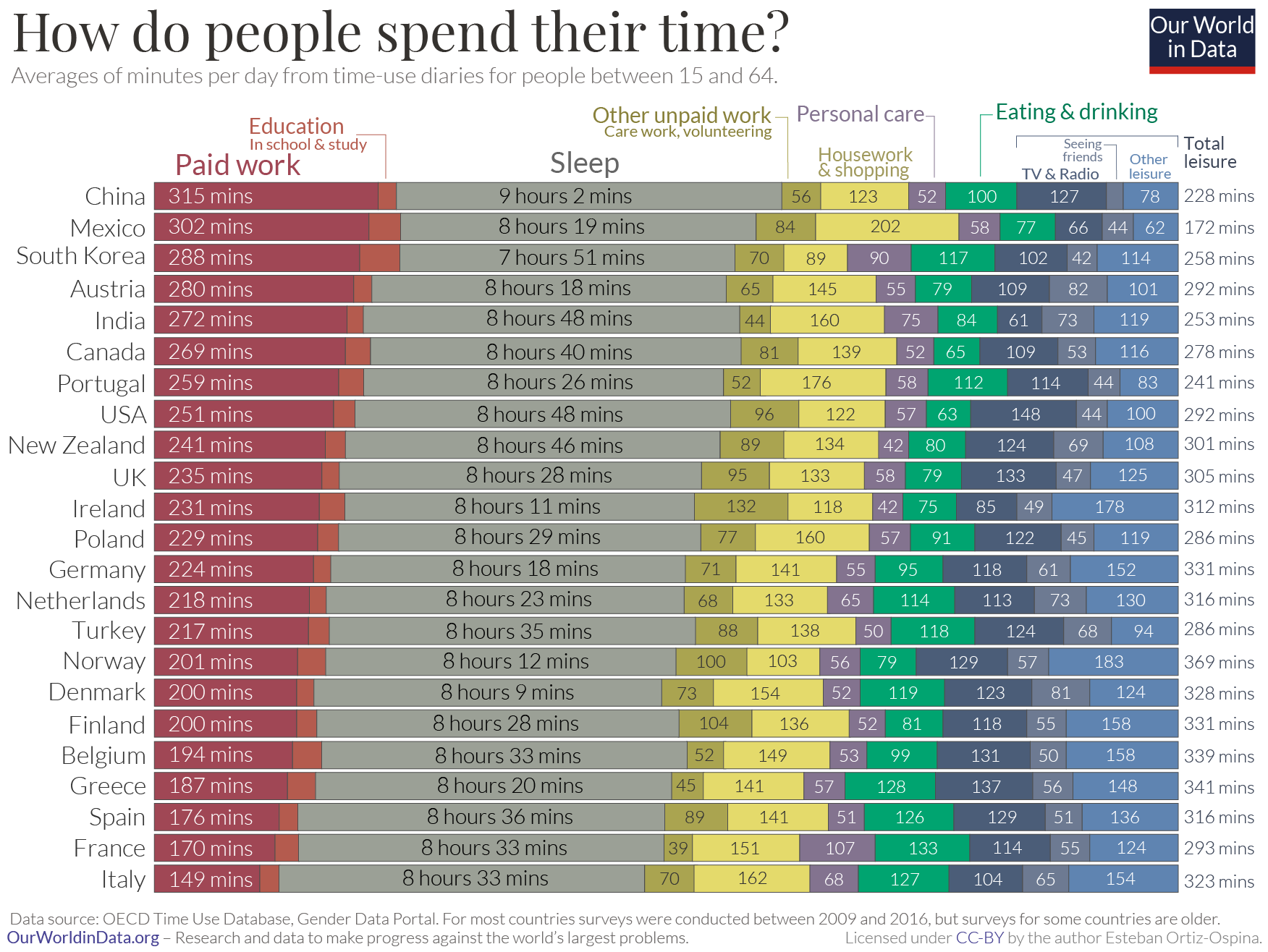
The first thing that jumps out from this chart is that there are indeed many similarities across countries.
This is not surprising — most of us try to split our days into “work, rest, and fun”, and so there are some predictable patterns. We spend the most time working and sleeping, but as evident from this, people in the UK spend a total of 305 mins/5 hrs per day enjoying leisurely activities – watching TV, listening to the radio, catching up with friends, reading, and of course exercising.
In fact, even after time spent on socialising and TV, the average person still has 2 hours a day available.
But okay — those people aren’t you. You’re busier. So let’s turn to you and start measuring your time with a personalised audit.
Your Time Audit
Work and sleep take up most of our time, so let’s start here:
- Work – A typical working week is around 37-40 hours per week, but let’s say you have a demanding job that requires 50 hours a week.
- Sleep – The average sleep duration in the UK is 6.2 – 6.9 hours per night, but let’s say you value your sleep and get a full eight hours – total sleep for the week: 56 hours.
- Commute time – You then need time to get to and from work. Since the pandemic, most of us work from home (at least a day or two in the week), but let’s presume you don’t, so I’ll give you 5 hours a week (an hour a day) of commute time.
Currently, work, sleep, and travel take up 110 hours of your 168-hour week. You still have 58 hours available, but wait, there’s more…
- Household chores & life admin – We need to make time to keep up with the day-to-day admin of life and maintenance of our home, so let’s set aside 10.5 hours a week, giving you 90 minutes a day.
- Supermarket shopping, cooking, and eating – You need to eat, right? In the above survey, people in the UK spend 79 minutes eating, drinking, and 29 minutes doing the food shop – 12.5 hours per week. However, let’s assume you really enjoy cooking and spending more time over meals; I’ll give you an extra 5 hours a week – a total time of 17.5 hours per week or 2.5 hours per day.
- Socialising with friends and family – Spending time with friends and loved ones is just as important as staying active, so let’s set aside 7 hours a week for this.
- Netflix and chill – We all need time to unwind; what better way than catching up on our favorite series? I’ll give you 10 hours a week for this.
Now, before we go any further, let’s look at where your time currently goes:
Work – 50 hours
Sleep – 56 hours
Commute – 5 hours
Household chores & life admin – 10.5 hours
Shopping, cooking & eating – 17.5 hours
Socialising with friends and family – 7 hours
TV and downtime – 10 hours
- Total allocated time: 50 (Work) + 56 (Sleep) + 5 (Commute) + 10.5 (Chores) + 17.5 (Meals) + 7 (Socialising) + 10 (TV) = 156 hours
- Total hours in a week: 168
- Remaining time: 168 – 156 = 12 hours
You now have twelve hours of free time at your disposal! Even if we attribute 50% of these to ‘wasted time,’ you’re still left with 6 free hours a week! Can you honestly say to yourself: “I don’t have the time to exercise?”
Still Think You Don’t Have Time?
We’ve just found at least 6 hours of available time in your week. All you need is 2.5–3 hours of that to completely change your health, fitness, and future.
Time is no longer the barrier. The choice is yours: Do you want to keep making excuses, or start making progress?
Let those 6 newly discovered hours each week be your gift to your future self. Use them to move, to sweat, to grow stronger. You deserve it – and your future self will thank you.
Complete your peronal time audit using our >> Time Audit Tool
How Exercise Boosts Productivity: The Science & Our Exclusive Workspace Partnership
Boost Your Productivity with Exercise: Our New Partnership with Bloxham Mill
The start of a new year shouldn’t be just about setting yourself some fitness goals, but should also be a time for you to work on your performance and productivity too. At Hall Personal Training, we’re always looking for ways to help our members feel their best, both in and out of the gym. That’s why we’re excited to announce our new partnership with Bloxham Mill, a modern and flexible workspace just 10 minutes from our studio in Deddington and Banbury.
This collaboration isn’t just about offering our members exclusive perks at Bloxham Mill; it’s also about highlighting the powerful link between exercise and productivity. Moving regularly isn’t just great for your body; it’s a proven way to sharpen your mind, boost your energy levels, and improve overall work output.
How Exercise Enhances Productivity
If you’ve ever felt sluggish at your desk or struggled to focus on an important task, exercise could be the missing piece in your daily routine. Research consistently shows that being physically active can increase productivity, improve concentration, and enhance overall cognitive function. In fact, employees who exercise regularly report a 21% increase in productivity (Journal of Occupational and Environmental Medicine). Here’s why:
- Sharper Focus & Faster Thinking: A study published in the British Journal of Sports Medicine found that just 20 minutes of exercise can boost brain function and concentration for hours. Movement increases blood flow to the brain, helping you stay alert and make better decisions.
- Brain-Derived Neurotrophic Factor (BDNF) & Mental Performance: Exercise stimulates the release of BDNF. Higher BDNF levels are linked to better focus, problem-solving, and overall mental well-being, making regular physical activity a powerful tool for workplace success.
- Increased Energy Levels: It might seem counterintuitive, but using energy to exercise actually creates more energy. People who exercise regularly report feeling more refreshed and less fatigued during their workday.
- Reduced Stress & Improved Mood: Exercise is a powerful stress reliever, helping to reduce cortisol levels and release endorphins. A healthier mindset leads to better problem-solving and a more positive work environment.
- Enhanced Creativity: Research from Stanford University suggests that walking can increase creative output by up to 60%. If you’re struggling with a mental block, stepping away for a quick walk or workout could be just what you need to spark fresh ideas.
- Better Sleep for Higher Performance: Regular exercise promotes deeper, more restful sleep, which in turn leads to improved cognitive function, decision-making, and efficiency at work.
How Our Partnership with Bloxham Mill Can Help You
To support our members both physically and professionally, we’ve teamed up with Bloxham Mill, a leading flexible workspace offering premium coworking spaces, fully serviced offices, and high-tech meeting rooms. Whether you work remotely, run your own business, or just need a professional space to focus, this partnership provides fantastic benefits.
Exclusive Perks for Hall Personal Training Members:
>> A complimentary weekly pass to experience the Hive, Bloxham Mill’s stylish coworking space. Perfect for those who need a fresh, professional setting to work productively.
>> 20% off meeting room bookings – Ideal for key presentations, collaborative sessions, or client meetings in a fully serviced, high-tech space.
These perks are designed to help you create a balanced routine that supports both your health and your professional success.
How to Claim Your Exclusive Offer
If you’re a Hall Personal Training member and want to take advantage of these exclusive perks at Bloxham Mill, here’s how:
>> Get in touch with Louise at reception@bloxhammill.com to book a tour or learn more.
>> Quote WINTEROFFER when booking your space to claim your discount.
Start Moving & Working Smarter
The connection between exercise and productivity is clear: when you prioritise your health, your work performance naturally improves. By combining structured personal training with access to a dedicated professional workspace, you can take your focus, energy, and efficiency to new heights in 2025.
If you’re ready to move more, think better, and work smarter, get in touch to discover how personal training can help you stay accountable and build healthier habits – together, let’s make this year your most productive yet!
Commercial Gyms vs. Hall Personal Training: Which Saves You Money?
Why Hall Personal Training Is Worth the Investment
At this time of year, prioritising health often means evaluating your options for fitness services. Many people start with a commercial gym membership due to their low upfront costs, only to realise later that these savings can come with hidden expenses and limited value.
So, why is Hall Personal Training different – and why are we worth the investment? Let’s break it down.
The “Elephant in the Room”: The Price Difference
Let’s address the most obvious point: We are more expensive than your average gym. A standard commercial gym might cost you around £10 per week however, this price only covers gym access. Our initial six-week programme, while more expensive (at £100 per week), offers a comprehensive package that goes far beyond your basic gym membership.
The True Cost of a Gym Membership
On the surface, commercial gyms seem like a great deal. Memberships typically cost around £40 per month (or £10 per week). However, the reality for most people often looks very different:
- Motivation fades: After the initial burst of enthusiasm, gym visits often dwindle. Research shows that 50% of new gym-goers quit in the first three months, meaning many memberships go unused.
- Lack of accountability: Commercial gyms don’t provide the support or structure needed to stay consistent—often, the only “check-in” you’ll get is with your direct debit.
- Nutrition Support: Most commercial gyms don’t include nutrition plans, requiring you to seek separate support, adding additional costs.
- Personal Training & Hidden Costs: To make progress, many gym-goers hire personal trainers (PTs). At £45 per session, three weekly sessions add up to £135 per week. Combined with your gym membership fee, this brings your total spend to £145 per week or a staggering £580 per month!
What Hall Personal Training Offers
At Hall Personal Training, we take a holistic approach to your health and fitness, offering a structured programme that guarantees results:
- Three Personal Training Session Weekly: Expert guidance tailored to your goals.
- Comprehensive Nutrition Plan: A custom approach to fuel your body.
- One-on-One Check-Ins: Weekly accountability sessions that track progress.
- Open Gym Access: You can contine to make progress with access to the gym
- Money-Back Guarantee: Confidence that you’re making a worthwhile investment.
Our popular 6-week program costs £600 (£100 per week) but includes everything you need to ensure you succeed. After completing the programme, ongoing membership becomes even more affordable, between £60 – £90 per week. This ongoing commitment could prove significantly more cost-effective than the sporadic gym attendance and additional trainer costs associated with a regular gym membership. It also ensures continuous motivation and support – proven to be the top drivers of behind your success.
Why Joining Hall Personal Training Saves You Money
- Membership: £10/week (£40/month)
- Personal Trainer: £45/session x 3 sessions/week = £135/week
- Total Weekly Cost: £145/week
- Total Monthly Cost: £580/month
2. Hall Personal Training Costs:
- 6-Week Programmme: £100/week (£600)
- Ongoing Membership Options: £60-£90/week
- Total Monthly Cost (after 6 weeks): £240–£360/month
- Overall savings: 45%
The Difference:
Choosing a commercial gym with a personal trainer costs +45% more per month than our services. Not only are we more affordable, but we also includescomprehensive support like nutrition plans, weekly check-ins, and a money-back guarantee – all designed to help you succeed without hidden fees.
The Smarter Investment
Choosing between us and a commercial gym depends on your individual needs, goals, and budget. While our initial investment is higher, our comprehensive package – expert coaching, accountability, and a proven system – delivers far more value than a few weeks of sporadic PT sessions or unused gym memberships. Instead of scattered costs and seeing inconsistent results, you get everything you need in one place, maximizing your chances for long-term success.
Something For You to Think About