Pre-Christmas damage control
With Christmas lurking round the corner I often find people ‘freak out’ about what to do when it comes to eating, and worry about bouncing back and regaining the weight that they’re recently lost. I can tell you now, you needn’t be worried, as I say every year:
“It’s not what you eat between Christmas and New Year that makes the difference, but what you eat between New Year and Christmas!”
I wish I could claim this as my own but have been quoting this for several years now when I first heard it at a fitness convention out in the States. Since then it’s one of the few words of wisdom that’s really stuck with me and they are definitely words to live by! You see, the amount of fat a person can gain over a week will be such a small amount that you shouldn’t let the fear of it stop you from fully getting into the festive spirt. It’s funny, as I find people are far too worried about what they’re going to be eating between Christmas and New Year rather than worrying about the other 51 weeks of the year.
Anyway, for those of you who have done well on transforming your body this year and may be worrying that Christmas may undo all the hard work, then here’s a great plan to limit the ‘Santa Bulge.’
We’re almost 10 days away from the big day, leaving just enough time to go strict on a 10-Day carbohydrate depletion phase. This phase is the key and will ensure you get to enjoy all the food and drink (ok, within reason) over the Christmas holidays with minimal fat gain however, it’s not going to be an easy 10 days…
The Day-10 Carbohydrate Plan
Days 1-10 require you to be strict on your carbohydrate consumption. The only carbohydrates you’ll eat will be in the form of green vegetables and nuts. All major and popular carbohydrate sources are to eliminated, these include: bread, pasta, grains (rice, buckwheat, spelt, millet, oats etc.), beans and pulses, cakes, sweet, chocolate, root veg, most condiments and sauces and alcohol! Yes sorry, for the next 10 days it has got to go! Your total daily intake of carbohydrates will be between 30-50g from only green vegetables and nuts. With the elimination of almost a whole food group you now need to fill its gap; protein and fat will do just that.
You need to make sure your consumption of protein is at least 1.8g per kilo of bodyweight or ideally 2.0-2.2g per kg of bodyweight. After you’ve set your protein intake you then need to set dietary fat. This will usually be between 0.7g-1g per kilo of bodyweight and dependent on your total calorie intake.
Over the 10 days you’ll also put yourself into a calorie deficient. I tend to find men do well on around 1600-1800 Kcals and women on slightly less, 1200-1400 Kcals. With this in mind if you take a 60kg female with their protein set at 120g (480 Kcals) and a carbohydrate intake of 30g (120Kcals) the calories from fat would want to be around 600-800 Kcals or between 65 and 90g of dietary fat. Now that you’ve set up some real numbers it’s time to plan your meals.
The majority of meals will consist of the following:
• a protein source – fish, poultry, red meat, eggs and/or full fat greek yogurt.
• green vegetables – spinach, kale, brussel sprouts, broccoli, green beans, peppers, asparagus etc.
• a source of dietary fat – handful of nuts, 1/2 avocado, fish oil, olive oil/oil based salad dressing, oily fish i.e mackerel, salmon, sardines.
The 10 days are designed to help deplete the body of its glycogen stores, so come day 11 and 12 (Christmas day/Boxing day) and throughout the Christmas week you’ll then help to replenish this ‘lost’ glycogen through good eating and drinking. You’ll find you’ll be able to consume all mannerer of foods without it having a detrimental impact on your body fat and composition. Win, win!
What to expect over the next 10-days
During the first few days it’s quite normal to experience the following: headaches, skin breakouts, tiredness and fatigue, irritability, brain fog and weakness (especially in the gym). These should all subside after 5 days of being of going low carb. If after 7 days you’re still suffering then check the following:
1. Protein may be too low – check how much protein you’re ACTUALLY eating against what you NEED to be eating, if it’s too low then take it up
2. Increase salt intake – Proteins needs to digested into their individual amino acids before being absorbed by cells. In order for these amino acids to be absorbed, sodium is needed, so higher protein diets do require a higher sodium intake. If you’re feeling tired then take a look at you salt intake, you may find it’s too low. It’s one reason I recommend the nuts, as salted nuts can really help with this. Also try adding sea salt or himalayan pink salt to foods.
3. Increase fat intake – If you can rule out the two points above and you’re still feeling miserable then take a look at your fat intake. If you’re on the lowest intake (0.7g per/kg/bw) then it may be worth increasing to 0.9-1g per/kg/bw. This will also help give you a few more calories which you may well need.
With regards to results; it’s not uncommon for most people to drop 1-2.5% body fat and 2-4kgs across these 10 days! So, good luck, stay strict over the next 10 days and then you’ll be free to let your hair down and enjoy Christmas for what it’s realy about; sharing good food and drink with close freinds and family.
From everyone here at Hall Training, we wish you a very Merry Christmas!
About Chris Hall
As the founder of Hall Training Systems, it is my mission to provide you with the very best personal training experience. I set up Hall Training Systems as Oxford’s leading personal training service in nutrition, performance and weight loss, ensuring I can deliver the very best in training techniques.
You can find me on Facebook, Google+ or why not even give us a Tweet @Hall_Training
James Bond has been gracing our screens since 1962, and has become a symbol of the British gentleman. The quintessential bad boy, every woman wants him, while every man wants to be him. We are used to seeing Bond in action behind the wheel, out in the field and even in the bedroom, but what does Bond get up to in the gym?
As well as dashing looks and charisma, 007 needs total body strength, explosive power and a fast sprint speed to keep his licence to kill. Here are our top ten exercises you need to get Bond Body Ready:
- The Pull Up
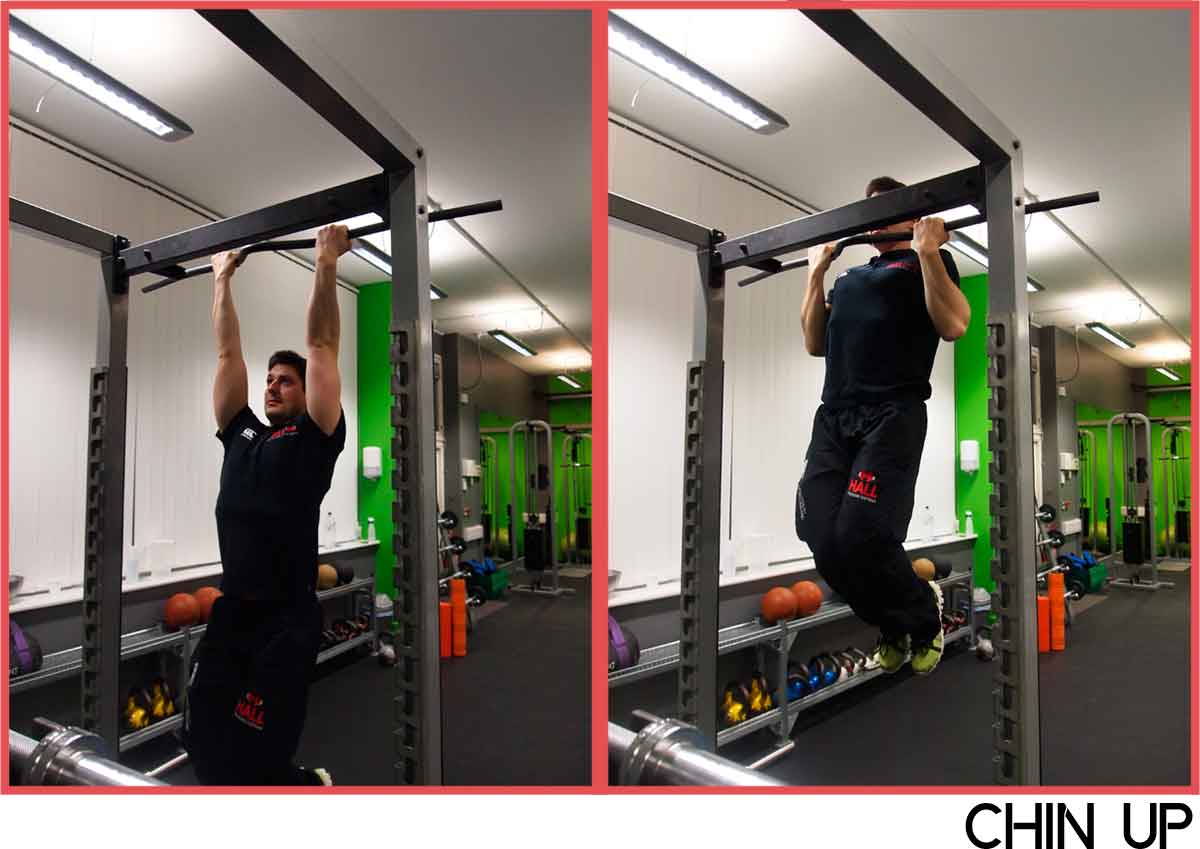
Why: Pull-ups will help develop Bond’s lat (back) and grip strength ready to climb a lift shaft or pull himself onto a helicopter. Another benefit is the range of progressions. If a pull-up (with palms away from you) is difficult to master, start with some chin-ups and build up from there. If they’re easy and you can knock out 20 in a row in true Bond style, put a weight belt on, or lower yourself down more slowly. You’ll be ready to clamber up scaffolding in to time.
- Garhammer Raises/Hanging Knee
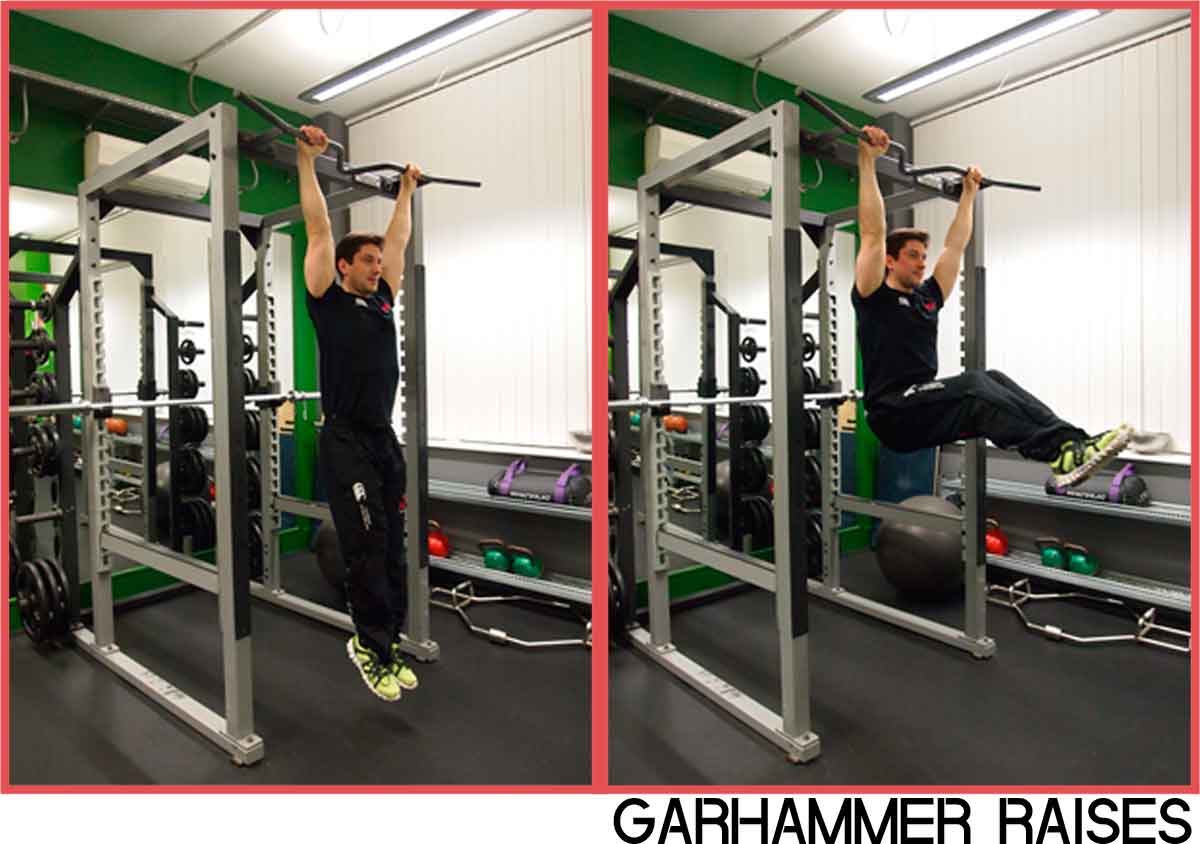
Why: These are very useful for developing the lower abdominals and increasing core strength, and would be essential for escaping when you’re chained hanging to a drain pipe, or creating an explosive kick when hanging from a building. Sit ups are another option for developing impressive abs: striding out of the sea onto a pure white beach is one of Bond’s favourite past times, and if you want the 007-life, you need to look the part! Plus they are a key part of the field agent fitness test, as we saw in Skyfall.
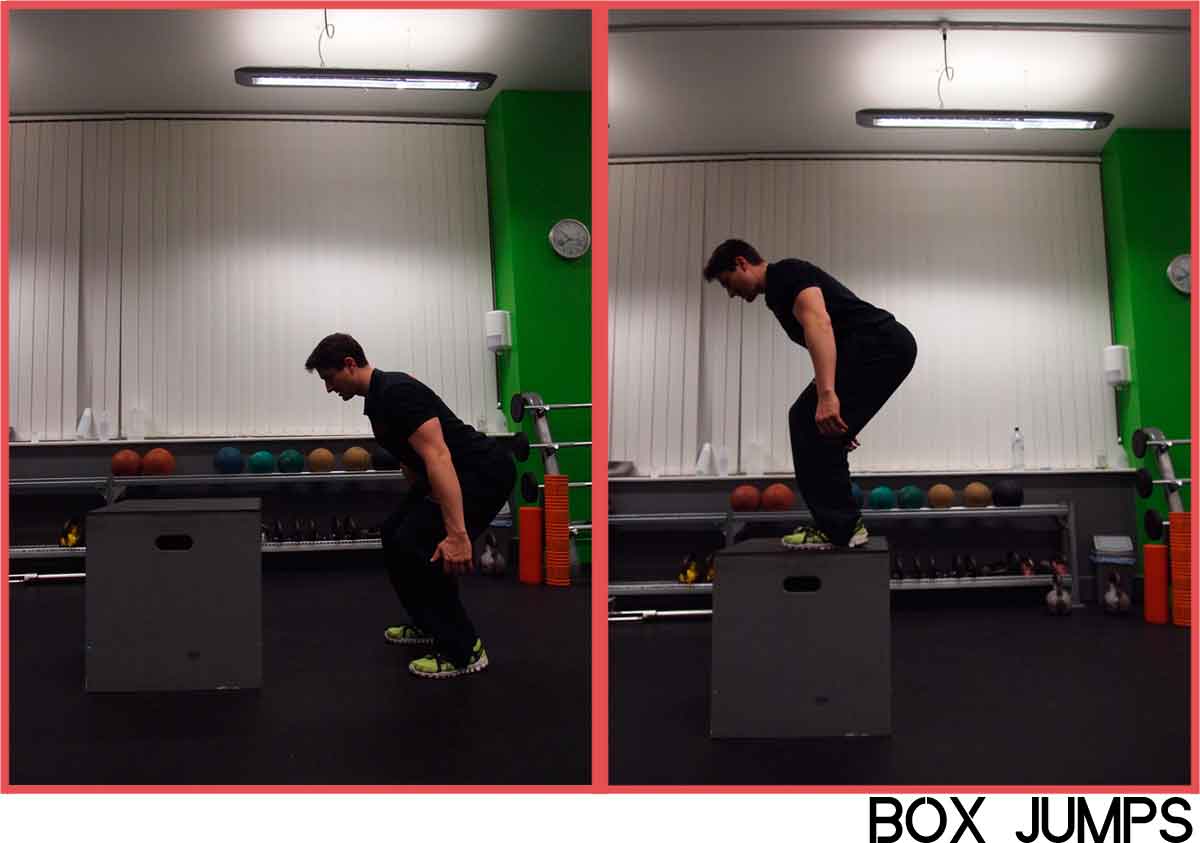
- Box Jumps
Squatting. Am I mobile enough to squat? Pt 2.
Welcome back to part 2 in the squatting series. If you can remember back to my first article, I talked about the benefits you can reap from applying the squat in your routine and why I believe all women should be squatting. Despite saying this I do think you need to earn the right to squat first before jumping straight into it.
As I mentioned in my last article, not everyone has the ability to reach the full range of movement required for the squat or, while reaching their full range they end up putting certain parts of their body under too much strain as they may lack the mobility or flexibility needed. But why is this?
First it’s important to establish the differentiation between the use of the word mobility and flexibility. While colloquially, flexibility and mobility may sound the same, they are different concepts with important impacts on your health. I think Tony Gentilcore, Co-Founder of Cressey Sports Performance, put it most succinctly:
• Mobility = how a joint moves
• Flexibility = length and range of a muscle
This range of motion around a joint, can refer to ligaments, tendons, muscles, and bones. Full range at a joint is the ability of the joint to move freely in all planes of movement available to that joint. During our daily routines e.g sitting at our work desks or standing with incorrect posture for long periods of time, we put our muscles, ligaments and tendons under stress. This can cause those muscles, such as the hip flexors, calves, hamstrings and back muscles to tighten up, therefore decreasing their ability to reach their full range.
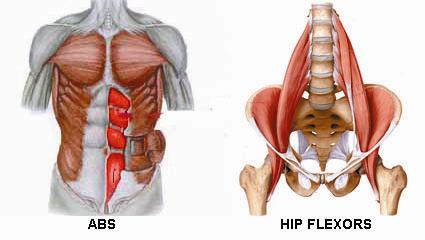
Now their are many areas of the body that can contribute to the lack of range you may have in your squat, but the most common contributors I see with the squat are either tight hip flexors, tight calves/lack of ankle mobility and tight hamstrings. Your hip flexors are used for hip flexion (bending at the hip) and are situated below your abdomen inside your hips (picture below) and your hamstrings are situated at the back of your thighs.
What causes each muscle to become tight?
Essentially, think of mobility as an umbrella covering a range of factors that may affect the range of motion around a joint. One of these components is flexibility – it’s difficult to move a joint if the connected muscles around it don’t stretch far enough to allow it. For example, your hip flexors can become tight from long periods of sitting or overuse. The calves can also tighten up from either long periods of walking or running and also long periods of standing. This is particularly evident in women who work in the corporate world as high heels and stilettos place the calves in a shortened state.
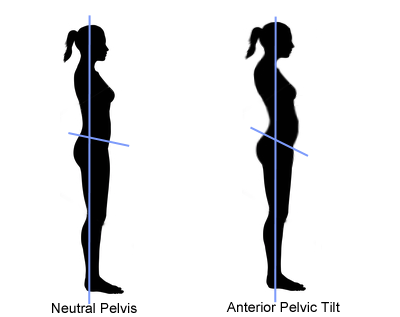
Lastly the hamstrings can become excessively tight if you have an anterior pelvic tilt (when the hips are tilted forward causing an arch in the lower back).This is commonly caused by tight quads and weak abdominals; a recipe for back pain. But there are other considerations that come into play as well, like not having the strength to perform the exercises, soft tissue damage (e.g. inflamed tendons), and even problems with other joints in the same chain of movement. So while an adequately stretched muscle may, in theory, be conducive to a greater range of movement around a joint, it’s basically useless if your mobility is constricted by other factors.
How does this affect my squat?
Tight hip flexors can cause excessive leaning forward during the squat. This can put extra strain on the back and can prevent you from sitting deep into the squat. Tight calves/lack of ankle mobility can cause you to lift your heels off the ground while trying to reach the full range, causing the weight to transfer to your toes instead of your heels. Lastly tight hamstrings are one of causes of what fitness professionals call the ‘butt wink’. This is when the hips and glutes tuck under the body at the bottom of the squat causing rounding of the back putting the vertebral discs under too much strain especially under heavy loads. This is shown in the picture below during a barbell back squat.
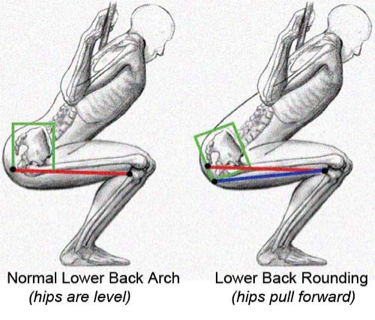
So, if you are finding yourself squatting with some of these bad habits or issues then the squat may not be for you quite yet. But don’t dismiss it, as most of these traits can be rectified or it may just be a case of finding the right type of squat for you. You can learn all about how to improve your mobility along with different variations and progressions of the squat in my next article.
If you can’t wait until my next article then here at Hall Training Systems we take each client through a movement screen before writing their programmes. This helps us detect the mobility/imbalances each client may have, which helps us decide whether they are ready for the squat, and if so, which squat will suit them best. If you are interested in the the squat then take advantage of our complementary training consults – book yours today and discover how strength training can change your life for the better!
About Becky Hodgson
As a successful 800m runner for Oxfordshire Athletics I have a strong postion on evidence based training and application. Strength training is my passion, passing my knoweldge of lifting on to help other women like myself to see both the physical and practical benefits that strength training has to offer.
You can find me on Facebook, or why not even give us a Tweet @Hall_Training
Squatting. Is the barbell back squat for you? Pt 1.
We’re all bombarded with messages about how we as women should squat to get those peachy glutes and slender legs. But is it really that simple and is the exercise for you?
Well, let’s start by looking at the benefits of squating with full range and an adequate load. These benefits include:
• Improved body composition
• Defined or ‘toned’ Glutes
• Strong core, predominately the ‘posterior core’ muscles
• Increased upper body strength
• Faster speed and greater jumping ability
• Greater calorie burn when compared to partial or parallel squats
Despite these benefits, not everyone can squat or needs to squat….yet. So, why might the squat not be for you right now? The squat requires a lot of mobility when performed correctly using full range of movement. Full range means the ability to sit deep into the squat with your hips below your knees while keeping your heels planted on the floor and your body upright. If you can’t achieve this position, you are seriously cutting the full benefits of the squat. But why might this be?A study from the Journal of Strength and Conditioning used electromyographic surface electrodes on the glutes along with three other hip and thigh muscles to track the electrical activity of the four muscles during the squat at three different depths. Partial, parallel and full depth squats. The results showed an 18.5% and 7.4% increase in glute activity during the full depth squat when compared to the partial and parallel squat [1]. This increase in muscular activity also increases your energy expenditure, which will lead to an increase in the amount of calories burned when compared to the partial or parallel squat [2]. So, if you want to burn calories while building your glutes then the full depth squat is definitely for you.
Still not convinced you need to squat? Studies have shown that resistance training, including squatting, can improve overall body composition and decrease body fat. I know what you’re thinking….squats can decrease my body fat without doing hours on the treadmill? They certainly can. This was shown in a study on hispanic adolescents comparing resistance training to typical school physical activities [3]. The adolescents who took part in a 12 week resistance programme including squats saw a decrease in body fat as well as an increase in condition and stamina. These results were not seen in the adolescents taking part in their regular physical activity sessions.
Lastly, if you regularly find yourself in the strecthing zone of your gym, banging out numerous sets and reps of crunches on the stability ball in the search for your flat stomach and defined abs, then the squat could be a much more efficient use of your time. Having great abs is 75% diet, 20% whole body training and 5% ab training. Whenever you get the idea that doing another 100 sit ups or training your abs every day would magically melt the fat away… you better save the time for some serious squatting, deadlifting or high intensity interval training if you want your abs to shine in their full glory, which brings me back to my previous point that squatting is a big component of any weight loss programme. But, not only can the squat help reveal your abs it can also help build them.
Squats are typically loaded from the top to bottom, usually in the form of a barbell, dumbbell or kettlebell. This requires your body up stay upright while holding a heavy load causing your core to work double time. Notice I use the word ‘core’ and not abs. The core is comprimised of much more than just the rectus abdominis aka. the six-pack and although direct ab work will tax the rectus abdomins to a greater degree it’s important to note that the back squat works the core as a whole, especially the ‘posterior core’ (lower back) more effectively than your average crunch or sit up (Boeckh-Behrens & Buskies. 2000).
So if the bikini is waiting for you, I personally would reduce your time in the stretching zone and get yourself over to that squat rack.
Stay tuned for part 2 where I will be discussing how to squat, how low you should squat and whether you have earned the right to squat.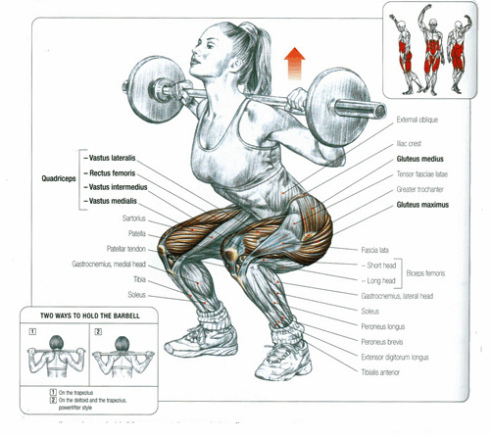
Sources:
[1] Caterisano A, Moss RF, Pellinger TK, et al. The effect of back squat depth on the EMG activity of 4 superficial hip and thigh muscles. J Strength Cond Res. 2002;16(3):428-32.
[2] Drinkwater EJ, Moore NR, Bird SP. Effects of changing from full range of motion to partial range of motion on squat kinetics. J Strength Cond Res. 2012;26(4):890-6. doi: 10.1519/JSC.0b013e318248ad2e
[3] Velez A, Golem DL, Arent SM. The impact of a 12-week resistance training program on strength, body composition, and self-concept of Hispanic adolescents. J Strength Cond Res. 2010;24(4):1065-73. doi: 10.1519/JSC.0b013e3181cc230a.
About Becky Hodgson
As a successful 800m runner for Oxfordshire Athletics I have a strong postion on evidence based training and application. Strength training is my passion, passing my knoweldge of lifting on to help other women like myself to see both the physical and practical benefits that strength training has to offer.
You can find me on Facebook, or why not even give us a Tweet @Hall_Training
Deskercise: Turning your office desk into a gym!
Due to the demands of modern life, more and more of our clients are in the office between 8am and 6pm, often with a lengthy commute at each end. Although it is still possible to make time for a fitness regime, many people struggle. To help combat this, we’ve started recommending a few desk exercises for our busiest clients. Desk exercise is a great way to combat our sedentary lifestyles, help beat the slouch and fit a bit of exercise into the day.
There are so many different exercises you can do at your desk, including mobility/stretching exercises, strengthening exercises and metabolic exercises to get the heart going. I’ve included a few of my top ones here to give you the ultimate deskercise workout. So, kick off the high heels, remove the tie and unbutton your top buttons, as we’re about to get the blood flowing and warmed up!
Mobility and warm up – the clients who work at a desk often develop slumped over postures and complain of having pain or discomfort in at least one of the following areas: neck, lower back, shoulders and upper back/traps. The exercises in our mobility and warm up circult will help to release these tight muscles that develop as a result of sitting all day. They will help ‘activate’ our postural muscles and develop movement in the spin, neck and shoulder regions. These exercises are key for increasing mobility and keeping muscular-skeleto issues at bay.
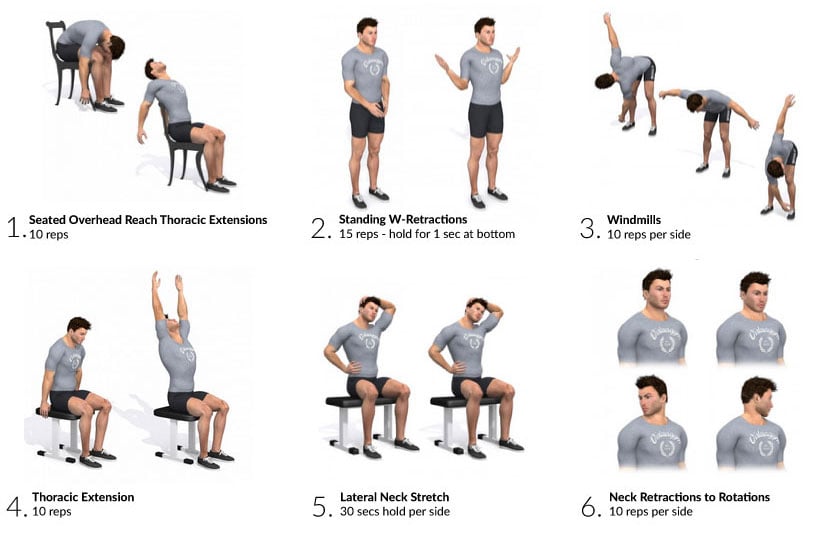
Top Tip: If your focus is on improving mobility and flexibility, then the exercises above should be performed at least once per day. If you do no other exercise try and build up to three times per day. A great time to do them is if you are feeling low on energy or need a break – desk exercises can be a productive way to take a break. Try using cues from other workers too: every time your colleague gets up to make a coffee or pops out for a cigarette, that could be your cue to fit in this quick mobility routine.
Now that we’re feeling looser and all warmed up, let’s move onto the workout itself and begin with our strengthening exercises.
Strengthening exercises – these will help you build up muscle strength and tone while keeping the heart rate high, burning extra calories. This total body workout should be performed in a giant circuit with limited rest, alternating an upper body exercise with a lower body exercise. Perfoming the workout in this way not only allows for a greater amount of work to be done in a short amount of time, but circuit training has been shown to increase caloric expenditure when rest is limited [1] and raise the body’s energy expenditure for up to 38 hours post exercise [2].
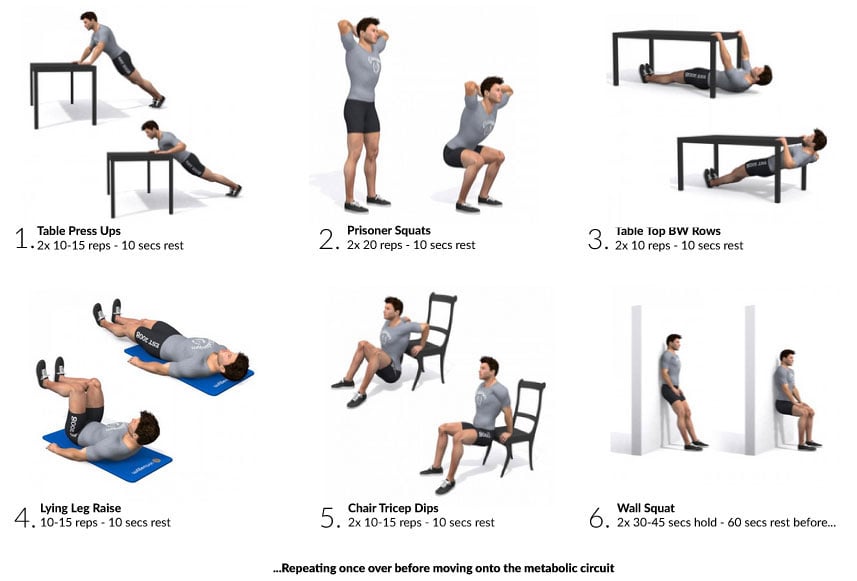
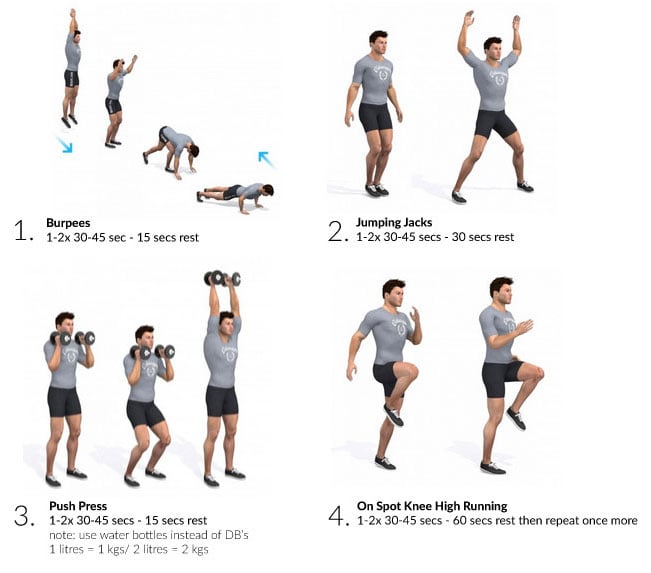
Once you’ve recovered and your legs have stopped shaking, let’s draw this workout to a close by really cranking the intesity up as we finish off with our four-exercise metabolic circuit!
Metabolic exercises – these really get your heart rate elevated, building on cardiovascular fitness as well as helping to mobilse ‘stubborn’ body fat as we move onto our High Intensity Interval Training (HIIT) phase. Similar to the circuit training, these exercises have a high metabolic cost to them allowing for greater energy expenditure and an increase in the body’s metabolism for several hours afterwards! HIIT has also been shown to be a time efficent way of reducing cardiovascualr disease (CVD) risk factors in adolescents [3], a condtion that’s more prevelant in the sedantry population.
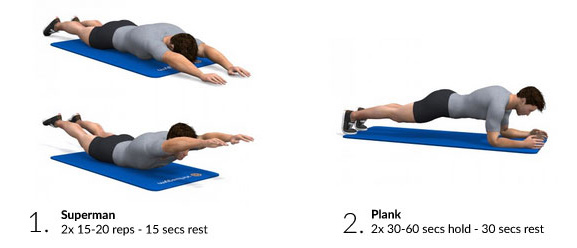
And finally, if there’s time…
Core exercises – if you have both the time and the energy then why not top the workout off by strengthing the core? It’s a region often left underused and weak by people sat down for most of the day. These two simple but effective exercise are a great start to building up a stronger core, which a recent study showed core “assists in the alleviation of chronic low back pain“ [4].
Wrapping up – the workout will take around 15-25 minutes depending on your level of fitness and how many circuits/rounds you complete. For beginners I would advise performing only one circuit of the above with the idea of progressing up to performing it twice or even three times over for more advanced people.
The number of calories you can burn depends entirely on your fitness levels, your weight, the exercises you choose to do and the intensity with which you perform them. Compared to general sitting at a desk which burns around 38Kcals per hour, our deskercise routine could get you burning around 190Kcals in half an hour; 5 times as much! [5]. However, if exercising at your desk isn’t possible then try increasing your general movement, such as tapping your feet, moving your fingers and even maintaining proper posture. Research conducted on a group of twenty women found if the obese women mimicked the activity patterns of the lean women, including a modification of posture allocation, an additional 300 kcal could be expended every day, irrespective of exercise [5].
Note: It’s important to remember that although beneficial, desk exercises are not a proper substitute for a gym workout, or HIIT session. However, they will prevent decline and keep you pain free, mobile and certainly more energised at work; which is certainly a win for you, your health and the boss!
You may also find useful
Our blog post on: Back Pain. Getting to the core of the problem
Sources:
[1] Kelleher AR, Hackney KJ, Fairchild TJ, Keslacy S, Ploutz-Snyder LL. The metabolic costs of reciprocal supersets vs. traditional resistance exercise in young recreationally active adults. J Strength Cond Res. 2010 Apr;24(4):1043-51.
[2] Murphy, Emmett; Schwarzkopf, Robert. Effects of Standard Set and Circuit Weight Training on Excess Post-exercise Oxygen Consumption. Journal of Strength & Conditioning Research. 1992
[3] Buchan DS, Ollis S, Young JD, et al. (2011). “The effects of time and intensity of exercise on novel and established markers of CVD in adolescent youth”. American Journal of Human Biology 23 (4): 517–26. doi:10.1002/ajhb.21166. PMID 21465614.
[4] Chang, Wen-Dien, Hung-Yu Lin, and Ping-Tung Lai. “Core strength training for patients with chronic low back pain.” Journal of Physical Therapy Science 27.3 (2015): 619-622.
[5] http://calorielab.com/burned/
[6] Johannsen DL, Welk GJ, Sharp RL, Flakoll PJ. Differences in daily energy expenditure in lean and obese women: the role of posture allocation. Obesity (Silver Spring). 2008;16(1):34-9. doi: 10.1038/oby.2007.15.
About Chris Hall
As the founder of Hall Training Systems, it is my mission to provide you with the very best personal training experience. I set up Hall Training Systems as Oxford’s leading personal training service in nutrition, performance and weight loss, ensuring I can deliver the very best in training techniques.
You can find me on Facebook, Google+ or why not even give us a Tweet @Hall_Training
Dad Bod. What is it and how can it be avoided?
We’ve all heard of the ‘dad bod‘ phenomenon sweeping the media recently. In fact we’ve published an article about it in this months’ edition of ShortList magazine, but what exactly is it and how can we avoid it?
The first definition of ‘dad bod’ says that ‘the dad bod is a nice balance between a beer guy and working out.’ It could be somebody who no longer has time to keep up with a rigorous gym routine, and enjoys a weekend full of good food and a few beers, or somebody who has always been in okay (but not fantastic) shape. The general consensus seems to be that a man with a ‘dad bod’ has a visible trace of muscle hidden under a layer of fat. Think Leonardo Di Caprio 2015 as opposed to 1999.
How does it happen?
There are many reasons somebody could develop ‘dad bod.’ Perhaps they’ve never achieved that chiselled six pack and have always carried round a bit of excess podge. The most likely explanation though is that the demands of adult life takeover from a younger commitment to the gym. Guys in their early 20s often have few commitments and limited financial pressures. If they want to spend their weekend in the gym working on their muscle definition, or spend £60 per month on supplements, then they tend to have the freedom to do so. As the years creep by and responsibilities pile up, this can become more difficult. Childcare and family commitments, trips to IKEA and social events all take over, and finding time to fit in gym sessions can be tricky.
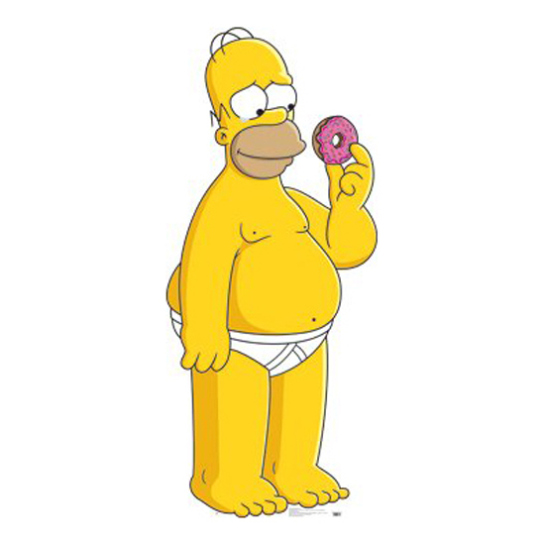 Unhelpfully, men often store fat in their stomach area, meaning the abs are the first muscles to disappear. Stress, inactivity, poor nutrition and alcohol all contribute to a build up of fat. While carrying excess fat generally increases health risks, a great deal of research suggests the fat around our abdominal region is even worse. This type of fat, known as visceral fat is hard to monitor, as it’s located underneath your abdominal muscles and surrounds your organs. Visceral fat is associated with insulin resistance (meaning the body cannot handle insulin well) it’s also a strong predictor for stroke and heart disease, and is much more important to keep under control than subcutaneous fat, the fat that we can see and pinch. Thankfully, visceral fat is the easiest to lose and is often the first type of fat to go when you start an exercise regime.
If we don’t want it how can we fight it?
People often underestimate the amount of work needed to get a well-defined six pack. The most important factor is diet. Any excess calories we eat are usually stored as fat, and will immediately start to mask muscle definition. Male fitness and underwear models devote an extraordinary amount of time to exercise, meal planning and food preparation – an amount that most of us can’t afford to spare!
If you are serious about beating dad bod, cutting your alcohol consumption down (or preferably out) would be a great place to start. A large-scale European study found that men who had one drink a day increased the risk of greater belly fat, and those who drank beer rather than wine had substantially more belly fat. Men who were heavy drinkers, consuming more than four drinks a day, were significantly fatter and had more belly fat than those who drank less. They also found the men who drank more also had a larger caloric intake from food [1].
It’s also important to find the right balance of macronutrients (protein, carbs and fats) for you. I find clients often overeat on sugary, high carbohydrate foods while under eating on protein. Try to reduce your intake of sugary carbohydrates in favour of a higher protein intake, healthy fats such as avocados, and unrefined carbohydrates such as rice, sweet potato, rye and amaranth. When it comes to protein you should aim to be eating between 1.2-2.0g per kg of bodyweight depending on your goal and activity levels.
For more information on protein and just how much you need take a look at our Protein 101 seminar or download our protein infographic.
You can save the ‘dirty’ foods such as cakes, chips, pizza and alcohol for special occasions, or your kids’ birthday parties!
When it comes to the gym, time is of the essence. As a busy dad you probably don’t have a lot of time to yourself so short, intense workouts would be best. Try and incorporate a mix of both HIIT (High Intensity Interval Training) and strength based circuits into your weekly routine. Ditch the long steady state cardio and do sprint work instead. Both HIIT and circuit training can be done in no longer than 30-minutes and have a better effect on fat loss than regular steady state training.
Looking for some inspiration? Check out our Holiday Workout blog for a video demostration of a short HIIT session.
If you hate cardio machines, try using battling ropes, kettlebells, jump ropes or sled work to really fire up your metabolism and burn some fat. I try to encourage the dads with young kids who aren’t able to hit the gym as much to get up and out the house for some fresh air. Going on a family cycle, playing a game of squash, taking a dip in the pool or having a simple kick around in the local park – anything that will help to elevate the heart and burn off some of those excess calories.
A note on abdominal work!
Although isolated abdominal work will help to develop the muscles of a six pack, it won’t necessarily help to show it off. It’s better to lose the gut first by focusing on the techniques above before wasting endless hours performing 100 crunches back to back.
Sources:
Bergmann, M., Schutze, M., et al. The Association of Lifetime Alcohol Use With Measures of Abdominal and General Adiposity in a Large-Scale European Cohort. European Journal of Clinical Nutrition. 2011. 65, 1079-1087.
About Chris Hall
As the founder of Hall Training Systems, it is my mission to provide you with the very best personal training experience. I set up Hall Training Systems as Oxford’s leading personal training service in nutrition, performance and weight loss, ensuring I can deliver the very best in training techniques.
You can find me on Facebook, Google+ or why not even give us a Tweet @Hall_Training
From Bean to Bar: The Health Benefits of Chocolate
It was last week I headed down to Hotel Chocolat in Covent Garden for a chocolate making experience. Chocolate is my Achilles Heel, I can’t resist it, so I was really excited to find out some more about how it is made and what exactly goes into it.
I thought it was only fair that I shared some of this knowledge with you, as whenever I ask clients which foods they feel they need to cut out, chocolate is pretty high on the list. While this can be sensible (we all know how hard it is to stop eating it once you’ve started) it’s not all bad news for chocolate lovers. Chocolate, especially dark chocolate, has some fantastic health benefits.
What I learnt yesterday is that there are only three types of cocoa beans in the world. They are the noble Criollo, the common Forastero and a hybrid between the two, the Trinitario. Criollo and Trinitario are often referred to as fine or flavour cocoa beans, while Forastero is considered the ordinary or bulk bean and provides 90% of the world’s chocolate!
Once the beans have been collected, fermented and roasted, the shell is separated from the bean itself, or the nib. I hadn’t appreciated how simple the chocolate making process actually is: the chocolate nibs are ground down. They turn from beans into a liquidy paste, and separate from the fat they contain: cocoa butter. This is skimmed off, then, for dark chocolate, sugar is added to the paste. If your chocolate is 70% dark chocolate, then 30% of it is sugar. For milk chocolate, sugar and milk power are added. This most important part of the process to be aware of nutritionally. The darker the chocolate, the more health benefits and the less sugar (i.e. additional calories) you are consuming!
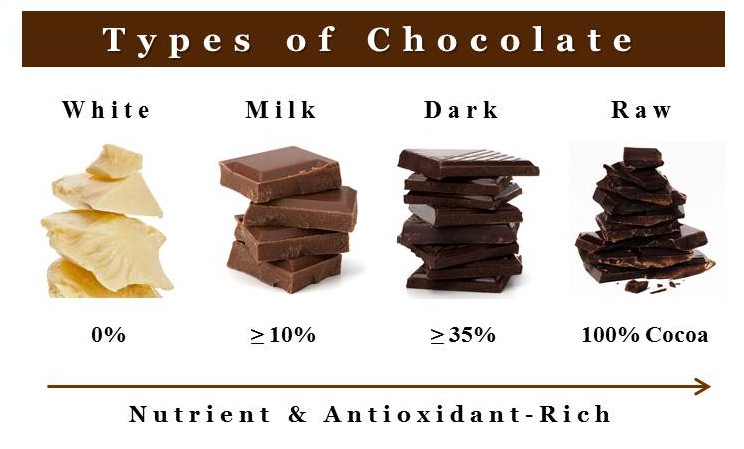 Once the sugar has been added, manufacturers (should) add cocoa butter. This is the only fat which melts at body temperature, hence why good quality chocolate melts in your mouth. Many manufacturers sell this off to beauty companies for use in cosmetics, and replace it with less healthy fats such as vegetable oils. Always check the back of the packet to make sure you know what goes into your chocolate and to see whether it contains vegetable oil or a fat subsitute! This substitution of fats is especially common in warmer countries, where the chocolate would melt on the shelves if it melted at 37 degrees.
If you’re eating good quality chocolate, with at least 70% cocoa content, there’s no need to feel too guilty, especially when you consider all the good it can do your body and mind! Here are my top five surprising health benefits of chocolate:
1. It boosts your mood
Good quality chocolate contains phenylethylamine (PEA), which is the hormone your brain creates when you’re falling in love with somebody. PEA works by encouraging your brain to relase the nerotransmitter dopamine, helping to lift your mood.
2. It’s packed full of minerals
Many people suffer from various mineral deficiencies. It’s amazing how many of these missing minerals a 100g bar of dark chocolate can contain. It’s full of zinc, magnesium, potassium and iron. A 100g serving of dark chocolate contains 76% of your daily recommended allowance of zinc and a whooping 146mg of magnesium! Given that 57% of the US population does not meet the US RDA for dietary intake of magnesium; chocolate could be a very simple source of obtaining an adequate amount of this mineral.
3. It improves brain power
As well as minerals, chocolate contains Flavonols, which act in a similar way to anti-oxidants. One of their roles is to improve circulation and blood flow to the brain. A 2009 study asked participants to count backwards in groups of three from 999. When they’d consumed cocoa they did it more quickly and with less mistakes, and better still didn’t find it so tiring!
4. It helps your body work better
Cocoa has numerous benefits on the body. It can help to reduce strokes, lower cholesterol, limit the risk of cardiovascular disease, and makes arteries more flexible.
5. It can help with weight loss
A neuroscientist called Will Clower claims that melting a square of dark chocolate on your tongue twenty minutes before you eat triggers the hormones that tell you you’re full, thus reducing the amount of calories you consumer over all.
While I wouldn’t recommend guzzling a whole bar of chocolate every day, the odd square of dark chocolate here and there is certainly nothing to worry about, and may even improve your health!
About Chris Hall
As the founder of Hall Training Systems, it is my mission to provide you with the very best personal training experience. I set up Hall Training Systems as Oxford’s leading personal training service in nutrition, performance and weight loss, ensuring I can deliver the very best in training techniques.
You can find me on Facebook, Google+ or why not even give us a Tweet @Hall_Training
Orthorexia Nervosa: Has your healthy eating gone too far?
Our social media feeds are full of pictures of healthy food and six packs, encouraging us to live a more active and healthier lifestyle. At first glance this sounds great – being healthy is good. But it is possible to be too healthy. There is a worrying trend emerging, with individuals becoming so obsessed with eating healthily that they are damaging their mental health. The line between healthy eating and an eating disorder becomes blurred.
Orthorexia Nervosa involves an intense compulsion to stick to a concrete set of rules for food consumption, often eating healthy, ‘clean’ foods, with complete avoidance of foods perceived to be unhealthy. Although it is not clinically defined as an eating disorder, it is a growing phenomenon, with increasing numbers of people showing orthorexic tendencies. It is more common among those who regularly exercise.
This obsession with healthy foods could come from a number of sources. Environment is massively important – if those around you are obsessive about the quality and type of food they eat, you are more likely to pick up similar habits. Social trends are becoming more of a problem, particularly with the prevalence of food and fitness bloggers on social media setting excessively high standards. The number of wheat, gluten and lactose free foods available, and the publicity surrounding certain diets is another causal factor. People may hear from a nutritionist or a celebrity that wheat is bad, and then cut it out of their diet for example. Although orthorexics seem to be driven by healthy motivations, underlying reasons such as a desire for control, using their eating habits to create an identity or social standing, and poor body image are more likely to be the driving factor. Orthorexia is also associated with OCD.

In the drive for health, some orthorexics can end up limiting their diet in such a way that it becomes nutritionally unsafe. Cutting out meat and pulses can cause a protein deficiency, while eliminating dairy limits the amount of calcium available to the body. Avoiding gluten often means avoiding wheat-based products, which have a high fibre content, often leads to a low fibre intake, and a lack of B vitamins.
Although these nutritional deficits can be dangerous, it is the mental effects of orthorexia that are often the most debilitating. Thoughts of food type, quality and timings become all consuming, as you would expect with a more common eating disorder, such as anorexia or bulimia. Orthorexia can also wreak havoc on the digestive system, as sufferers eat according to strict ‘healthy’ rules, ignoring signs that they are hungry or full so they eat what they perceive to be the correct diet.
Due to our society’s preoccupation with fitness and a slender physique, orthorexic behaviours can appear socially acceptable when they are really a symptom of an underlying problem.
Signs of Orthorexia
The signs of orthorexia include: avoiding social activity that involves food. Sufferers can find themselves unable to take part in everyday life, due to preoccupation with food. They become increasingly isolated and intolerant of other people’s views about diet and nutrition. Other symptoms include paying increased and unnecessary attention to food source and macronutrient content, and excluding entire food groups from their diet.
Steps to Recovery
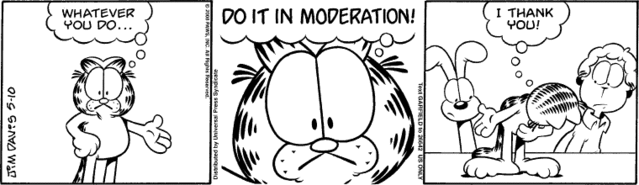
The first step to recovery is noticing and acknowledging that there is a problem. It’s also essential that there is a desire for change. Learning to listen to your body and eat more flexibly is an important first step, as well as gradually reintroducing eliminated or ‘unsafe’ food groups back into the diet. No single food will make you unhealthy or fat as long as it is eaten in moderation, so there’s no reason to cut out an entire food group. Recovering from orthorexia is about learning to eat a diet that is physically healthy, but more importantly, mentally healthy.
For more information, or to seek advice, visit:
http://www.b-eat.co.uk/
http://www.hypnotherapy-directory.org.uk/articles/eatingdisorders.html
About Chris Hall
As the founder of Hall Training Systems, it is my mission to provide you with the very best personal training experience. I set up Hall Training Systems as Oxford’s leading personal training service in nutrition, performance and weight loss, ensuring I can deliver the very best in training techniques.
You can find me on Facebook, Google+ or why not even give us a Tweet @Hall_Training
With the holidays upon us, family commitments and gatherings can make getting to the gym near impossible. Many of my clients tend to travel to see family and friends both abroad and all over the UK. So, to help them stay in shape and give them a level of sanity I sometimes prescribe them the hotel room workout!
A workout that’s designed to be done within 15-20 minutes with no kit and in the smallest of spaces. In this short video I demonstrate an 8 exercise workout that can be done, literally anywhere.
The Circuit
A1 – Split Squat – 2-3x 15 reps
rest 10-30 secs
A2 – Push Ups – 2-3x 15 reps
rest 10-30 secs
A3 – Burpees – 2-3x 20-30 secs
rest 10-30 secs
A4 – Prisoner Squats – 2-3x 20-30 reps
rest 10-30 secs
A5 – Jumping Jacks – 2-3x 30 secs
rest 10-30 secs
A6 – Spot Running w/high knees – 2-3x 30 secs
rest 10-30 secs
A7 – Mountain Climbers – 2-3x 20-30 secs
rest 10-30 secs
A8 – Plank w/alt. leg swipes – 2-3x 10-12 reps per/side
rest 60-90 secs. Repeat 2-3 times
Range of motion: Full vs. Partial. Which is better when it comes to muscle size and strength?
Admit it guys and girls, we’re all guilty of it. There has been a time in most of our lifting careers when ego has got the better of us and we’ve favoured the weight over the technique. I’m outright here to admit I was one for sure. At the start of my lifting career, I only lifted using short/partial range of motion (ROM). I remember my first ever weight training book by Pete Sisco & John Little, called Power Factor Training – A scientific approach to building lean muscle mass. It was a book and a system developed around the method of using partial reps to train a muscle in a shortened state for maximum hypertrophy. I saw the word ‘scientific’ and so thought it must be gospel! Unbeknown to me about the real science behind proper lifting techniques and muscle hypertrophy.
However, since then 11 years have passed and I’ve grown wiser of the lifting community. Developing a greater understanding, knowledge and application of examining the bro-science against the actual science. So, when I was clearing up tonight I stumbled across my old Power Factor Training book which ignited an unanswered question. Does working a muscle in its shortened range of motion (aka partial reps) have any greater benefit on a muscles size & strength over a full range of motion?
Well, let’s take a look at the evidence for a moment…
Due to the greater difficulty in measuring muscular cross-sectional area (size/strength at its largest point) over a long-term period, there are very few studies comparing the results between short ROM over full ROM however, here are the ones I dug out.
The first long-term study (12-weeks) compared the effects of parallel and quarter squats over full range back squats. Their findings showed that full range back squats produced higher increases in quadriceps muscle cross-sectional area than a quarter squat. (Raastad, 2008)
In 2012, a 10-week study [1] evaluated strength and muscle gain differences between full ROM and partial ROM when performing preacher curls (see figure 3). Researchers asked the 40 untrained males to perform preacher curls twice per week for 10-weeks. One group lifted the weight from 0 to 130 degrees (full ROM) whilst the second groups lifted the weight from 50 to 100 degrees (partial ROM). At the end of the 10-weeks the researchers discovered the following results:
• The full ROM group increased bicep thickness by 9.52%.
• The partial ROM group increased bicep thickness by 7.37%.
However, the difference between hypertrophy of the two groups was not significant.
In 2013 Bloomquist and his researchers compared the effects of partial ROM (0-60 degrees) and full ROM (0-120 degrees) on thigh muscle cross-sectional area when performing a back squat.
Both groups were asked to do 3-4 sets of 3-10 reps both to failure and then not to failure. Their results found the group who performed full ROM increased total quad muscle cross-sectional area across the entire sites of the quadriceps, whereas the partial ROM group only saw increases across two heads of the quadriceps and at the most proximal sites – the site nearest the hip. Additionally the full ROM groups also noticed a greater muscle cross-sectional area at the back of the thigh (hamstrings) than the group who performed partial reps [2].
Lastly, another study done in 2012 by McMahon looked at partial ROM vs. full ROM on three knee extension exercises using 80% of 1RM on the squat, leg press and leg extension. The researchers found that the vastus lateralis muscle cross-sectional area increased significantly in both groups. They also noted the full ROM group displayed greater relative gains in the vastus lateralis muscle cross-sectional area compared to the partial ROM group. However, the difference between groups was only significant at the end of the 8-weeks, with the full ROM group displaying a 15% increase compared to the partial ROM group, showing only a 10% increase in the muscles size and strength [3].
While the research is still limited in this area it does seem that working a muscle across its full ROM is more beneficial to its size and strength than working it across a partial range. Nevertheless, it’s not to say one should forget partial work all together; after all it can be a great tool in overcoming ‘sticking points’ in a lift. However, I do believe ROM should be dictated by exercise type, individual lever length and training outcomes. It should not be dictated by weight, a hungry ego or some pseudoscience you’ve read in a fancy book!
Sources:
[1] Pinto RS, Gomes N, Radaelli R, Botton CE, Brown LE, Bottaro M. Effect of range of motion on muscle strength and thickness. J Strength Cond Res. 2012;26(8):2140-5. doi: 10.1519/JSC.0b013e31823a3b15.
[2] Bloomquist K, Langberg H, Karlsen S, Madsgaard S, Boesen M, Raastad T. Effect of range of motion in heavy load squatting on muscle and tendon adaptations. Eur J Appl Physiol. 2013;113(8):2133-42. doi: 10.1007/s00421-013-2642-7.
[3] McMahon GE, Morse CI, Burden A, Winwood K, Onambélé GL. Impact of range of motion during ecologically valid resistance training protocols on muscle size, subcutaneous fat, and strength. J Strength Cond Res. 2014;28(1):245-55. doi: 10.1519/JSC.0b013e318297143a.
